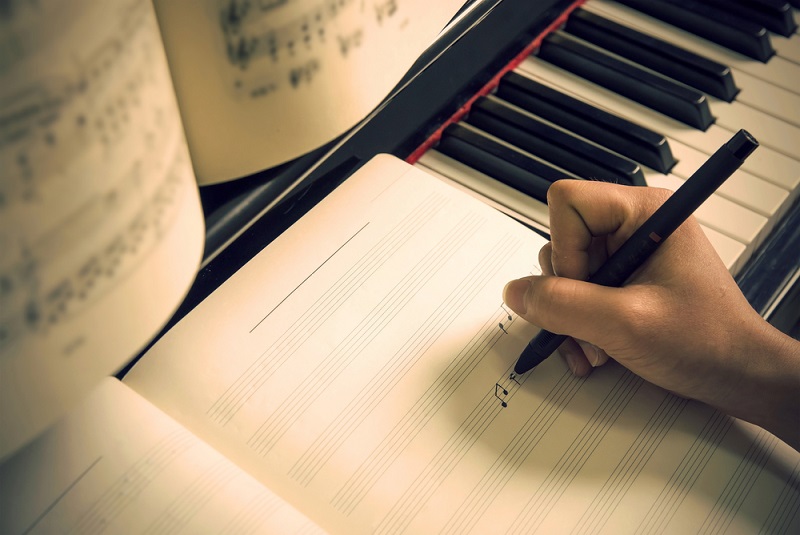
 Sheet Music Giant is a site for those who wants to access popular sheet music easily,
letting them download the sheet music for free for trial purposes.
It's completely free to download and try the listed sheet music, but you have to delete the files after 24 hours of trial.
Don't forget, if you like the piece of music you have just learned playing,
treat the artist with respect, and go buy the original sheet music.
Sheet Music Giant is a site for those who wants to access popular sheet music easily,
letting them download the sheet music for free for trial purposes.
It's completely free to download and try the listed sheet music, but you have to delete the files after 24 hours of trial.
Don't forget, if you like the piece of music you have just learned playing,
treat the artist with respect, and go buy the original sheet music.
Piano Sheet Music
 "Playing scales is like a boxer skipping rope or punching a bag. It's not the thing in itself; it's preparatory to the activity" Barney Kessel - Jazz Guitar
Monkey Island
Monkey Island 2: LeChuck's Revenge is an adventure game developed and published by LucasArts in 1991. It was the second game of the Monkey Island series, following The Secret of Monkey Island, and the sixth LucasArts game to use the SCUMM engine. It was the first game to use the iMUSE sound system.The game's story centers on the wanna-be pirate Guybrush Threepwood. After defeating ghost pirate LeChuck in The Secret of Monkey Island, little is known of what happened between Guybrush Threepwood and Elaine Marley. The sequel involves Guybrush's attempts to find the mysterious treasure of Big Whoop.
Tokio Hotel
Tokio Hotel is a German band founded in Magdeburg, Germany in 2001 by singer Bill Kaulitz, guitarist Tom Kaulitz, drummer Gustav Schäfer and bassist Georg Listing. The quartet have scored four number one singles and have released three number one albums in their native country, selling nearly 5 million CDs and DVDs there. After recording an unreleased demo-CD under the name "Devilish" and having their contract with Sony BMG Germany terminated, the band released their first German-language album, Schrei, as Tokio Hotel on Universal Music Germany in 2005. Schrei sold more than half a million copies worldwide and spawned four top five singles in both Germany and Austria. In 2007, the band released their second German album Zimmer 483 and their first English album Scream which have combined album sales of over one million copies worldwide and helped win the band their first MTV Europe Music Award for Best InterAct. The former, Zimmer 483, spawned three top five singles in Germany while the latter, Scream, spawned two singles that reached the top twenty in new territories such as Portugal, Spain and Italy. In September 2008, they won in the US their first MTV Video Music Award for Best New Artist. In October 2008, they won four awards including Best International Artist and Song of the year at Los Premios MTV Latinoamérica held in Mexico. Tokio Hotel became the first German band ever to win an award at the MTV VMAs and also at the MTV Latin America Awards. They also picked up the Headliner award at the MTV Europe Music Awards 2008 held in Liverpool on 6 November 2008 and the Award for Best Group on 5 November 2009 at the MTV Europe Music Award held in Berlin.
Franz Behr
Franz Behr (1837–1898) was a prolific, but minor, and now almost forgotten, German composer of songs and salon pieces for piano.
He was popular at one time, and many of his works were published (his opus numbers reached at least 582, with Royal Gavotte). His works include names such as The Camp of the Gypsies, Will o’ the wisp, Valse des Elfes (Op. 497), Perciotta, serenande catalane, and Evening Chimes in the Mountains. He also wrote under the name G. Bachmann (Marche bulgare, Succès-mazurk, Collier de rubis, Paris-valse, Gavotte duchesse, Floréal mazurka).
He was popular at one time, and many of his works were published (his opus numbers reached at least 582, with Royal Gavotte). His works include names such as The Camp of the Gypsies, Will o’ the wisp, Valse des Elfes (Op. 497), Perciotta, serenande catalane, and Evening Chimes in the Mountains. He also wrote under the name G. Bachmann (Marche bulgare, Succès-mazurk, Collier de rubis, Paris-valse, Gavotte duchesse, Floréal mazurka).
Antonin Dvorak
Antonín Leopold Dvořák (English pronunciation: /ˈdvɒrʒɑːk/ DVOR-zhahk or /ˈdvɒrʒæk/ DVOR-zhak; Czech: ( listen); September 8, 1841 – May 1, 1904) was a Czech composer of Romantic music, who employed the idioms of the folk music of Moravia and his native Bohemia. His works include operas, symphonic, choral and chamber music. His best-known works include his New World Symphony, the Slavonic Dances, "American" String Quartet, and Cello Concerto in B minor.
Dvořák wrote in a variety of forms: his nine symphonies generally stick to classical models that Beethoven would have recognised, but he also worked in the newly developed symphonic poem form and the influence of Richard Wagner is apparent in some works. Many of his works also show the influence of Czech folk music, both in terms of rhythms and melodic shapes; perhaps the best known examples are the two sets of Slavonic Dances. Dvořák also wrote operas (of which the best known is Rusalka); serenades for string orchestra and wind ensemble; chamber music (including a number of string quartets, and quintets); songs; choral music; and piano music.
Dvořák wrote in a variety of forms: his nine symphonies generally stick to classical models that Beethoven would have recognised, but he also worked in the newly developed symphonic poem form and the influence of Richard Wagner is apparent in some works. Many of his works also show the influence of Czech folk music, both in terms of rhythms and melodic shapes; perhaps the best known examples are the two sets of Slavonic Dances. Dvořák also wrote operas (of which the best known is Rusalka); serenades for string orchestra and wind ensemble; chamber music (including a number of string quartets, and quintets); songs; choral music; and piano music.
Lionel Richie
Lionel Brockman Richie, Jr. (born June 20, 1949) is an Academy Award and Grammy award-winning American singer, songwriter, record producer, and occasional actor, who has sold more than 100 million records.
He released his self-titled debut in 1982. The album hit #3 on the music charts and sold over 4 million copies. His 1983 follow up album, Can't Slow Down, sold over twice as many copies and won the Grammy Award for the Album of the Year in 1984. His third album, Dancing on the Ceiling, which was released in 1986, spawned such hits as "Say You, Say Me", "Dancing on the Ceiling," and "Se La", but it also signified the end of his large commercial success.
In 2002, Richie's song "Running with the Night" was featured on the Rockstar North video game Grand Theft Auto: Vice City though the song was removed from later versions of the game. In 2004, he appeared on Canadian Idol as his songs were featured during a Canadian Idol week.
In November 2005, Lionel Richie performed with Kenny Rogers on a CMT Crossroads special. The show gave an informative insight into their friendship both in and out of the music world. Richie was also the headliner at a 2000 Fourth of July tribute concert with Fantasia Barrino at the Philadelphia Museum of Art. Richie released his eighth studio album entitled " Coming Home" on September 12, 2006. The first single of the album was "I Call It Love" and was premiered in July 2006, becoming his biggest hit in the U.S. in ten years. The album was an incredible success for Richie in the United States, peaking at #6. His adopted daughter Nicole Richie stars in the music video for this track.
On May 2, 2008, Lionel Richie was the 21st recipient of the George and Ira Gershwin Lifetime Achievement Award at UCLA's annual Spring Sing. In accepting the award, Richie said: "Forget about surviving 30 some odd years in the music business, Lionel Richie survived 27 years of Nicole Richie".
He released his self-titled debut in 1982. The album hit #3 on the music charts and sold over 4 million copies. His 1983 follow up album, Can't Slow Down, sold over twice as many copies and won the Grammy Award for the Album of the Year in 1984. His third album, Dancing on the Ceiling, which was released in 1986, spawned such hits as "Say You, Say Me", "Dancing on the Ceiling," and "Se La", but it also signified the end of his large commercial success.
In 2002, Richie's song "Running with the Night" was featured on the Rockstar North video game Grand Theft Auto: Vice City though the song was removed from later versions of the game. In 2004, he appeared on Canadian Idol as his songs were featured during a Canadian Idol week.
In November 2005, Lionel Richie performed with Kenny Rogers on a CMT Crossroads special. The show gave an informative insight into their friendship both in and out of the music world. Richie was also the headliner at a 2000 Fourth of July tribute concert with Fantasia Barrino at the Philadelphia Museum of Art. Richie released his eighth studio album entitled " Coming Home" on September 12, 2006. The first single of the album was "I Call It Love" and was premiered in July 2006, becoming his biggest hit in the U.S. in ten years. The album was an incredible success for Richie in the United States, peaking at #6. His adopted daughter Nicole Richie stars in the music video for this track.
On May 2, 2008, Lionel Richie was the 21st recipient of the George and Ira Gershwin Lifetime Achievement Award at UCLA's annual Spring Sing. In accepting the award, Richie said: "Forget about surviving 30 some odd years in the music business, Lionel Richie survived 27 years of Nicole Richie".
Alan Silvestri
Alan Anthony Silvestri (born March 26, 1950) is an Academy Award-nominated American film score composer and conductor.
estri is best known for his collaborations with director Robert Zemeckis, having scored Romancing the Stone (1984), the Back to the Future trilogy (1985, 1989, 1990), Who Framed Roger Rabbit (1988), Death Becomes Her (1992), Forrest Gump (1994), Contact (1997), Cast Away (2000), The Polar Express (2004) , Beowulf (2007) and Disney's A Christmas Carol (2009).
Silvestri is also known for his work on Predator (1987) and Predator 2 (1990), both of which are considered preeminent examples of action/sci-fi film scores. He has also begun a collaboration with director Stephen Sommers, scoring the films The Mummy Returns in 2001, Van Helsing in 2004 and G.I. Joe: The Rise of Cobra in 2009.
Silvestri also composed music for television, including for the series Starsky & Hutch, CHiPs , Manimal and HBO's Tales from the Crypt.
Silvestri was 21 years old when he started his film/televsion composing career.
His early style is marked by a strong use of the "octatonic scale," as well as an eclectic use of different notes and instruments.
It was thought that Silvestri was allegedly inspired by the works of Barry DeVorzon, Perry Botkin, Jr., Lalo Schifrin, Jerry Fielding, Jerry Goldsmith and John Williams.
estri is best known for his collaborations with director Robert Zemeckis, having scored Romancing the Stone (1984), the Back to the Future trilogy (1985, 1989, 1990), Who Framed Roger Rabbit (1988), Death Becomes Her (1992), Forrest Gump (1994), Contact (1997), Cast Away (2000), The Polar Express (2004) , Beowulf (2007) and Disney's A Christmas Carol (2009).
Silvestri is also known for his work on Predator (1987) and Predator 2 (1990), both of which are considered preeminent examples of action/sci-fi film scores. He has also begun a collaboration with director Stephen Sommers, scoring the films The Mummy Returns in 2001, Van Helsing in 2004 and G.I. Joe: The Rise of Cobra in 2009.
Silvestri also composed music for television, including for the series Starsky & Hutch, CHiPs , Manimal and HBO's Tales from the Crypt.
Silvestri was 21 years old when he started his film/televsion composing career.
His early style is marked by a strong use of the "octatonic scale," as well as an eclectic use of different notes and instruments.
It was thought that Silvestri was allegedly inspired by the works of Barry DeVorzon, Perry Botkin, Jr., Lalo Schifrin, Jerry Fielding, Jerry Goldsmith and John Williams.
Caetano Veloso
Caetano Emanuel Viana Teles Veloso, or known as Caetano Veloso, is a Brazilian composer, singer, guitarist, writer and political activist. He was recognized as one of the best songwriters of the century and considered Bob Dylan of Brazil.
Mozart
Wolfgang Amadeus Mozart, full name Johann Chrysostom Wolfgang Amadeus Mozart (27 January 1756 â 5 December 1791) was a prolific and influential composer of the Classical era. His over 600 compositions include works widely acknowledged as pinnacles of symphonic, concertante, chamber, piano, operatic, and choral music. Mozart is among the most enduringly popular of classical composers, and many of his works are part of the standard concert repertoire.
Mozart's music, like Haydn's, stands as an archetypal example of the Classical style. His works spanned the period during which that style transformed from one exemplified by the style galant to one that began to incorporate some of the contrapuntal complexities of the late Baroque, complexities against which the galant style had been a reaction. Mozart's own stylistic development closely paralleled the development of the classical style as a whole. In addition, he was a versatile composer and wrote in almost every major genre, including symphony, opera, the solo concerto, chamber music including string quartet and string quintet, and the piano sonata. While none of these genres were new, the piano concerto was almost single-handedly developed and popularized by Mozart. He also wrote a great deal of religious music, including masses; and he composed many dances, divertimenti, serenades, and other forms of light entertainment.
The central traits of the classical style can be identified in Mozart's music. Clarity, balance, and transparency are hallmarks of his work.
Mozart's music, like Haydn's, stands as an archetypal example of the Classical style. His works spanned the period during which that style transformed from one exemplified by the style galant to one that began to incorporate some of the contrapuntal complexities of the late Baroque, complexities against which the galant style had been a reaction. Mozart's own stylistic development closely paralleled the development of the classical style as a whole. In addition, he was a versatile composer and wrote in almost every major genre, including symphony, opera, the solo concerto, chamber music including string quartet and string quintet, and the piano sonata. While none of these genres were new, the piano concerto was almost single-handedly developed and popularized by Mozart. He also wrote a great deal of religious music, including masses; and he composed many dances, divertimenti, serenades, and other forms of light entertainment.
The central traits of the classical style can be identified in Mozart's music. Clarity, balance, and transparency are hallmarks of his work.
Yuriko Nakamura
Yuriko Nakamura (中村 由利子, Nakamura Yuriko) is a Japanese composer and pianist. Some of her songs were also used for the soundtrack of Shusuke Kaneko's Summer Vacation 1999.
Peter Allen Greenbaum
(29 October 1946 – 25 July 2020), known professionally as Peter Green, was an English blues rock singer-songwriter and guitarist. As the founder of Fleetwood Mac, he was inducted into the Rock and Roll Hall of Fame in 1998. Green's songs, such as "Albatross", "Black Magic Woman", "Oh Well", "The Green Manalishi (With the Two Prong Crown)" and "Man of the World", appeared on singles charts, and several have been adapted by a variety of musicians.
Traditional
Joseph Kosma
Joseph Kosma was a Hungarian-French composer. Date of birth: October 22, 1905, Budapest, Hungary Date and place of death: August 7, 1969, France
Regina Spektor
Regina Spektor (born February 18, 1980) is a Soviet-born Jewish-American singer-songwriter and pianist. Her music is associated with the anti-folk scene centered on New York City's East Village.
Spektor has said that she has created 700 songs, but that she rarely writes any of them down. She has also stated that she never aspired to write songs herself, but songs seem to just flow to her. Spektor possesses a broad vocal range and uses the full extent of it. She also explores a variety of different and somewhat unorthodox vocal techniques, such as verses composed entirely of buzzing noises made with the lips and beatbox-style flourishes in the middle of ballads, and also makes use of such unusual musical techniques as using a drum stick to tap rhythms on the body of the piano or chair.
Her lyrics are equally eclectic, often taking the form of abstract narratives or first-person character studies, similar to short stories or vignettes put to song. Spektor usually sings in English, though she sometimes includes a few words or verses of Latin, Russian, French, and other languages in her songs.
Spektor has said that she has created 700 songs, but that she rarely writes any of them down. She has also stated that she never aspired to write songs herself, but songs seem to just flow to her. Spektor possesses a broad vocal range and uses the full extent of it. She also explores a variety of different and somewhat unorthodox vocal techniques, such as verses composed entirely of buzzing noises made with the lips and beatbox-style flourishes in the middle of ballads, and also makes use of such unusual musical techniques as using a drum stick to tap rhythms on the body of the piano or chair.
Her lyrics are equally eclectic, often taking the form of abstract narratives or first-person character studies, similar to short stories or vignettes put to song. Spektor usually sings in English, though she sometimes includes a few words or verses of Latin, Russian, French, and other languages in her songs.
Giulio Caccini
Giulio Romolo Caccini (also Giulio Romano) (Rome, 8 October 1551 – Florence, buried 10 December 1618) was an Italian composer, teacher, singer, instrumentalist and writer of the late Renaissance and early Baroque eras. He was one of the founders of the genre of opera, and one of the most influential creators of the new Baroque style. He was also the father of the composer Francesca Caccini and the singer Settimia Caccini.
Alex Kim
Alex Kim, Minneapolis, Minnesota. He has studied music at the PiM Arts High School and graduated from the Berklee College of Music in...
One Republic
OneRepublic is an American Rock band formed in Colorado. After a few years of moderate success, they have since drawn mainstream attention with the release of their single "Apologize," which has sold in excess of 7 million singles worldwide. The song, according to SoundScan Data, is one of only two songs that have reached 3 million legal downloads in history. A remix of "Apologize" was featured on Timbaland's Shock Value and the band's debut album, Dreaming Out Loud, produced by Greg Wells. Their debut album was released in the United States on November 20, 2007, with international release dates staggered throughout early 2008. As of June 14, 2008, Dreaming Out Loud had sold 761,298 copies in the U.S. with the bands total album sales coming to over 1.5 million worldwide so far. The band's second single, "Stop and Stare," has also crossed the 2 million mark in terms of worldwide single sales. Their third single, "Say (All I Need)", has been released in the UK and in the U.S. Their fourth single will be "Mercy", as stated by OneRepublic's MySpace page. The video has been streamed on Youtube.com.
Current members:
Ryan Tedder â Lead vocals, Guitar, Bass Guitar, Piano, Glockenspiel, Drums (2002âpresent)
Zach Filkins â Guitar, vocals (2002âpresent)
Drew Brown â Guitar, Bass Guitar, Glockenspiel (2002âpresent)
Eddie Fisher â Drums, percussion (2005âpresent)
Brent Kutzle â Bass guitar, keyboards, cello, vocals (2007âpresent)
Current members:
Ryan Tedder â Lead vocals, Guitar, Bass Guitar, Piano, Glockenspiel, Drums (2002âpresent)
Zach Filkins â Guitar, vocals (2002âpresent)
Drew Brown â Guitar, Bass Guitar, Glockenspiel (2002âpresent)
Eddie Fisher â Drums, percussion (2005âpresent)
Brent Kutzle â Bass guitar, keyboards, cello, vocals (2007âpresent)
Josh Groban
Joshua Winslow Groban (born February 27, 1981) is a Grammy-nominated American singer-songwriter. He has concentrated his career so far mostly in concert singing and recordings, although he has stated that he wishes to pursue musical theater in the future.
Various music critics have described Groban's voice in different ways, with some referring to him as a tenor and others as a baritone. In performance, Groban's music goes as low as G2 (as in the song "To Where You Are") and extends up to at least B4 flat or the B flat above middle C (as heard in "You Raise Me Up"). He also hits a High B during the Baywatch theme song in his Emmy performance of TV Theme Songs on September 21, 2008.This places his voice lower than the tenor range on the low end, and just short of Tenor C, and therefore above the baritone range, on the high end.
Some of Groban's musical influences have been Radiohead, Paul Simon, Sting, Peter Gabriel, and Björk. He says he is able to look up to anyone, musically, who has pushed the boundaries and stepped outside of the box. As for vocal influences, "anyone who told a story with their songs," including Mandy Patinkin, Klaus Nomi, George Hearn, and Luciano Pavarotti.
Various music critics have described Groban's voice in different ways, with some referring to him as a tenor and others as a baritone. In performance, Groban's music goes as low as G2 (as in the song "To Where You Are") and extends up to at least B4 flat or the B flat above middle C (as heard in "You Raise Me Up"). He also hits a High B during the Baywatch theme song in his Emmy performance of TV Theme Songs on September 21, 2008.This places his voice lower than the tenor range on the low end, and just short of Tenor C, and therefore above the baritone range, on the high end.
Some of Groban's musical influences have been Radiohead, Paul Simon, Sting, Peter Gabriel, and Björk. He says he is able to look up to anyone, musically, who has pushed the boundaries and stepped outside of the box. As for vocal influences, "anyone who told a story with their songs," including Mandy Patinkin, Klaus Nomi, George Hearn, and Luciano Pavarotti.
Brahms
Johannes Brahms (May 7, 1833 â April 3, 1897) was a German composer of the Romantic period. He was born in Hamburg and in his later years he settled in Vienna, Austria.
Brahms maintained a Classical sense of form and order in his works â in contrast to the opulence of the music of many of his contemporaries. Thus many admirers (though not necessarily Brahms himself) saw him as the champion of traditional forms and "pure music," as opposed to the New German embrace of program music.
Brahms venerated Beethoven: in the composer's home, a marble bust of Beethoven looked down on the spot where he composed, and some passages in his works are reminiscent of Beethoven's style. The main theme of the finale of Brahms's First Symphony is reminiscent of the main theme of the finale of Beethoven's Ninth, and when this resemblance was pointed out to Brahms he replied that any ass â jeder Esel â could see that.
Ein deutsches Requiem was partially inspired by his mother's death in 1865, but also incorporates material from a Symphony he started in 1854, but abandoned following Schumann's suicide attempt. He once wrote that the Requiem "belonged to Schumann". The first movement of this abandoned Symphony was re-worked as the first movement of the First Piano Concerto.
Brahms also loved the Classical composers Mozart and Haydn. He collected first editions and autographs of their works, and edited performing editions. He also studied the music of pre-classical composers, including Giovanni Gabrieli, Johann Adolph Hasse, Heinrich Schütz and especially Johann Sebastian Bach. His friends included leading musicologists, and with Friedrich Chrysander he edited an edition of the works of François Couperin. He looked to older music for inspiration in the arts of strict counterpoint; the themes of some of his works are modelled on Baroque sources, such as Bach's The Art of Fugue in the fugal finale of Cello Sonata No. 1, or the same composer's Cantata No. 150 in the passacaglia theme of the Fourth Symphony's finale.
Brahms maintained a Classical sense of form and order in his works â in contrast to the opulence of the music of many of his contemporaries. Thus many admirers (though not necessarily Brahms himself) saw him as the champion of traditional forms and "pure music," as opposed to the New German embrace of program music.
Brahms venerated Beethoven: in the composer's home, a marble bust of Beethoven looked down on the spot where he composed, and some passages in his works are reminiscent of Beethoven's style. The main theme of the finale of Brahms's First Symphony is reminiscent of the main theme of the finale of Beethoven's Ninth, and when this resemblance was pointed out to Brahms he replied that any ass â jeder Esel â could see that.
Ein deutsches Requiem was partially inspired by his mother's death in 1865, but also incorporates material from a Symphony he started in 1854, but abandoned following Schumann's suicide attempt. He once wrote that the Requiem "belonged to Schumann". The first movement of this abandoned Symphony was re-worked as the first movement of the First Piano Concerto.
Brahms also loved the Classical composers Mozart and Haydn. He collected first editions and autographs of their works, and edited performing editions. He also studied the music of pre-classical composers, including Giovanni Gabrieli, Johann Adolph Hasse, Heinrich Schütz and especially Johann Sebastian Bach. His friends included leading musicologists, and with Friedrich Chrysander he edited an edition of the works of François Couperin. He looked to older music for inspiration in the arts of strict counterpoint; the themes of some of his works are modelled on Baroque sources, such as Bach's The Art of Fugue in the fugal finale of Cello Sonata No. 1, or the same composer's Cantata No. 150 in the passacaglia theme of the Fourth Symphony's finale.
Elton John
Sir Elton Hercules John CBE (born Reginald Kenneth Dwight on 25 March 1947) is an English pop/rock singer, composer and pianist.
In his four-decade career, John has been one of the dominant forces in rock and popular music, especially during the 1970s. He has sold over 200 million records, making him one of the most successful artists of all time. He has more than 50 Top 40 hits including seven consecutive No. 1 U.S. albums, 59 Top 40 singles, 16 Top 10, four No. 2 hits, and nine No. 1 hits. He has won five Grammy awards and one Academy Award. His success has had a profound impact on popular music and has contributed to the continued popularity of the piano in rock and roll. In 2004, Rolling Stone ranked him #49 on their list of the 100 greatest artists of all time.
Some of the characteristics of John's musical talent include an ability to quickly craft melodies for the lyrics of songwriting partner Bernie Taupin, his former rich tenor (now baritone) voice, his classical and gospel-influenced piano, the aggressive orchestral arrangements of Paul Buckmaster among others and the flamboyant fashions, outlandishly excessive eyeglasses, and on-stage showmanship, especially evident during the 1970s.
John was inducted into the Rock and Roll Hall of Fame in 1994. He has been heavily involved in the fight against AIDS since the late 1980s, and was knighted in 1998. He entered into a civil partnership with David Furnish on 21 December 2005 and continues to be a champion for LGBT social movements. On April 9, 2008, John held a benefit concert for Hillary Clinton's presidential campaign, raising $2.5 million.
In his four-decade career, John has been one of the dominant forces in rock and popular music, especially during the 1970s. He has sold over 200 million records, making him one of the most successful artists of all time. He has more than 50 Top 40 hits including seven consecutive No. 1 U.S. albums, 59 Top 40 singles, 16 Top 10, four No. 2 hits, and nine No. 1 hits. He has won five Grammy awards and one Academy Award. His success has had a profound impact on popular music and has contributed to the continued popularity of the piano in rock and roll. In 2004, Rolling Stone ranked him #49 on their list of the 100 greatest artists of all time.
Some of the characteristics of John's musical talent include an ability to quickly craft melodies for the lyrics of songwriting partner Bernie Taupin, his former rich tenor (now baritone) voice, his classical and gospel-influenced piano, the aggressive orchestral arrangements of Paul Buckmaster among others and the flamboyant fashions, outlandishly excessive eyeglasses, and on-stage showmanship, especially evident during the 1970s.
John was inducted into the Rock and Roll Hall of Fame in 1994. He has been heavily involved in the fight against AIDS since the late 1980s, and was knighted in 1998. He entered into a civil partnership with David Furnish on 21 December 2005 and continues to be a champion for LGBT social movements. On April 9, 2008, John held a benefit concert for Hillary Clinton's presidential campaign, raising $2.5 million.
tom jones
Thomas John Woodward, or stage name Tom Jones, is a Welsh singer known for his wide-octave vocal talent. He was born in Pontiypridd near Cardiff in Wales. Since 1965 he has sold over 100 million albums. It has a very strong sound dominance.
Astor Piazzolla
Ástor Pantaleón Piazzolla (March 11, 1921 – July 4, 1992) was an Argentine tango composer and bandoneón player. His oeuvre revolutionized the traditional tango into a new style termed nuevo tango, incorporating elements from jazz and classical music. An excellent bandoneonist, he regularly performed his own compositions with different ensembles.
Piazzolla's nuevo tango was distinct from the traditional tango in its incorporation of elements of jazz, its use of extended harmonies and dissonance, its use of counterpoint, and its ventures into extended compositional forms. As Argentine psychoanalyst Carlos Kuri has pointed out, Piazzolla's fusion of tango with this wide range of other recognizable Western musical elements was so successful that it produced a new individual style transcending these influences. It is precisely this success, and individuality, that makes it hard to pin down where particular influences reside in his compositions, but some aspects are clear. The use of the passacaglia technique of a circulating bass line and harmonic sequence, invented and much used in 17th and 18th century baroque music but also central to the idea of jazz "changes", predominates in most of Piazzolla's mature compositions. Another clear reference to the baroque is the often complex and virtuosic counterpoint that sometimes follows strict fugal behavior but more often simply allows each performer in the group to assert his voice. A further technique that emphasises this sense of democracy and freedom among the musicians is improvisation that is borrowed from jazz in concept, but in practice involves a different vocabulary of scales and rhythms that stay within the parameters of the established tango sound-world. Pablo Ziegler has been particularly responsible for developing this aspect of the style both within Piazzolla's groups and since the composer's death.
Piazzolla's nuevo tango was distinct from the traditional tango in its incorporation of elements of jazz, its use of extended harmonies and dissonance, its use of counterpoint, and its ventures into extended compositional forms. As Argentine psychoanalyst Carlos Kuri has pointed out, Piazzolla's fusion of tango with this wide range of other recognizable Western musical elements was so successful that it produced a new individual style transcending these influences. It is precisely this success, and individuality, that makes it hard to pin down where particular influences reside in his compositions, but some aspects are clear. The use of the passacaglia technique of a circulating bass line and harmonic sequence, invented and much used in 17th and 18th century baroque music but also central to the idea of jazz "changes", predominates in most of Piazzolla's mature compositions. Another clear reference to the baroque is the often complex and virtuosic counterpoint that sometimes follows strict fugal behavior but more often simply allows each performer in the group to assert his voice. A further technique that emphasises this sense of democracy and freedom among the musicians is improvisation that is borrowed from jazz in concept, but in practice involves a different vocabulary of scales and rhythms that stay within the parameters of the established tango sound-world. Pablo Ziegler has been particularly responsible for developing this aspect of the style both within Piazzolla's groups and since the composer's death.
Carlos Guastavino
Carlos Guastavino was one of the foremost Argentine composers of the 20th century. His production amounted to over 500 works, most of them songs for piano and voice, many still unpublished. His style was quite conservative, always tonal and lusciously romanti
LINDA LEE JOHNSON
JOHNSON, LINDA LEE (b. 1947) was born in Seattle, Washington, and has lived on the West Coast most of her life. She attended Chabot College in Hayward, California, and now lives in Castro Valley, California, with her husband Bruce, superintendent of Redwood Christian Schools. Linda works at the school's district office as a part-time secretary. She has two grown children and three grandchildren. She began writing lyrics in 1978, working primarily with composer Tom Fettke. The words to "Be Strong in the Lord" were written on a plane flight to her grandfather's funeral, and Tom set the song first as an anthem and later as a hymn. It can be found as hymn #514 in Hope's new hymnal WORSHIP & REJOICE (2001).
Paul Vance
Joseph Paul Florio, known professionally as Paul Vance, was an American songwriter and record producer, primarily from the 1950s until the 1970s. His most successful song compositions, all written with Lee Pockriss, included "Catch a Falling Star", "Itsy Bitsy Teenie Weenie Yellow Polkadot Bikini", and "Tracy"
Marco Borsato
Marco Roberto Borsato (born December 21, 1966) is a popular Dutch singer, previously performing in Italian only to be recognised by the mainstream public when switching to Dutch in 1994. He is married to Leontine Ruiters and has three children.
Marco debuted as a singer after he won the Dutch Soundmixshow programme on April 7, 1990 with his rendition of the song At This Moment by Billy Vera.
He had three albums in Italian and became popular with a larger audience when he brought out a Dutch-language album and the single "Dromen Zijn Bedrog" reached number one in the Dutch charts.
Many of his songs are actually Dutch covers or adaptations of Italian songs, (for example by Riccardo Fogli, Giorgia, Riccardo Cocciante and Zucchero). In particular, he had quite a success with an adaptation of Margherita by Riccardo Cocciante.
Marco debuted as a singer after he won the Dutch Soundmixshow programme on April 7, 1990 with his rendition of the song At This Moment by Billy Vera.
He had three albums in Italian and became popular with a larger audience when he brought out a Dutch-language album and the single "Dromen Zijn Bedrog" reached number one in the Dutch charts.
Many of his songs are actually Dutch covers or adaptations of Italian songs, (for example by Riccardo Fogli, Giorgia, Riccardo Cocciante and Zucchero). In particular, he had quite a success with an adaptation of Margherita by Riccardo Cocciante.
Rachmaninoff
Sergei Vasilievich Rachmaninoff (1 April 1873 - 28 March 1943) was a Russian composer, pianist, and conductor. He was one of the finest pianists of his day and, as a composer, the last great representative of Russian late Romanticism in classical music. Early influences of Tchaikovsky, Rimsky-Korsakov and other Russian composers gave way to a thoroughly personal idiom which included a pronounced lyricism, expressive breadth, structural ingenuity and a tonal palette of rich, distinctive orchestral colors.
Understandably, the piano figures prominently in Rachmaninoff's compositional output, either as a solo instrument or as part of an ensemble. He made it a point, however, to use his own skills as a performer to explore fully the expressive possibilities of the instrument. Even in his earliest works, he revealed a sure grasp of idiomatic piano writing and a striking gift for melody. In some of his early orchestral pieces he showed the first signs of a talent for tone painting, which he would perfect in The Isle of the Dead, and he began to show a similar penchant for vocal writing in two early sets of songs, Opp. 4 and 8. Rachmaninoff's masterpiece, however, is his choral symphony The Bells, in which all of his talents are fused and unified.
Rachmaninoff sometimes felt threatened by the success of modernists such as Scriabin and Prokofiev and wondered whether to cease composing even before he left Russia. His musical philosophy was rooted in the Russian spiritual tradition, where the role of the artist was to create beauty and to speak the truth from the depths of his heart. In his last major interview, in 1941, he admitted his music, like Russian music, was a product of his temperament. He said, on another occasion, "The new kind of music seems to create not from the heart but from the head. Its composers think rather than feel. They have not the capacity to make their works exalt—they meditate, protest, analyze, reason, calculate and brood, but they do not exalt."
Understandably, the piano figures prominently in Rachmaninoff's compositional output, either as a solo instrument or as part of an ensemble. He made it a point, however, to use his own skills as a performer to explore fully the expressive possibilities of the instrument. Even in his earliest works, he revealed a sure grasp of idiomatic piano writing and a striking gift for melody. In some of his early orchestral pieces he showed the first signs of a talent for tone painting, which he would perfect in The Isle of the Dead, and he began to show a similar penchant for vocal writing in two early sets of songs, Opp. 4 and 8. Rachmaninoff's masterpiece, however, is his choral symphony The Bells, in which all of his talents are fused and unified.
Rachmaninoff sometimes felt threatened by the success of modernists such as Scriabin and Prokofiev and wondered whether to cease composing even before he left Russia. His musical philosophy was rooted in the Russian spiritual tradition, where the role of the artist was to create beauty and to speak the truth from the depths of his heart. In his last major interview, in 1941, he admitted his music, like Russian music, was a product of his temperament. He said, on another occasion, "The new kind of music seems to create not from the heart but from the head. Its composers think rather than feel. They have not the capacity to make their works exalt—they meditate, protest, analyze, reason, calculate and brood, but they do not exalt."
Johann Pachelbel
Johann Pachelbel (pronounced /ˈpækəlbɛl/, /ˈpɑːkəlbɛl/, or /ˈpɑːkəbɛl/; baptized September 1, 1653 – buried March 9, 1706) was a German Baroque composer, organist and teacher, who brought the south German organ tradition to its peak. He composed a large body of sacred and secular music, and his contributions to the development of the chorale prelude and fugue have earned him a place among the most important composers of the middle Baroque era.
Pachelbel's work enjoyed enormous popularity during his lifetime; he had many pupils and his music became a model for the composers of south and central Germany. Today, Pachelbel is best known for the Canon in D, the only canon he wrote - although a true canon at the unison in three parts, it is often regarded more as a passacaglia, and it is in this mode that it has been arranged and transcribed for many different media. In addition to the canon, his most well-known works include the Chaconne in F minor, the Toccata in E minor for organ, and the Hexachordum Apollinis, a set of keyboard variations.
Pachelbel's music was influenced by southern German composers, such as Johann Jakob Froberger and Johann Kaspar Kerll, Italians such as Girolamo Frescobaldi and Alessandro Poglietti, French composers, and the composers of the Nuremberg tradition. Pachelbel preferred a lucid, uncomplicated contrapuntal style that emphasized melodic and harmonic clarity. His music is less virtuosic and less adventurous harmonically than that of Dieterich Buxtehude, although, like Buxtehude, Pachelbel experimented with different ensembles and instrumental combinations in his chamber music and, most importantly, his vocal music, much of which features exceptionally rich instrumentation. Pachelbel explored many variation forms and associated techniques, which manifest themselves in various diverse pieces, from sacred concertos to harpsichord suites.
Pachelbel's work enjoyed enormous popularity during his lifetime; he had many pupils and his music became a model for the composers of south and central Germany. Today, Pachelbel is best known for the Canon in D, the only canon he wrote - although a true canon at the unison in three parts, it is often regarded more as a passacaglia, and it is in this mode that it has been arranged and transcribed for many different media. In addition to the canon, his most well-known works include the Chaconne in F minor, the Toccata in E minor for organ, and the Hexachordum Apollinis, a set of keyboard variations.
Pachelbel's music was influenced by southern German composers, such as Johann Jakob Froberger and Johann Kaspar Kerll, Italians such as Girolamo Frescobaldi and Alessandro Poglietti, French composers, and the composers of the Nuremberg tradition. Pachelbel preferred a lucid, uncomplicated contrapuntal style that emphasized melodic and harmonic clarity. His music is less virtuosic and less adventurous harmonically than that of Dieterich Buxtehude, although, like Buxtehude, Pachelbel experimented with different ensembles and instrumental combinations in his chamber music and, most importantly, his vocal music, much of which features exceptionally rich instrumentation. Pachelbel explored many variation forms and associated techniques, which manifest themselves in various diverse pieces, from sacred concertos to harpsichord suites.
Keiko Matsui
Keiko Matsui (松居慶子?), born in Tokyo as Keiko Doi on July 26, 1961 (or 1963), is a Japanese smooth jazz/new age/Chill-out music keyboardist and composer whose career spans three decades, during which time she has released twenty CDs (in addition to various compilations) and has received international acclaim.
Keiko and her husband Kazu Matsui (b. June 5, 1954) have two daughters, Maya (b. ca. 1988) and Mako (b. Sep 12, 1995).
Keiko and her husband Kazu Matsui (b. June 5, 1954) have two daughters, Maya (b. ca. 1988) and Mako (b. Sep 12, 1995).
Anna Nalick
Anna Christine Nalick (born March 30, 1984, in Glendora, California), is an American singer-songwriter. Her debut album, Wreck of the Day, featuring her first radio hit, "Breathe (2 AM)," was released on April 19, 2005. Nalick's second album is due for release on September 23, 2008 and features her current radio hit, Shine.
Stephen Schwartz
Stephen Lawrence Schwartz (born March 6, 1948) is an American musical theater lyricist and composer. In a career already spanning over four decades, Schwartz has written such hit musicals as Godspell (1971), Pippin (1972) and Wicked (2003). He has also contributed lyrics for a number of successful films, including Pocahontas (1995), The Hunchback of Notre Dame (1996), The Prince of Egypt (1998; music and lyrics) and Enchanted (2007). Schwartz has won the Drama Desk Award for Outstanding Lyrics, three Grammy Awards, and three Academy Awards and has been nominated for six Tony Awards.
Arvo Pärt
Arvo Pärt is an Estonian composer of classical and religious music. Since the late 1970s, Pärt has worked in a minimalist style that employs his self-invented compositional technique, tintinnabuli. Pärt's music is in part inspired by Gregorian chant.
Elvis Presley
Elvis Aaron Presley (January 8, 1935–August 16, 1977, middle name sometimes written Aron)a was an American singer, musician and actor. A cultural icon, he is commonly referred to as the "The King of Rock 'n' Roll" or "The King".
In 1954, Presley began his career as the first performer of rockabilly, an uptempo fusion of country and rhythm and blues with a strong back beat. His novel versions of existing songs, mixing "black" and "white" sounds, made him popular—and controversial—as did his uninhibited stage and television performances. He recorded songs in the rock and roll genre, with tracks like "Hound Dog" and "Jailhouse Rock" later embodying the style. Presley had a versatile voice and had unusually wide success encompassing other genres, including gospel, blues, ballads and pop. To date, he has been inducted into four music halls of fame.
In the 1960s, Presley made the majority of his thirty-one movies—mainly poorly reviewed, but financially successful, musicals. In 1968, he returned with acclaim to live music in a television special, and thereafter performed across the U.S., notably in Las Vegas. Throughout his career, he set records for concert attendance, television ratings and recordings sales. He is one of the best-selling and most influential artists in the history of popular music. Health problems, drug dependency and other factors led to his premature death at age 42.
In 1954, Presley began his career as the first performer of rockabilly, an uptempo fusion of country and rhythm and blues with a strong back beat. His novel versions of existing songs, mixing "black" and "white" sounds, made him popular—and controversial—as did his uninhibited stage and television performances. He recorded songs in the rock and roll genre, with tracks like "Hound Dog" and "Jailhouse Rock" later embodying the style. Presley had a versatile voice and had unusually wide success encompassing other genres, including gospel, blues, ballads and pop. To date, he has been inducted into four music halls of fame.
In the 1960s, Presley made the majority of his thirty-one movies—mainly poorly reviewed, but financially successful, musicals. In 1968, he returned with acclaim to live music in a television special, and thereafter performed across the U.S., notably in Las Vegas. Throughout his career, he set records for concert attendance, television ratings and recordings sales. He is one of the best-selling and most influential artists in the history of popular music. Health problems, drug dependency and other factors led to his premature death at age 42.
Eric Coates
Eric Coates (27 August 1886 – 21 December 1957) was an English composer of light music and a viola player.
Gabriel Faure
Gabriel Urbain Fauré (12 May 1845 – 4 November 1924) was a French composer, organist, pianist, and teacher. He was the foremost French composer of his generation, and his musical style influenced many 20th century composers. His harmonic and melodic language affected how harmony was later taught.
Keith Jarrett
Keith Jarrett (born May 8, 1945 in Allentown, Pennsylvania) is an American pianist and composer.
His career started with Art Blakey, Charles Lloyd and Miles Davis. Since the early 1970s he has enjoyed a great deal of success in both classical music and jazz, as a group leader and a solo performer. His improvisation technique combines not only jazz, but also other forms of music, especially classical, gospel, blues and ethnic folk music.
In 2003 he received the Polar Music Prize, being the first (and to this day only) recipient not sharing the prize with anyone else.
His career started with Art Blakey, Charles Lloyd and Miles Davis. Since the early 1970s he has enjoyed a great deal of success in both classical music and jazz, as a group leader and a solo performer. His improvisation technique combines not only jazz, but also other forms of music, especially classical, gospel, blues and ethnic folk music.
In 2003 he received the Polar Music Prize, being the first (and to this day only) recipient not sharing the prize with anyone else.
Georges Bizet
Georges Bizet (25 October 1838 – 3 June 1875) was a French composer and pianist of the Romantic era. He is best known for the opera Carmen.
Bizet was born at 26 rue de la Tour d'Auvergne in the 9th arrondissement of Paris in 1838. He was registered with the legal name Alexandre César Léopold Bizet, but he was baptised on 16 March 1840 with the first name Georges, and he was always known thereafter as Georges Bizet. His father Adolphe Armand Bizet (1810-86) was an amateur singer and composer, and his mother, Aimée Léopoldine Joséphine née Delsarte (1814-61), was the sister of the famous singing teacher François Delsarte.
He entered the Paris Conservatory of Music on 9 October 1848, a fortnight before his tenth birthday. His teachers there were Pierre Zimmermann (fugue and counterpoint; often assisted by his son-in-law Charles Gounod), Antoine François Marmontel (piano), François Benoist (organ) and, on Zimmermann's death, Fromental Halévy, whose daughter he himself later married. He won first prizes for organ and fugue in 1855 and completed his earliest compositions.
His first symphony, the Symphony in C, was written in November 1855, when he was seventeen, evidently as a student assignment. It was unknown to the world until 1933, when it was discovered in the archives of the Paris Conservatory library. Upon its first performance in 1935, it was immediately hailed as a junior masterwork and a welcome addition to the early Romantic period repertoire. The symphony bears a stylistic resemblance to the first symphony of Gounod, first played earlier in the same year, and which Bizet had arranged for two pianos although present-day listeners may discern a similarity to music of Franz Schubert, whose work was little known in France at the time the symphony was written.
In 1857, a setting of the one-act operetta Le docteur Miracle won him a share in a prize offered by Jacques Offenbach. He also won the music composition scholarship of the Prix de Rome, the conditions of which required him to study in Rome for three years. There, his talent developed as he wrote such works as the opera buffa Don Procopio (1858-59). There he also composed his only major sacred work, Te Deum (1858), which he submitted to the Prix Rodrigues competition, a contest for Prix de Rome winners only. Bizet failed to win the Prix Rodrigues, and the Te Deum score remained unpublished until 1971. He made two attempts to write another symphony in 1859, but destroyed the manuscripts in December of that year. Apart from this period in Rome, Bizet lived in the Paris area all his life.
Shortly after leaving Rome in July 1860, but while still touring in Italy, he had the idea of writing a symphony in which each of the four movements would be a musical evocation of a different Italian city – Rome, Venice, Florence and Naples. On hearing of his mother's serious illness he cut short his Italian travels and returned to Paris in September 1860; she died a year later. The Scherzo of the symphony was completed by November 1861, but it was not until 1866 that the first version of the whole symphony was written. He subjected it to a number of revisions through to 1871, but died before ever producing what he considered the definitive version. For this reason, the work is sometimes described as "unfinished", but this is an inaccurate description as it was fully scored. It was published in 1880 as the Roma Symphony.
Bizet was born at 26 rue de la Tour d'Auvergne in the 9th arrondissement of Paris in 1838. He was registered with the legal name Alexandre César Léopold Bizet, but he was baptised on 16 March 1840 with the first name Georges, and he was always known thereafter as Georges Bizet. His father Adolphe Armand Bizet (1810-86) was an amateur singer and composer, and his mother, Aimée Léopoldine Joséphine née Delsarte (1814-61), was the sister of the famous singing teacher François Delsarte.
He entered the Paris Conservatory of Music on 9 October 1848, a fortnight before his tenth birthday. His teachers there were Pierre Zimmermann (fugue and counterpoint; often assisted by his son-in-law Charles Gounod), Antoine François Marmontel (piano), François Benoist (organ) and, on Zimmermann's death, Fromental Halévy, whose daughter he himself later married. He won first prizes for organ and fugue in 1855 and completed his earliest compositions.
His first symphony, the Symphony in C, was written in November 1855, when he was seventeen, evidently as a student assignment. It was unknown to the world until 1933, when it was discovered in the archives of the Paris Conservatory library. Upon its first performance in 1935, it was immediately hailed as a junior masterwork and a welcome addition to the early Romantic period repertoire. The symphony bears a stylistic resemblance to the first symphony of Gounod, first played earlier in the same year, and which Bizet had arranged for two pianos although present-day listeners may discern a similarity to music of Franz Schubert, whose work was little known in France at the time the symphony was written.
In 1857, a setting of the one-act operetta Le docteur Miracle won him a share in a prize offered by Jacques Offenbach. He also won the music composition scholarship of the Prix de Rome, the conditions of which required him to study in Rome for three years. There, his talent developed as he wrote such works as the opera buffa Don Procopio (1858-59). There he also composed his only major sacred work, Te Deum (1858), which he submitted to the Prix Rodrigues competition, a contest for Prix de Rome winners only. Bizet failed to win the Prix Rodrigues, and the Te Deum score remained unpublished until 1971. He made two attempts to write another symphony in 1859, but destroyed the manuscripts in December of that year. Apart from this period in Rome, Bizet lived in the Paris area all his life.
Shortly after leaving Rome in July 1860, but while still touring in Italy, he had the idea of writing a symphony in which each of the four movements would be a musical evocation of a different Italian city – Rome, Venice, Florence and Naples. On hearing of his mother's serious illness he cut short his Italian travels and returned to Paris in September 1860; she died a year later. The Scherzo of the symphony was completed by November 1861, but it was not until 1866 that the first version of the whole symphony was written. He subjected it to a number of revisions through to 1871, but died before ever producing what he considered the definitive version. For this reason, the work is sometimes described as "unfinished", but this is an inaccurate description as it was fully scored. It was published in 1880 as the Roma Symphony.
High School Musical
High School Musical is an Emmy Award-winning American television film. Upon its release on January 20, 2006, it became the most successful Disney Channel Original Movie (DCOM) ever produced, with a television sequel High School Musical 2 released in 2007 and the feature film High School Musical 3: Senior Year to be released theatrically in October 2008. It will be the first Disney Channel Original movie to have a theatrical sequel. A fourth installment, High School Musical 4, has been announced to be in the writing stages.
High School Musical was Disney Channel's most watched movie at its time, with 7.7 million viewers in its premiere broadcast in the US. In the UK, it received 789,000 viewers for its premiere (and 1.2 million viewers overall during the first week), making it the second most watched program for the Disney Channel (UK) of 2006. It was also the first ever Disney Channel Original Movie to be broadcast on the BBC on December 29, 2006. The film's soundtrack was the best-selling album in the United States for 2006.
With a plot described by the author and numerous critics as a modern adaptation of Romeo & Juliet, High School Musical is a story about two high school juniors from rival cliques – Troy Bolton (Zac Efron), captain of the basketball team, and Gabriella Montez (Vanessa Hudgens), a beautiful and shy transfer student who excels in math and science. Together, they try out for the lead parts in their high school musical, and as a result, divide the school. Despite other students' attempts to thwart their dreams, Troy and Gabriella resist peer pressure and rivalry, inspiring others along the way not to "stick with the status quo."
High School Musical was filmed at East High School located in Salt Lake City, Utah, the auditorium of Murray High School, & Downtown Salt Lake City. Murray High School was also the set of: Take Down (1978), Read It and Weep (2006), Minutemen (2008) and High School Musical: Get in the Picture (2008).
High School Musical was Disney Channel's most watched movie at its time, with 7.7 million viewers in its premiere broadcast in the US. In the UK, it received 789,000 viewers for its premiere (and 1.2 million viewers overall during the first week), making it the second most watched program for the Disney Channel (UK) of 2006. It was also the first ever Disney Channel Original Movie to be broadcast on the BBC on December 29, 2006. The film's soundtrack was the best-selling album in the United States for 2006.
With a plot described by the author and numerous critics as a modern adaptation of Romeo & Juliet, High School Musical is a story about two high school juniors from rival cliques – Troy Bolton (Zac Efron), captain of the basketball team, and Gabriella Montez (Vanessa Hudgens), a beautiful and shy transfer student who excels in math and science. Together, they try out for the lead parts in their high school musical, and as a result, divide the school. Despite other students' attempts to thwart their dreams, Troy and Gabriella resist peer pressure and rivalry, inspiring others along the way not to "stick with the status quo."
High School Musical was filmed at East High School located in Salt Lake City, Utah, the auditorium of Murray High School, & Downtown Salt Lake City. Murray High School was also the set of: Take Down (1978), Read It and Weep (2006), Minutemen (2008) and High School Musical: Get in the Picture (2008).
DragonForce
DragonForce are a British power metal band from London, England. The band was formed in 1999 by guitarists Herman Li and Sam Totman, and are known for their long and fast guitar solos, fantasy-themed lyrics and retro video game-influenced sound. DragonForce's current lineup comprises Li, Totman, vocalist Marc Hudson and drummer Gee Anzalone. The band have been through a number of lineup changes throughout their career; longtime members in vocalist ZP Theart, keyboardist Vadim Pruzhanov, drummer Dave Mackintosh and bassist Frédéric Leclercq are among the former members of the band.
Mild
Mild Musical group Active from: 2003 Members: Bordin Chalearnraj, Paisit Kamklan, Jane Manophinivej, MORE
Albums: Mild, Master Peace, Ma Show, Multilayers, Hang by a Thread, odyssey, Mabuchi Motor Genre: Pop music, Hip-Hop/Rap, Pop, Soundtracks Songs Sayonara MI4D · 2018 Warn yen Mild · 2014 Unlovable Mild · 2014
Albums: Mild, Master Peace, Ma Show, Multilayers, Hang by a Thread, odyssey, Mabuchi Motor Genre: Pop music, Hip-Hop/Rap, Pop, Soundtracks Songs Sayonara MI4D · 2018 Warn yen Mild · 2014 Unlovable Mild · 2014
Franz Liszt
Franz Liszt (Hungarian: Ferencz Liszt, in modern usage Ferenc Liszt, from 1859 to 1865 officially Franz Ritter von Liszt) (October 22, 1811 – July 31, 1886) was a Hungarian composer, virtuoso pianist and teacher. He was also the father-in-law of Richard Wagner. In 1865 he became abbot in the Roman Catholic Church.
Liszt became renowned throughout Europe during the 19th century for his great skill as a performer. He was said by his contemporaries to have been the most technically advanced pianist of his age and perhaps the greatest pianist of all time. He was also an important and influential composer, a notable piano teacher, a conductor who contributed significantly to the modern development of the art, and a benefactor to other composers and performers, notably Richard Wagner, Hector Berlioz, Camille Saint-Saëns, Edvard Grieg and Alexander Borodin.
As a composer, Liszt was one of the most prominent representatives of the "Neudeutsche Schule" ("New German School"). He left behind a huge and diverse body of work, in which he influenced his forward-looking contemporaries and anticipated some 20th-century ideas and trends. Some of his most notable contributions were the invention of the symphonic poem, developing the concept of thematic transformation as part of his experiments in musical form and making radical departures in harmony.
Liszt became renowned throughout Europe during the 19th century for his great skill as a performer. He was said by his contemporaries to have been the most technically advanced pianist of his age and perhaps the greatest pianist of all time. He was also an important and influential composer, a notable piano teacher, a conductor who contributed significantly to the modern development of the art, and a benefactor to other composers and performers, notably Richard Wagner, Hector Berlioz, Camille Saint-Saëns, Edvard Grieg and Alexander Borodin.
As a composer, Liszt was one of the most prominent representatives of the "Neudeutsche Schule" ("New German School"). He left behind a huge and diverse body of work, in which he influenced his forward-looking contemporaries and anticipated some 20th-century ideas and trends. Some of his most notable contributions were the invention of the symphonic poem, developing the concept of thematic transformation as part of his experiments in musical form and making radical departures in harmony.
William Sterndale Bennett
Sir William Sterndale Bennett was an English composer, pianist, conductor and music educator. At the age of ten Bennett was admitted to the London Royal Academy of Music, where he remained for ten years.
Music and Lyrics
Music and Lyrics is a romantic comedy film released by Warner Bros. on February 14, 2007 in the United States, Canada, and Australia, and on February 9, 2007 in the United Kingdom. The film stars Hugh Grant as Alex Fletcher, a washed-up 1980s pop star and Drew Barrymore as Sophie Fisher, a former English literature major. It tells the story of their efforts to write a song for singer Cora Corman (Haley Bennett), and their subsequent romance.
The film received mixed reviews from contemporary critics, but topped the UK box office. At the North American box office, it debuted at number four and generated $19 million in its first week.
The film received mixed reviews from contemporary critics, but topped the UK box office. At the North American box office, it debuted at number four and generated $19 million in its first week.
J. S. Bach
Johann Sebastian Bach (21 March 1685, O.S.31 March 1685, N.S. – 28 July 1750, N.S.) was a German composer, organist, harpsichordist, violist, and violinist whose sacred and secular works for choir, orchestra, and solo instruments drew together the strands of the Baroque period and brought it to its ultimate maturity. Although he did not introduce new forms, he enriched the prevailing German style with a robust contrapuntal technique, an unrivalled control of harmonic and motivic organisation, and the adaptation of rhythms, forms and textures from abroad, particularly from Italy and France.
Revered for their intellectual depth, technical command and artistic beauty, Bach's works include the Brandenburg Concertos, the Goldberg Variations, the Partitas, The Well-Tempered Clavier, the Mass in B minor, the St Matthew Passion, the St John Passion, the Magnificat, A Musical Offering, The Art of Fugue, the English and French Suites, the Sonatas and Partitas for solo violin, the Cello Suites, more than 200 surviving cantatas, and a similar number of organ works, including the famous Toccata and Fugue in D minor and Passacaglia and Fugue in C minor, as well as the Great Eighteen Chorale Preludes and Organ Mass.
Bach's abilities as an organist were highly respected throughout Europe during his lifetime, although he was not widely recognised as a great composer until a revival of interest and performances of his music in the first half of the 19th century. He is now generally regarded as one of the main composers of the Baroque style, and as one of the greatest composers of all time.
Revered for their intellectual depth, technical command and artistic beauty, Bach's works include the Brandenburg Concertos, the Goldberg Variations, the Partitas, The Well-Tempered Clavier, the Mass in B minor, the St Matthew Passion, the St John Passion, the Magnificat, A Musical Offering, The Art of Fugue, the English and French Suites, the Sonatas and Partitas for solo violin, the Cello Suites, more than 200 surviving cantatas, and a similar number of organ works, including the famous Toccata and Fugue in D minor and Passacaglia and Fugue in C minor, as well as the Great Eighteen Chorale Preludes and Organ Mass.
Bach's abilities as an organist were highly respected throughout Europe during his lifetime, although he was not widely recognised as a great composer until a revival of interest and performances of his music in the first half of the 19th century. He is now generally regarded as one of the main composers of the Baroque style, and as one of the greatest composers of all time.
Elvis Costello
Elvis Costello (born Declan Patrick MacManus, 25 August 1954) is an English singer-songwriter. He came to prominence as an early participant in London's pub rock scene in the mid-1970s and later became associated with the punk/New Wave genre. Steeped in word play, the vocabulary of Costello's lyrics is broader than that of most popular songs. His music has drawn on many diverse genres; one critic described him as a "pop encyclopedia", able to "reinvent the past in his own image".
Costello has won multiple awards in his career, including a Grammy Award, and has twice been nominated for the Brit Award for Best British Male. In 2003, Elvis Costello & the Attractions was inducted into the Rock and Roll Hall of Fame. In 2004, Rolling Stone ranked Costello number 80 on their list of the 100 Greatest Artists of All Time.
Costello has won multiple awards in his career, including a Grammy Award, and has twice been nominated for the Brit Award for Best British Male. In 2003, Elvis Costello & the Attractions was inducted into the Rock and Roll Hall of Fame. In 2004, Rolling Stone ranked Costello number 80 on their list of the 100 Greatest Artists of All Time.
Vivaldi
Antonio Lucio Vivaldi (March 4, 1678 â July 28, 1741), nicknamed il Prete Rosso ("The Red Priest"), was a Venetian priest and Baroque music composer, as well as a famous virtuoso violinist; he was born and raised in the Republic of Venice. The Four Seasons, a series of four violin concerti, is his best-known work and a highly popular Baroque piece.
Many of Vivaldi's compositions reflect a flamboyant, almost playful, exuberance. Most of Vivaldi's repertoire was rediscovered only in the first half of the 20th century in Turin and Genoa and was published in the second half. Vivaldi's music is innovative, breaking a consolidated tradition in schemes; he gave brightness to the formal and the rhythmic structure of the concerto, repeatedly looking for harmonic contrasts and innovative melodies and themes. Moreover, Vivaldi was able to compose nonacademic music, particularly meant to be appreciated by the wide public and not only by an intellectual minority. The joyful appearance of his music reveals in this regard a transmissible joy of composing; these are among the causes of the vast popularity of his music. This popularity soon made him famous in other countries such as France which was, at the time, very independent concerning its musical taste.
Vivaldi is considered one of the composers who brought Baroque music (with its typical contrast among heavy sonorities) to evolve into a classical style. Johann Sebastian Bach was deeply influenced by Vivaldi's concertos and arias (recalled in his Johannes Passion, Matthäuspassion, and cantatas). Bach transcribed a number of Vivaldi's concerti for solo keyboard, along with a number for orchestra, including the famous Concerto for Four Violins and Violoncello, Strings and Continuo (RV 580).
Many of Vivaldi's compositions reflect a flamboyant, almost playful, exuberance. Most of Vivaldi's repertoire was rediscovered only in the first half of the 20th century in Turin and Genoa and was published in the second half. Vivaldi's music is innovative, breaking a consolidated tradition in schemes; he gave brightness to the formal and the rhythmic structure of the concerto, repeatedly looking for harmonic contrasts and innovative melodies and themes. Moreover, Vivaldi was able to compose nonacademic music, particularly meant to be appreciated by the wide public and not only by an intellectual minority. The joyful appearance of his music reveals in this regard a transmissible joy of composing; these are among the causes of the vast popularity of his music. This popularity soon made him famous in other countries such as France which was, at the time, very independent concerning its musical taste.
Vivaldi is considered one of the composers who brought Baroque music (with its typical contrast among heavy sonorities) to evolve into a classical style. Johann Sebastian Bach was deeply influenced by Vivaldi's concertos and arias (recalled in his Johannes Passion, Matthäuspassion, and cantatas). Bach transcribed a number of Vivaldi's concerti for solo keyboard, along with a number for orchestra, including the famous Concerto for Four Violins and Violoncello, Strings and Continuo (RV 580).
Eric Whitacre
Eric Edward Whitacre (born January 2, 1970) is an American composer, conductor, and speaker known for his choral, orchestral, and wind ensemble music. In March 2016, he was appointed as Los Angeles Master Chorale's first artist-in-residence at the Walt Disney Concert Hall.
Simon and Garfunkel
Simon & Garfunkel is an American singer-songwriter duo consisting of Paul Simon and Art Garfunkel. They formed the group Tom & Jerry in 1957, and had their first taste of success with the minor hit "Hey, Schoolgirl". As Simon & Garfunkel, the duo rose to fame in 1965, backed by the hit single "The Sounds of Silence". Their music was featured in the landmark film The Graduate, propelling them further into the public consciousness.
They are well known for their close vocal harmonies and sometimes unstable relationship. Their last album, Bridge over Troubled Water, was delayed several times due to artistic disagreements. They were among the most popular recording artists of the 1960s; among their biggest hits, in addition to "The Sounds of Silence", were "I Am a Rock", "Homeward Bound", "A Hazy Shade of Winter", "Mrs. Robinson", "Bridge over Troubled Water", "The Boxer", "Cecilia", and "Scarborough Fair/Canticle". They have received several Grammys and are inductees of the Rock and Roll Hall of Fame and the Long Island Music Hall of Fame (2007). They have reunited on several occasions since their 1970 breakup, most famously for 1981's The Concert in Central Park, which attracted about 500,000 people.
They are well known for their close vocal harmonies and sometimes unstable relationship. Their last album, Bridge over Troubled Water, was delayed several times due to artistic disagreements. They were among the most popular recording artists of the 1960s; among their biggest hits, in addition to "The Sounds of Silence", were "I Am a Rock", "Homeward Bound", "A Hazy Shade of Winter", "Mrs. Robinson", "Bridge over Troubled Water", "The Boxer", "Cecilia", and "Scarborough Fair/Canticle". They have received several Grammys and are inductees of the Rock and Roll Hall of Fame and the Long Island Music Hall of Fame (2007). They have reunited on several occasions since their 1970 breakup, most famously for 1981's The Concert in Central Park, which attracted about 500,000 people.
Sperion
Sperion Musician/band. Anime / Game / J-Drama / Japanese popular music and soundtrack transcriber / arranger.
Boyd
Boyd Kosiyabong was born on 5 September 1967, the third of five children. Having great interest in animated cartoons and music, he started taking piano lessons by the age of four but soon had to give up formal lessons which could not satisfy his specific interest in cartoon soundtracks. He became self-taught afterwards, learning to play the theme songs of his favourite cartoons and beginning to compose by the time he was in sixth grade.