 Sheet Music Giant is a site for those who wants to access popular sheet music easily,
letting them download the sheet music for free for trial purposes.
It's completely free to download and try the listed sheet music, but you have to delete the files after 24 hours of trial.
Don't forget, if you like the piece of music you have just learned playing,
treat the artist with respect, and go buy the original sheet music.
Sheet Music Giant is a site for those who wants to access popular sheet music easily,
letting them download the sheet music for free for trial purposes.
It's completely free to download and try the listed sheet music, but you have to delete the files after 24 hours of trial.
Don't forget, if you like the piece of music you have just learned playing,
treat the artist with respect, and go buy the original sheet music.
Piano Sheet Music
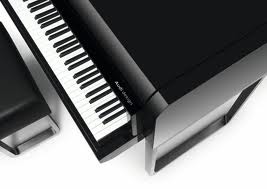 "When words leave off, music begins." Heinrich Heine
Traditional
Pietro Yon
Pietro Alessandro Yon (August 8, 1886 – November 22, 1943) was an Italian-born organist and composer who made his career in the United States.In the spring of 1907, Father John B. Young, pastor of St. Francis Xavier Church in Manhattan, was in Rome on Vatican business and additionally to seek out a replacement for his organist Gaston Dethier, who was leaving to pursue a concert career. Upon hearing Yon play, Father Young was sufficiently impressed to offer him a three-year contract. Thus Yon at age 21 came to the United States, where from 1907 until 1926 he was the organist of St. Francis Xavier Church. He joined his brother S. Constantino Yon, who had preceded him and held a similar position at St. Vincent Ferrer Church.
Liszt
Franz Liszt (October 22, 1811 – July 31, 1886) was a Hungarian composer, virtuoso pianist and teacher.
Liszt became renowned throughout Europe for his great skill as a performer; to this day, many consider him to have been the greatest pianist in history. He was also an important and influential composer, a notable piano teacher, a conductor who contributed significantly to the modern development of the art, and a benefactor to other composers and performers, notably Richard Wagner and Hector Berlioz.
As a composer, Liszt was one of the most prominent representatives of the "Neudeutsche Schule" ("New German School"). He left behind a huge and diverse oeuvre, in which he influenced his forward-looking contemporaries and anticipated some 20th-century ideas and trends. Some of his most notable contributions were the invention of the symphonic poem, developing the concept of thematic transformation as part of his experiments in musical form and making radical departures in harmony.
Liszt has most frequently been credited to have been the first pianist who gave concerts with programs consisting only of solo pieces. An example is a concert he gave on March 9, 1839, at the Palazzo Poli in Rome. Since Liszt could not find singers who — following the usual habit of the time — should have completed the program, he played four numbers all alone.
Liszt was a prolific composer. Most of his music is for the piano and much of it requires formidable technique.In his most famous and virtuosic works, he is the archetypal Romantic composer. Liszt pioneered the technique of thematic transformation, a method of development which was related to both the existing variation technique and to the new use of the Leitmotif by Richard Wagner. Liszt's piano works are usually divided into two classes. On the one hand, there are "original works", and on the other hand "transcriptions", "paraphrases" or "fantasies" on works by other composers.
Liszt became renowned throughout Europe for his great skill as a performer; to this day, many consider him to have been the greatest pianist in history. He was also an important and influential composer, a notable piano teacher, a conductor who contributed significantly to the modern development of the art, and a benefactor to other composers and performers, notably Richard Wagner and Hector Berlioz.
As a composer, Liszt was one of the most prominent representatives of the "Neudeutsche Schule" ("New German School"). He left behind a huge and diverse oeuvre, in which he influenced his forward-looking contemporaries and anticipated some 20th-century ideas and trends. Some of his most notable contributions were the invention of the symphonic poem, developing the concept of thematic transformation as part of his experiments in musical form and making radical departures in harmony.
Liszt has most frequently been credited to have been the first pianist who gave concerts with programs consisting only of solo pieces. An example is a concert he gave on March 9, 1839, at the Palazzo Poli in Rome. Since Liszt could not find singers who — following the usual habit of the time — should have completed the program, he played four numbers all alone.
Liszt was a prolific composer. Most of his music is for the piano and much of it requires formidable technique.In his most famous and virtuosic works, he is the archetypal Romantic composer. Liszt pioneered the technique of thematic transformation, a method of development which was related to both the existing variation technique and to the new use of the Leitmotif by Richard Wagner. Liszt's piano works are usually divided into two classes. On the one hand, there are "original works", and on the other hand "transcriptions", "paraphrases" or "fantasies" on works by other composers.
Lin -Manuel Miranda
Lin-Manuel Miranda is an award-winning composer, lyricist, and performer, as well as a 2015 MacArthur Foundation Award recipient. His current musical, Hamilton - with book, music and lyrics by Mr. Miranda, in addition to him originating the title role - opened on Broadway in 2015. Hamilton was awarded the 2016 Pulitzer Prize in Drama and earned a record-breaking 16 Tony Nominations, winning 11 Tony Awards including two personally for Mr. Miranda for Book and Score of a Musical. The Original Broadway Cast Recording of Hamilton won the 2016 Grammy for Best Musical Theater Album. Both Mr. Miranda and Hamilton won the 2016 Drama League Awards for Distinguished Performance and Outstanding Production of a Musical, respectively.
Frank Zappa
Frank Vincent Zappa Jr. American guitarist, singer, composer. He was born a Sicilian father and a Franco-Italian mother.
Date of birth: December 21, 1940, Baltimore, Maryland, United States Date and place of death: December 4, 1993, Hollywood Hills, Los Angeles, California, USA
Date of birth: December 21, 1940, Baltimore, Maryland, United States Date and place of death: December 4, 1993, Hollywood Hills, Los Angeles, California, USA
Christina Perri
Christina Perri (born August 19, 1986) is an American singer and songwriter from Philadelphia. Her song "Jar of Hearts" charted in the United States after it was featured on the Fox television show So You Think You Can Dance in 2010. Rolling Stone named her the "Band of the Week" on October 26, 2010. On May 10, 2011, Perri's "Jar of Hearts" was featured on Glee (Season 2, Episode 20 "Prom Queen").
OneRepublic
OneRepublic is an American Rock band formed in Colorado. After a few years of moderate success, they have since drawn mainstream attention with the release of their single "Apologize," which has sold in excess of 7 million singles worldwide. The song, according to SoundScan Data, is one of only two songs that have reached 3 million legal downloads in history. A remix of "Apologize" was featured on Timbaland's Shock Value and the band's debut album, Dreaming Out Loud, produced by Greg Wells. Their debut album was released in the United States on November 20, 2007, with international release dates staggered throughout early 2008. As of June 14, 2008, Dreaming Out Loud had sold 761,298 copies in the U.S. with the bands total album sales coming to over 1.5 million worldwide so far. The band's second single, "Stop and Stare," has also crossed the 2 million mark in terms of worldwide single sales. Their third single, "Say (All I Need)", has been released in the UK and in the U.S. Their fourth single will be "Mercy", as stated by OneRepublic's MySpace page. The video has been streamed on Youtube.com.
Current members:
Ryan Tedder – Lead vocals, Guitar, Bass Guitar, Piano, Glockenspiel, Drums (2002–present)
Zach Filkins – Guitar, vocals (2002–present)
Drew Brown – Guitar, Bass Guitar, Glockenspiel (2002–present)
Eddie Fisher – Drums, percussion (2005–present)
Brent Kutzle – Bass guitar, keyboards, cello, vocals (2007–present)
Current members:
Ryan Tedder – Lead vocals, Guitar, Bass Guitar, Piano, Glockenspiel, Drums (2002–present)
Zach Filkins – Guitar, vocals (2002–present)
Drew Brown – Guitar, Bass Guitar, Glockenspiel (2002–present)
Eddie Fisher – Drums, percussion (2005–present)
Brent Kutzle – Bass guitar, keyboards, cello, vocals (2007–present)
John Williams
John Towner Williams (born February 8, 1932) is an American composer, conductor, and pianist. In a career that spans six decades, Williams has composed many of the most famous film scores in Hollywood history, including Star Wars, Superman, Home Alone, the first three Harry Potter movies and all but two of Steven Spielberg's feature films including the Indiana Jones series, Schindler's List, E.T. the Extra-Terrestrial, Jurassic Park and Jaws. He also composed the soundtrack for the hit 1960s television series Lost in Space as well as the fanfare of the DreamWorks Pictures' logo.
Williams has composed theme music for four Olympic Games, the NBC Nightly News, the rededication of the Statue of Liberty, and numerous television series and concert pieces. He served as the principal conductor of the Boston Pops Orchestra from 1980 to 1993, and is now the orchestra's laureate conductor.
Williams is a five-time winner of the Academy Award. He has also won four Golden Globe Awards, seven BAFTA Awards and 21 Grammy Awards. With 45 Academy Award nominations, Williams is, together with composer Alfred Newman, the second most nominated person after Walt Disney. He was inducted into the Hollywood Bowl Hall of Fame in 2000, and was a recipient of the Kennedy Center Honors in 2004.
Williams has composed theme music for four Olympic Games, the NBC Nightly News, the rededication of the Statue of Liberty, and numerous television series and concert pieces. He served as the principal conductor of the Boston Pops Orchestra from 1980 to 1993, and is now the orchestra's laureate conductor.
Williams is a five-time winner of the Academy Award. He has also won four Golden Globe Awards, seven BAFTA Awards and 21 Grammy Awards. With 45 Academy Award nominations, Williams is, together with composer Alfred Newman, the second most nominated person after Walt Disney. He was inducted into the Hollywood Bowl Hall of Fame in 2000, and was a recipient of the Kennedy Center Honors in 2004.
Masato Nakamura
Masato Nakamura is a Japanese musician, bass player and record producer. Founded in 1988, J-pop is a member of Dreams Come True, which continues to sell more than 50 million CDs. Sonic the Hedgehog and Sonic the Hedgehog 2 are known outside of Japan for composing video game soundtracks.
Anatol Liadov
Anatoly Konstantinovich Lyadov or Liadov (Russian: Анато́лий Константи́нович Ля́дов; 12 May 1855 – 28 August 1914) was a Russian composer, teacher and conductor.Lyadov was born in 1855 in St. Petersburg, into a family of eminent Russian musicians. He was taught informally by his conductor step-father Konstantin Lyadov from 1860 to 1868, and then in 1870 entered the St. Petersburg Conservatory to study piano and violin.He soon gave up instrumental study to concentrate on counterpoint and fugue, although he remained a fine pianist. His natural musical talent was highly thought of by, among others, Modest Mussorgsky, and during the 1870s he became associated with the group of composers known as The Five. He entered the composition classes of Nikolai Rimsky-Korsakov, but was expelled for absenteeism in 1876. In 1878 he was readmitted to these classes to help him complete his graduation composition.
Mormon Tabernacle Choir
The Tabernacle Choir at Temple Square, formerly known as the Mormon Tabernacle Choir, is an American choir that is part of The Church of Jesus Christ of Latter-day Saints. It has performed in the Salt Lake Tabernacle for over 100 years
Angela Aki
Kiyomi Angela Aki (安藝 聖世美 アンジェラ, Aki Kiyomi Anjera, born September 15, 1977) known professionally as Angela Aki (アンジェラ・アキ, Anjera Aki), is a pop singer, songwriter and pianist.Aki was born in the small town of Itano in Tokushima Prefecture, in the mostly rural island of Shikoku. Her mother is Italian American and her father is Japanese.
Aki began to take piano lessons when she was three years old and lived in Tokushima through sixth grade and spent her junior high school days in Okayama. She has admitted that growing up in rural Japan proved very difficult, as she was bullied and she turned to the piano as an escape from the isolation she felt. She grew up listening to a mix of enka, The Carpenters and The Bee Gees.
Aki began to take piano lessons when she was three years old and lived in Tokushima through sixth grade and spent her junior high school days in Okayama. She has admitted that growing up in rural Japan proved very difficult, as she was bullied and she turned to the piano as an escape from the isolation she felt. She grew up listening to a mix of enka, The Carpenters and The Bee Gees.
Guus Meeuwis
Gustaaf Stephanus Modestus "Guus" Meeuwis is a Dutch singer-songwriter. As part of the Vagant group, he made several hits in the Netherlands and Flander in the 1990s and the first decade of the 2000s.
Yann Tiersen
Guillaume Yann Tiersen (born 23 June 1970) is a French musician and composer known internationally for composing the score to the Jean-Pierre Jeunet movie Amélie. His music is recognized by its use of a large variety of instruments in relatively minimalist compositions, often with a touch of either European classical music or French folk music, using primarily the piano, accordion or violin together with instruments like the melodica, xylophone, toy piano, ondes martenot, harpsichord and typewriter. His musical style is reminiscent of Frédéric Chopin, Erik Satie, Philip Glass and Michael Nyman.
Johann Sebastian Bach
Johann Sebastian Bach (31 March 1685 – 28 July 1750) was a German composer and musician of the Baroque period. He is known for instrumental compositions such as the Art of Fugue, the Brandenburg Concertos, and the Goldberg Variations, and for vocal music such as the St Matthew Passion and the Mass in B minor. Since the 19th-century Bach Revival he has been generally regarded as one of the greatest composers of the Western art musical canon.
John Scofield
John Scofield (born December 26, 1951), sometimes referred to as "Sco", is an American jazz-rock guitarist and composer whose music includes bebop, jazz fusion, funk, blues, soul, and rock. He has worked with Miles Davis, Dave Liebman, Joe Henderson, Charles Mingus, Joey DeFrancesco, Herbie Hancock, Eddie Palmieri, Pat Metheny, Bill Frisell, Joe Lovano, Pat Martino, Mavis Staples, Phil Lesh, Billy Cobham, Medeski Martin & Wood, George Duke, Jaco Pastorius, John Mayer, Robert Glasper, and Gov't Mule.
Irving Berlin
Irving Berlin (May 11, 1888 – September 22, 1989) was a Russian-born American composer and lyricist, and one of the most prolific American songwriters in history. Berlin was one of the few Tin Pan Alley/Broadway songwriters who wrote both lyrics and music for his songs. Although he never learned to read music beyond a rudimentary level, with the help of various uncredited musical assistants or collaborators, he eventually composed over 3,000 songs, many of which (e.g. "God Bless America", "White Christmas", "Anything You Can Do", "There's No Business Like Show Business") left an indelible mark on music and culture worldwide. He composed seventeen film scores and twenty-one Broadway scores.
Kirsten Guenther
Kirsten Guenther is the recipient of a Richard Rodgers Award, Rockefeller Grant, Dramatist Guild Fellowship, Johnny Mercer Writers Fellowship, and a Lincoln Center Honorarium. She has participated in writers’ residencies at the ASCAP/Disney workshop, the Lark Playwrights Development Center, the Dramatist Guild Fellowship program, Goodspeed Musicals, The National Alliance for Musical Theatre, The Orchard Project and Theatreworks Silicon Valley, among others.
Yasunori Mitsuda
Yasunori Mitsuda (光田 康典 Mitsuda Yasunori?, born January 21, 1972) is a Japanese video game composer, sound programmer, and musician. He has composed music for or worked on over 35 games, and has contributed to over 15 other albums. He is best known for his compositions for the video games Chrono Trigger, Chrono Cross, Shadow Hearts, Shadow Hearts: Covenant, Xenogears, Xenosaga Episode I, and Mario Party. He began composing video game music for his own games in high school, and after graduation attended Junior College of Music in Tokyo. In 1992 upon graduation he joined Square (now Square Enix) as a composer after seeing a magazine advertisement in an office he was visiting with his professor.
Despite his job title as a composer, Mitsuda worked for two years as a sound engineer. In 1994, after threatening to quit to Square's vice president, Hironobu Sakaguchi, he was assigned to compose the soundtrack to Chrono Trigger. After the game's success and the music's acclaim, he went on to compose several other games for Square, including Xenogears. In 1998 Mitsuda left Square to work as a freelance composer, founding his own music production studio, Procyon Studio, in 2001 as well as his own record label, Sleigh Bells. The company has since expanded to nine employees, and Mitsuda continues to compose for video games, as well as for anime series and his own independent albums.
Despite his job title as a composer, Mitsuda worked for two years as a sound engineer. In 1994, after threatening to quit to Square's vice president, Hironobu Sakaguchi, he was assigned to compose the soundtrack to Chrono Trigger. After the game's success and the music's acclaim, he went on to compose several other games for Square, including Xenogears. In 1998 Mitsuda left Square to work as a freelance composer, founding his own music production studio, Procyon Studio, in 2001 as well as his own record label, Sleigh Bells. The company has since expanded to nine employees, and Mitsuda continues to compose for video games, as well as for anime series and his own independent albums.
KircheSongbook
50 Great Songs of the Church - Songbook on Amazon.com. *FREE* shipping on qualifying offers. 50 Great Songs of the Church - Songbook.
ZUN
ZUN" and is the main programmer, scriptwriter, graphic artist, and music composer. His real name is Jun'ya Ōta
The Beatles
The Beatles were a pop and rock group from Liverpool, England formed in 1960. Primarily consisting of John Lennon (rhythm guitar, vocals), Paul McCartney (bass guitar, vocals), George Harrison (lead guitar, vocals) and Ringo Starr (drums, vocals) throughout their career, The Beatles are recognised for leading the mid-1960s musical "British Invasion" into the United States. Although their initial musical style was rooted in 1950s rock and roll and homegrown skiffle, the group explored genres ranging from Tin Pan Alley to psychedelic rock. Their clothes, styles, and statements made them trend-setters, while their growing social awareness saw their influence extend into the social and cultural revolutions of the 1960s. After the band broke up in 1970, all four members embarked upon solo careers.
The Beatles are one of the most commercially successful and critically acclaimed bands in the history of popular music, selling over a billion records internationally. In the United Kingdom, The Beatles released more than 40 different singles, albums, and EPs that reached number one, earning more number one albums (15) than any other group in UK chart history. This commercial success was repeated in many other countries; their record company, EMI, estimated that by 1985 they had sold over one billion records worldwide. According to the Recording Industry Association of America, The Beatles have sold more albums in the United States than any other band. In 2004, Rolling Stone magazine ranked The Beatles number one on its list of 100 Greatest Artists of All Time. According to that same magazine, The Beatles' innovative music and cultural impact helped define the 1960s, and their influence on pop culture is still evident today. In 2008, Billboard magazine released a list of top-selling Hot 100 artists to celebrate the chart's fiftieth anniversary; The Beatles reached #1 again.
The Beatles are one of the most commercially successful and critically acclaimed bands in the history of popular music, selling over a billion records internationally. In the United Kingdom, The Beatles released more than 40 different singles, albums, and EPs that reached number one, earning more number one albums (15) than any other group in UK chart history. This commercial success was repeated in many other countries; their record company, EMI, estimated that by 1985 they had sold over one billion records worldwide. According to the Recording Industry Association of America, The Beatles have sold more albums in the United States than any other band. In 2004, Rolling Stone magazine ranked The Beatles number one on its list of 100 Greatest Artists of All Time. According to that same magazine, The Beatles' innovative music and cultural impact helped define the 1960s, and their influence on pop culture is still evident today. In 2008, Billboard magazine released a list of top-selling Hot 100 artists to celebrate the chart's fiftieth anniversary; The Beatles reached #1 again.
Frank Wildhorn, Leslie Bricusse
Frank Wildhorn (born 1959) is an American composer known for his musicals and popular songs.
Leslie Bricusse (29 January 1931) is a British lyricist and composer.
Although best known for his partnership with Anthony Newley, Bricusse has worked with many other composers. Whilst at Cambridge University, he was Secretary of Footlights between 1952 and 1953 and Footlights President during the following year. He married the actress Yvonne Romain.
Leslie Bricusse (29 January 1931) is a British lyricist and composer.
Although best known for his partnership with Anthony Newley, Bricusse has worked with many other composers. Whilst at Cambridge University, he was Secretary of Footlights between 1952 and 1953 and Footlights President during the following year. He married the actress Yvonne Romain.
Lauv
Ari Staprans Leff, known professionally as Lauv, is an American singer, songwriter and record producer based in Los Angeles. His debut EP Lost in the Light was released in 2015 and his compilation album I Met You When I Was 18 was released in 2018.
Vivaldi
Antonio Lucio Vivaldi (March 4, 1678 â July 28, 1741), nicknamed il Prete Rosso ("The Red Priest"), was a Venetian priest and Baroque music composer, as well as a famous virtuoso violinist; he was born and raised in the Republic of Venice. The Four Seasons, a series of four violin concerti, is his best-known work and a highly popular Baroque piece.
Many of Vivaldi's compositions reflect a flamboyant, almost playful, exuberance. Most of Vivaldi's repertoire was rediscovered only in the first half of the 20th century in Turin and Genoa and was published in the second half. Vivaldi's music is innovative, breaking a consolidated tradition in schemes; he gave brightness to the formal and the rhythmic structure of the concerto, repeatedly looking for harmonic contrasts and innovative melodies and themes. Moreover, Vivaldi was able to compose nonacademic music, particularly meant to be appreciated by the wide public and not only by an intellectual minority. The joyful appearance of his music reveals in this regard a transmissible joy of composing; these are among the causes of the vast popularity of his music. This popularity soon made him famous in other countries such as France which was, at the time, very independent concerning its musical taste.
Vivaldi is considered one of the composers who brought Baroque music (with its typical contrast among heavy sonorities) to evolve into a classical style. Johann Sebastian Bach was deeply influenced by Vivaldi's concertos and arias (recalled in his Johannes Passion, Matthäuspassion, and cantatas). Bach transcribed a number of Vivaldi's concerti for solo keyboard, along with a number for orchestra, including the famous Concerto for Four Violins and Violoncello, Strings and Continuo (RV 580).
Many of Vivaldi's compositions reflect a flamboyant, almost playful, exuberance. Most of Vivaldi's repertoire was rediscovered only in the first half of the 20th century in Turin and Genoa and was published in the second half. Vivaldi's music is innovative, breaking a consolidated tradition in schemes; he gave brightness to the formal and the rhythmic structure of the concerto, repeatedly looking for harmonic contrasts and innovative melodies and themes. Moreover, Vivaldi was able to compose nonacademic music, particularly meant to be appreciated by the wide public and not only by an intellectual minority. The joyful appearance of his music reveals in this regard a transmissible joy of composing; these are among the causes of the vast popularity of his music. This popularity soon made him famous in other countries such as France which was, at the time, very independent concerning its musical taste.
Vivaldi is considered one of the composers who brought Baroque music (with its typical contrast among heavy sonorities) to evolve into a classical style. Johann Sebastian Bach was deeply influenced by Vivaldi's concertos and arias (recalled in his Johannes Passion, Matthäuspassion, and cantatas). Bach transcribed a number of Vivaldi's concerti for solo keyboard, along with a number for orchestra, including the famous Concerto for Four Violins and Violoncello, Strings and Continuo (RV 580).
U-KISS
U-KISS (Korean: 유키스) is a South Korean boy band formed by NH Media in 2008. The members include Shin Soohyun, Ellison Kim (also known as Eli), Kevin Woo, Shin Dongho, Lee Kiseop, Hoon and AJ (both joined the group in 2011). Alexander (Xander), and Kibum, are former members of U-KISS. U-KISS stands for Ubiquitous Korean International (Idol) Super Star. They debuted in Japan on August 15, 2008 and in South Korea on August 28, 2008. Later in late 2009, six-member U-KISS was turned into seven-member U-KISS with the addition of Lee Kiseop. When the original members Alexander Lee Eusebio and Kim Kibum's contracts were terminated in early 2011, they were replaced by Hoon and AJ. Hoon was previously known as a solo artist, while AJ is a former member of NH Media's group, PARAN.
John Lennon
John Winston Ono Lennon, MBE (born John Winston Lennon; October 9, 1940 – December 8, 1980) was an English rock musician, singer, songwriter, artist, and peace activist who gained worldwide fame as one of the founding members of The Beatles. As a member of the group, Lennon was one of the lead vocalists and co-wrote many of the band's songs with Paul McCartney.
In his solo career, Lennon wrote and recorded songs such as "Give Peace a Chance" and "Imagine". Lennon revealed his rebellious nature and wit on television, in films such as A Hard Day's Night, in books such as In His Own Write, and in press conferences and interviews. He was controversial through his work as a peace activist, artist, and author.
Lennon had two sons: Julian Lennon, with his first wife Cynthia Lennon, and Sean Ono Lennon, with his second wife, avant-garde artist Yoko Ono. After a self-imposed retirement from 1976 to 1980, Lennon reemerged with a comeback album, but was murdered one month later in New York City on 8 December 1980. In 2002, respondents to a BBC poll on the 100 Greatest Britons voted Lennon into eighth place. In 2004, Rolling Stone magazine ranked Lennon number 38 on its list of "The Immortals: The Fifty Greatest Artists of All Time" and ranked The Beatles at number one.
In his solo career, Lennon wrote and recorded songs such as "Give Peace a Chance" and "Imagine". Lennon revealed his rebellious nature and wit on television, in films such as A Hard Day's Night, in books such as In His Own Write, and in press conferences and interviews. He was controversial through his work as a peace activist, artist, and author.
Lennon had two sons: Julian Lennon, with his first wife Cynthia Lennon, and Sean Ono Lennon, with his second wife, avant-garde artist Yoko Ono. After a self-imposed retirement from 1976 to 1980, Lennon reemerged with a comeback album, but was murdered one month later in New York City on 8 December 1980. In 2002, respondents to a BBC poll on the 100 Greatest Britons voted Lennon into eighth place. In 2004, Rolling Stone magazine ranked Lennon number 38 on its list of "The Immortals: The Fifty Greatest Artists of All Time" and ranked The Beatles at number one.
M. Ferrero
M. Ferrero Musical artist Albums: Drama, Penita Pena, Los Niños de la Crisis Songs Una Botella por Amor Una Botella por Amor · 2018 Tú Me Enseñaste Drama · 2019 En Coma Drama · 2019.
Fletcher Henderson
James Fletcher Hamilton Henderson, Jr. (December 18, 1897 – December 28, 1952) was an American pianist, bandleader, arranger and composer, important in the development of big band jazz and swing music. His was one of the most prolific black orchestras and his influence was vast. He was often known as "Smack" Henderson (apparently named due to his college baseball hitting skills).
David Lanz
David Lanz (born June 28, 1950 in Seattle, Washington) is a Grammy-nominated New Age pianist. He has released 13 albums, each having some chart success. His most famous album, Cristofori's Dream, topped the New Age charts in 1988, which was Number One on Billboard's first adult alternative/New Age chart for 27 weeks and eventually sold platinum. Natural States peaked at place 125 on the Billboard 200.
Lanz's goal is to have his music create an atmosphere of enlightenment. In an interview with Barnes & Noble, Lanz stated that he wanted to create an atmosphere similar to that of Steven Halpern's music, but with a "more popular hook in it".
Lanz has said himself, " is the most divinely inspired instrument on the planet. It presents a great attraction to our left-right brain relationship. My goal is to create entertainment that also provides enlightenment."
Lanz's goal is to have his music create an atmosphere of enlightenment. In an interview with Barnes & Noble, Lanz stated that he wanted to create an atmosphere similar to that of Steven Halpern's music, but with a "more popular hook in it".
Lanz has said himself, " is the most divinely inspired instrument on the planet. It presents a great attraction to our left-right brain relationship. My goal is to create entertainment that also provides enlightenment."
Lenny Kravitz
Leonard Albert "Lenny" Kravitz (born May 26, 1964) is an American singer-songwriter, multi-instrumentalist, record producer, and arranger whose "retro" style incorporates elements of rock, soul, funk, reggae, hard rock, psychedelic, Folk, and ballads.
In addition to singing lead and backing vocals, Kravitz often plays all the guitar, bass, drums, keyboards, and percussion himself when recording. He won the Grammy Award for "Best Male Rock Vocal Performance" four years in a row from 1999 to 2002. He has sold an estimated 32 millions albums worldwide.
In addition to singing lead and backing vocals, Kravitz often plays all the guitar, bass, drums, keyboards, and percussion himself when recording. He won the Grammy Award for "Best Male Rock Vocal Performance" four years in a row from 1999 to 2002. He has sold an estimated 32 millions albums worldwide.
Bee Gees
The Bee Gees were a singing trio of brothers — Barry, Robin, and Maurice Gibb. They were born on the Isle of Man to English parents, lived in Chorlton, Manchester, England and during their childhood years moved to Brisbane, Australia, where they began their musical careers. Their worldwide success came when they returned to England and signed with producer Robert Stigwood.
The multiple award-winning group was successful for most of its forty years of recording music, but it had two distinct periods of exceptional success: as a harmonic "soft rock" act in the late 1960s and early 1970s, and as the foremost stars of the disco music era in the late 1970s.
No matter the style, the Bee Gees sang three-part tight harmonies that were instantly recognizable; as brothers, their voices blended perfectly, in the same way that The Everly Brothers and Beach Boys did. Barry sang lead on many songs, and an R&B falsetto introduced in the disco years; Robin provided the clear vibrato lead that was a hallmark of their pre-disco music; Maurice sang high and low harmonies throughout their career. The three brothers co-wrote most of their hits, and they said that they felt like they became 'one person' when they were writing. The group's name was retired after Maurice died in January 2003.
The Bee Gees were inducted into The Rock and Roll Hall of Fame in 1997; fittingly, the presenter of the award to "Britain's first family of harmony" was Brian Wilson, leader of the Beach Boys, America's first family of rock harmony.
It has been estimated that the Bee Gees' record sales total more than 220 million, easily making them one of the best-selling music artists of all-time. The above figure in record sales does not include record sales for artists for whom they have written and with whom they have collaborated. Their 1997 Rock and Roll Hall of Fame citation says "Only Elvis Presley, The Beatles, Michael Jackson, Garth Brooks and Paul McCartney have outsold the Bee Gees".
The multiple award-winning group was successful for most of its forty years of recording music, but it had two distinct periods of exceptional success: as a harmonic "soft rock" act in the late 1960s and early 1970s, and as the foremost stars of the disco music era in the late 1970s.
No matter the style, the Bee Gees sang three-part tight harmonies that were instantly recognizable; as brothers, their voices blended perfectly, in the same way that The Everly Brothers and Beach Boys did. Barry sang lead on many songs, and an R&B falsetto introduced in the disco years; Robin provided the clear vibrato lead that was a hallmark of their pre-disco music; Maurice sang high and low harmonies throughout their career. The three brothers co-wrote most of their hits, and they said that they felt like they became 'one person' when they were writing. The group's name was retired after Maurice died in January 2003.
The Bee Gees were inducted into The Rock and Roll Hall of Fame in 1997; fittingly, the presenter of the award to "Britain's first family of harmony" was Brian Wilson, leader of the Beach Boys, America's first family of rock harmony.
It has been estimated that the Bee Gees' record sales total more than 220 million, easily making them one of the best-selling music artists of all-time. The above figure in record sales does not include record sales for artists for whom they have written and with whom they have collaborated. Their 1997 Rock and Roll Hall of Fame citation says "Only Elvis Presley, The Beatles, Michael Jackson, Garth Brooks and Paul McCartney have outsold the Bee Gees".
Jeff
Jeff "Tain" Watts is a jazz drummer who has performed with Wynton Marsalis, Branford Marsalis, Betty Carter, Michael Brecker, Alice Coltrane, Ravi Coltrane, and others.Watts got the nickname "Tain" from Kenny Kirkland when they were on tour in Florida and drove past a Chieftain gas station. He was given a Guggenheim fellowship in music composition in 2017. Watts attended Berklee College of Music, where he met collaborator Branford Marsalis.
Buddy Holly
Charles Hardin Holley (September 7, 1936 – February 3, 1959), known professionally as Buddy Holly, was an American singer-songwriter who was a central and pioneering figure of mid-1950s rock and roll. He was born in Lubbock, Texas, to a musical family during the Great Depression, and learned to play guitar and sing alongside his siblings. His style was influenced by gospel music, country music, and rhythm and blues acts, which he performed in Lubbock with his friends from high school.
Chopin
Frédéric Chopin (1 March 1810 – 17 October 1849) was a Polish composer and virtuoso pianist of the Romantic period. He is widely regarded as the greatest Polish composer, and ranks as one of music's greatest tone poets.
He was born in the village of Żelazowa Wola, in the Duchy of Warsaw, to a Polish mother and French-expatriate father, and in his early life was regarded as a child-prodigy pianist. In November 1830, at the age of 20, Chopin went abroad; following the suppression of the Polish November Uprising of 1830–31, he became one of many expatriates of the Polish "Great Emigration."
In Paris, he made a comfortable living as a composer and piano teacher, while giving few public performances. A Polish patriot,
Chopin's extant compositions were written primarily for the piano as a solo instrument. Though technically demanding, Chopin's style emphasizes nuance and expressive depth rather than virtuosity. Chopin invented musical forms such as the ballade and was responsible for major innovations in forms such as the piano sonata, waltz, nocturne, étude, impromptu and prelude. His works are mainstays of Romanticism in 19th-century classical music.
He was born in the village of Żelazowa Wola, in the Duchy of Warsaw, to a Polish mother and French-expatriate father, and in his early life was regarded as a child-prodigy pianist. In November 1830, at the age of 20, Chopin went abroad; following the suppression of the Polish November Uprising of 1830–31, he became one of many expatriates of the Polish "Great Emigration."
In Paris, he made a comfortable living as a composer and piano teacher, while giving few public performances. A Polish patriot,
Chopin's extant compositions were written primarily for the piano as a solo instrument. Though technically demanding, Chopin's style emphasizes nuance and expressive depth rather than virtuosity. Chopin invented musical forms such as the ballade and was responsible for major innovations in forms such as the piano sonata, waltz, nocturne, étude, impromptu and prelude. His works are mainstays of Romanticism in 19th-century classical music.
Nick Robertson
Nick Robertson Musical artist Songs Your God Will Come Get the Truth · 2010 Identity Crisis Identity Crisis / Cattleships & Bruisers · 2006 Walking with Angels Lazy Sundays · 2010
Cathy Dennis
Catherine Roseanne Dennis (born 25 March 1969) is a British singer, songwriter, record producer and actress. After a moderately successful international solo career, Dennis later achieved great success as a writer of pop songs, scoring eight UK number ones and winning five Ivor Novello Awards.in 2004, Dennis was listed 66th in the Q Magazine list of the top 100 most influential people in music and in 2006, she won the UK music industry's Woman of the Year Award.
J. S. Bach
Johann Sebastian Bach (21 March 1685, O.S.31 March 1685, N.S. – 28 July 1750, N.S.) was a German composer, organist, harpsichordist, violist, and violinist whose sacred and secular works for choir, orchestra, and solo instruments drew together the strands of the Baroque period and brought it to its ultimate maturity. Although he did not introduce new forms, he enriched the prevailing German style with a robust contrapuntal technique, an unrivalled control of harmonic and motivic organisation, and the adaptation of rhythms, forms and textures from abroad, particularly from Italy and France.
Revered for their intellectual depth, technical command and artistic beauty, Bach's works include the Brandenburg Concertos, the Goldberg Variations, the Partitas, The Well-Tempered Clavier, the Mass in B minor, the St Matthew Passion, the St John Passion, the Magnificat, A Musical Offering, The Art of Fugue, the English and French Suites, the Sonatas and Partitas for solo violin, the Cello Suites, more than 200 surviving cantatas, and a similar number of organ works, including the famous Toccata and Fugue in D minor and Passacaglia and Fugue in C minor, as well as the Great Eighteen Chorale Preludes and Organ Mass.
Bach's abilities as an organist were highly respected throughout Europe during his lifetime, although he was not widely recognised as a great composer until a revival of interest and performances of his music in the first half of the 19th century. He is now generally regarded as one of the main composers of the Baroque style, and as one of the greatest composers of all time.
Revered for their intellectual depth, technical command and artistic beauty, Bach's works include the Brandenburg Concertos, the Goldberg Variations, the Partitas, The Well-Tempered Clavier, the Mass in B minor, the St Matthew Passion, the St John Passion, the Magnificat, A Musical Offering, The Art of Fugue, the English and French Suites, the Sonatas and Partitas for solo violin, the Cello Suites, more than 200 surviving cantatas, and a similar number of organ works, including the famous Toccata and Fugue in D minor and Passacaglia and Fugue in C minor, as well as the Great Eighteen Chorale Preludes and Organ Mass.
Bach's abilities as an organist were highly respected throughout Europe during his lifetime, although he was not widely recognised as a great composer until a revival of interest and performances of his music in the first half of the 19th century. He is now generally regarded as one of the main composers of the Baroque style, and as one of the greatest composers of all time.
Edgar Winter
Edgar Holland Winter (born December 28, 1946) is an American rock and blues musician. He is known for being a multi-instrumentalist — keyboardist, guitarist, saxophonist and percussionist — as well as a singer. His success peaked in the 1970s with his band, The Edgar Winter Group, and their popular songs "Frankenstein" and "Free Ride".
Friedrich Gulda
Friedrich Gulda (16 May 1930 – 27 January 2000) was an Austrian pianist who performed in both the classical and jazz fields.
Born in Vienna as the son of a teacher, Gulda began learning to play the piano from Felix Pazofsky at the Wiener Volkskonservatorium, aged 7; in 1942, he entered the Vienna Music Academy, where he studied piano and musical theory under Bruno Seidlhofer and Joseph Marx.
He won first prize at the International Competition in Geneva in 1946. Initially the jury preferred the Belgian pianist Lode Backx (b. 1922), but when the final vote was taken, Gulda was the winner. One of the jurors, Eileen Joyce, who favoured Backx, stormed out and created a minor international incident by claiming the other jurors were "nobbled" by Gulda's supporters. Gulda began going on concert tours throughout the world. Together with Jörg Demus and Paul Badura-Skoda, Gulda formed what became known as the "Viennese troika".
Although most famous for his Mozart and Beethoven interpretations, Gulda also performed the music of J. S. Bach (often on clavichord), Schubert, Chopin, Schumann, Debussy and Ravel.
From the 1950s on he cultivated an interest in jazz, performing with many Viennese musicians like Alexander Jenner, writing several songs and instrumental pieces himself and combining jazz and classical music in his concerts at times. Gulda wrote a Prelude and Fugue with a theme suggesting swing. Keith Emerson performed it on Emerson, Lake & Palmer's The Return of the Manticore. In addition, Gulda composed "Variations on The Doors' 'Light My Fire'". Another version can be found on As You Like It (1970), an album with standards such as "'Round Midnight" and "What Is This Thing Called Love?"
In 1982, Gulda teamed up with jazz pianist Chick Corea, who found himself in between the breakup of Return to Forever and the formation of his Elektric Band. Issued on The Meeting (Philips, 1984), Gulda and Corea communicate in lengthy improvisations mixing jazz ("Some Day My Prince Will Come" and the lesser known Miles Davis song "Put Your Foot Out") and classical music (Brahms' "Wiegenlied" ). In the late 1990s, Gulda organised rave parties, where he performed with the support of several DJs and Go-Go dancers.
It was this unorthodox practice that, among other things like his refusal to follow clothing conventions or scheduled concert programmes, earned him the nickname "terrorist pianist"; Gulda had a strong dislike of authorities like his alma mater, the Vienna Music Academy, the Beethoven Ring of which he was offered in recognition of his performances but which he refused. He even faked his own death followed by a resurrection party at the Vienna Konzerthaus in 1999, cementing his status as the enfant terrible among pianists. Nevertheless, Gulda is widely regarded as one of the most outstanding piano players of the 20th century. His piano students included Martha Argerich and the conductor Claudio Abbado.
Born in Vienna as the son of a teacher, Gulda began learning to play the piano from Felix Pazofsky at the Wiener Volkskonservatorium, aged 7; in 1942, he entered the Vienna Music Academy, where he studied piano and musical theory under Bruno Seidlhofer and Joseph Marx.
He won first prize at the International Competition in Geneva in 1946. Initially the jury preferred the Belgian pianist Lode Backx (b. 1922), but when the final vote was taken, Gulda was the winner. One of the jurors, Eileen Joyce, who favoured Backx, stormed out and created a minor international incident by claiming the other jurors were "nobbled" by Gulda's supporters. Gulda began going on concert tours throughout the world. Together with Jörg Demus and Paul Badura-Skoda, Gulda formed what became known as the "Viennese troika".
Although most famous for his Mozart and Beethoven interpretations, Gulda also performed the music of J. S. Bach (often on clavichord), Schubert, Chopin, Schumann, Debussy and Ravel.
From the 1950s on he cultivated an interest in jazz, performing with many Viennese musicians like Alexander Jenner, writing several songs and instrumental pieces himself and combining jazz and classical music in his concerts at times. Gulda wrote a Prelude and Fugue with a theme suggesting swing. Keith Emerson performed it on Emerson, Lake & Palmer's The Return of the Manticore. In addition, Gulda composed "Variations on The Doors' 'Light My Fire'". Another version can be found on As You Like It (1970), an album with standards such as "'Round Midnight" and "What Is This Thing Called Love?"
In 1982, Gulda teamed up with jazz pianist Chick Corea, who found himself in between the breakup of Return to Forever and the formation of his Elektric Band. Issued on The Meeting (Philips, 1984), Gulda and Corea communicate in lengthy improvisations mixing jazz ("Some Day My Prince Will Come" and the lesser known Miles Davis song "Put Your Foot Out") and classical music (Brahms' "Wiegenlied" ). In the late 1990s, Gulda organised rave parties, where he performed with the support of several DJs and Go-Go dancers.
It was this unorthodox practice that, among other things like his refusal to follow clothing conventions or scheduled concert programmes, earned him the nickname "terrorist pianist"; Gulda had a strong dislike of authorities like his alma mater, the Vienna Music Academy, the Beethoven Ring of which he was offered in recognition of his performances but which he refused. He even faked his own death followed by a resurrection party at the Vienna Konzerthaus in 1999, cementing his status as the enfant terrible among pianists. Nevertheless, Gulda is widely regarded as one of the most outstanding piano players of the 20th century. His piano students included Martha Argerich and the conductor Claudio Abbado.
Ravel
Joseph-Maurice Ravel (March 7, 1875 – December 28, 1937) was a French composer of Impressionist music known especially for his melodies, orchestral and instrumental textures and effects. Much of his piano music, chamber music, vocal music and orchestral music has entered the standard concert repertoire.
Ravel's piano compositions, such as Jeux d'eau, Miroirs and Gaspard de la Nuit, demand considerable virtuosity from the performer, and his orchestral music, including Daphnis et Chloé and his arrangement of Modest Mussorgsky's Pictures at an Exhibition, uses a variety of sound and instrumentation very effectively.
Ravel is perhaps known best for his orchestral work, Boléro (1928), which he considered trivial and once described as "a piece for orchestra without music."
According to SACEM, Ravel's estate earns more royalties than that of any other French musician. According to international copyright law, Ravel's works are public domain since January 1, 2008 in most countries. In France, due to anomalous copyright law extensions to account for the two world wars, they will not enter the public domain until 2015.
Ravel's piano compositions, such as Jeux d'eau, Miroirs and Gaspard de la Nuit, demand considerable virtuosity from the performer, and his orchestral music, including Daphnis et Chloé and his arrangement of Modest Mussorgsky's Pictures at an Exhibition, uses a variety of sound and instrumentation very effectively.
Ravel is perhaps known best for his orchestral work, Boléro (1928), which he considered trivial and once described as "a piece for orchestra without music."
According to SACEM, Ravel's estate earns more royalties than that of any other French musician. According to international copyright law, Ravel's works are public domain since January 1, 2008 in most countries. In France, due to anomalous copyright law extensions to account for the two world wars, they will not enter the public domain until 2015.
Gabriel Faure
Gabriel Urbain Fauré (12 May 1845 – 4 November 1924) was a French composer, organist, pianist, and teacher. He was the foremost French composer of his generation, and his musical style influenced many 20th century composers. His harmonic and melodic language affected how harmony was later taught.
Stephen Sondheim
Stephen Joshua Sondheim (born March 22, 1930) is an American composer and lyricist for stage and film. He is the winner of an Academy Award, multiple Tony Awards (nine, more than any other composer) including the Special Tony Award for Lifetime Achievement in the Theatre (received 2008), multiple Grammy Awards, and a Pulitzer Prize. He has been described as "the greatest and perhaps best-known artist in the American musical theatre." His most famous scores include (as composer/lyricist) A Funny Thing Happened on the Way to the Forum, Company, Follies, A Little Night Music, Sweeney Todd, Sunday in the Park with George, Into the Woods, and Assassins, as well as the lyrics for West Side Story and Gypsy. He was president of the Dramatists Guild from 1973 to 1981.
David Sides
Growing up in a musical family, David began teaching himself how to play the piano at the age of 10, after being inspired by The Lion King motion picture soundtrack. His obsession with the film and its music motivated him to work through his struggles of learning how to play his favorite songs, all by ear. Over time his ability to play by ear drastically improved as he put his ear to the test every Sunday while playing at church, and as he challenged himself to learn anything he'd hear on the radio.After High School, David enrolled at the University of California, Riverside as a Math major. It wasn't until his Junior year that he decided to switch to Music in hopes of one day earning a living while doing something he loved. It was during this time that he began entering in school talent shows and competitions, two of which he won. Just before finishing college he was encouraged by his friends to begin uploading videos of himself playing his piano covers on a new and slowly growing website: YouTube.
Israel Houghton
Israel Houghton
Israel Houghton.jpeg
Houghton in 2015
Background information
Also known as Israel
Born May 19, 1971 (age 48)
Oceanside, California, U.S.
Genres
Contemporary Christian music gospel praise & worship soul
Occupation(s)
Singer songwriter producer arranger
Instruments Vocals, guitar, keyboards
Years active 1997–present
Labels Integrity, RCA Inspiration
Website israelhoughton.net
Israel Houghton (/ˈhoʊtən/; born May 19, 1971) is an American Christian music singer, songwriter, producer and worship leader. Houghton is usually credited as Israel & New Breed.
Contents
1 Musical career
1.1 Discography
1.1.1 Other recordings
2 Personal life
3 Awards and nominations
4 References
5 External links
Musical career
Houghton produced an album by Michael Gungor, Bigger Than My Imagination, which was described as "one of the year's best worship albums" in a 2003 Christianity Today review.
Israel Houghton.jpeg
Houghton in 2015
Background information
Also known as Israel
Born May 19, 1971 (age 48)
Oceanside, California, U.S.
Genres
Contemporary Christian music gospel praise & worship soul
Occupation(s)
Singer songwriter producer arranger
Instruments Vocals, guitar, keyboards
Years active 1997–present
Labels Integrity, RCA Inspiration
Website israelhoughton.net
Israel Houghton (/ˈhoʊtən/; born May 19, 1971) is an American Christian music singer, songwriter, producer and worship leader. Houghton is usually credited as Israel & New Breed.
Contents
1 Musical career
1.1 Discography
1.1.1 Other recordings
2 Personal life
3 Awards and nominations
4 References
5 External links
Musical career
Houghton produced an album by Michael Gungor, Bigger Than My Imagination, which was described as "one of the year's best worship albums" in a 2003 Christianity Today review.
Boyzone
Boyzone is a popular Irish boy band of the 1990s that reformed in 2007. They had major success in the UK and Ireland and differing levels of success in parts of Europe and Asia with six #1 hit singles in the UK. By 2007 they had sold over 15 million records.
Boyzone was put together in 1993 by Louis Walsh who is also known for managing Johnny Logan and Westlife. Before even recording any material they made a now infamous appearance on RTÉ's The Late Late Show. Their first album Said and Done was released in 1995 and the following two studio albums in 1996 and 1998. Four compilation albums have been released, the latest being The Silver Collection in summer 2007.
Boyzone was put together in 1993 by Louis Walsh who is also known for managing Johnny Logan and Westlife. Before even recording any material they made a now infamous appearance on RTÉ's The Late Late Show. Their first album Said and Done was released in 1995 and the following two studio albums in 1996 and 1998. Four compilation albums have been released, the latest being The Silver Collection in summer 2007.
Beatles
The Beatles were an English rock band formed in Liverpool in 1960. Their best-known lineup, consisting of John Lennon, Paul McCartney, George Harrison, and Ringo Starr, became the greatest and most influential act of the rock era, introducing more innovations into popular music than any other rock band of the 20th century. Rooted in skiffle and 1950s rock and roll, the Beatles later utilized several genres, ranging from pop ballads to psychedelic rock, often incorporating classical elements in innovative ways. In the early 1960s, their enormous popularity first emerged as "Beatlemania", but as their songwriting grew in sophistication, they came to be perceived by many fans and cultural observers as an embodiment of the ideals shared by the era's sociocultural revolutions.
The band built their reputation playing clubs in Liverpool and Hamburg over a three-year period from 1960. Manager Brian Epstein moulded them into a professional act and producer George Martin enhanced their musical potential. They gained popularity in the United Kingdom after their first modest hit, "Love Me Do", in late 1962. They acquired the nickname the "Fab Four" as Beatlemania grew in Britain over the following year, and by early 1964 they had become international stars, leading the "British Invasion" of the United States pop market. From 1965 on, the Beatles produced what many critics consider their finest material, including the innovative and widely influential albums Rubber Soul (1965), Revolver (1966), Sgt Pepper's Lonely Hearts Club Band (1967), The Beatles (1968), and Abbey Road (1969). After their break-up in 1970, they each enjoyed successful musical careers. Lennon was shot and killed in December 1980, and Harrison died of lung cancer in November 2001. McCartney and Starr remain musically active.
The band built their reputation playing clubs in Liverpool and Hamburg over a three-year period from 1960. Manager Brian Epstein moulded them into a professional act and producer George Martin enhanced their musical potential. They gained popularity in the United Kingdom after their first modest hit, "Love Me Do", in late 1962. They acquired the nickname the "Fab Four" as Beatlemania grew in Britain over the following year, and by early 1964 they had become international stars, leading the "British Invasion" of the United States pop market. From 1965 on, the Beatles produced what many critics consider their finest material, including the innovative and widely influential albums Rubber Soul (1965), Revolver (1966), Sgt Pepper's Lonely Hearts Club Band (1967), The Beatles (1968), and Abbey Road (1969). After their break-up in 1970, they each enjoyed successful musical careers. Lennon was shot and killed in December 1980, and Harrison died of lung cancer in November 2001. McCartney and Starr remain musically active.
Jules Massenet
Jules (Émile Frédéric) Massenet (May 12, 1842 – August 13, 1912) was a French composer best known for his operas. His compositions were very popular in the late 19th and early 20th centuries, and he ranks as one of the greatest melodists of his era. Soon after his death, Massenet's style went out of fashion, and many of his operas fell into almost total oblivion. Apart from Manon and Werther, his works were rarely performed. However, since the mid-1970s, many operas of his such as Thaïs and Esclarmonde have undergone periodic revivals.
Bud Powell
Earl Rudolph "Bud" Powell (September 27, 1924 – July 31, 1966) was an American jazz pianist. Though Thelonious Monk was a close friend and influence, his greatest piano influence was Art Tatum.
Along with Charlie Parker, Monk, and Dizzy Gillespie, Powell was a leading figure in the development of modern jazz, or bebop. His virtuosity led many to call him the Charlie Parker of the piano. Powell was also a composer, and many jazz critics credit his works and his playing as having "greatly extended the range of jazz harmony."
Along with Charlie Parker, Monk, and Dizzy Gillespie, Powell was a leading figure in the development of modern jazz, or bebop. His virtuosity led many to call him the Charlie Parker of the piano. Powell was also a composer, and many jazz critics credit his works and his playing as having "greatly extended the range of jazz harmony."
Jerry Sperling
Sperling, Jerome 'Jerry' 22.oct.1929- USA NY, New York Brooklyn. singer, guitarist, 1933-1940 lived with his parents at 100 Clymer Street in Brooklyn, 1940s he attended Kinderwelt at West Point NY, 1993-2002 residing in Floral Park Queens Long Island, published with Tara Publications Jewish Music in Cedarhurst Long Island, worked at Jerry Sperling Music, attended Queensborough Community College in Bayside Queens Long Island ; son of electrician Benjamin Sperling (Poland 1903-) and Hilda (Russia 1894-) ; brother of Rita Sperling (1935-)
Michael Stanley
Michael Stanley Gee (March 25, 1948 – March 5, 2021) was an American singer-songwriter, musician, and radio personality. Both as a solo artist and with the Michael Stanley Band (MSB), his brand of heartland rock was popular in Cleveland, Ohio and around the American Midwest in the 1970s and 1980s.
Ludwig van Beethoven
Ludwig van Beethoven (/ˈlʊdvɪɡ væn ˈbeɪt(h)oʊvən/ (About this soundlisten); German: (About this soundlisten); baptised 17 December 1770 – 26 March 1827) was a German composer and pianist. A crucial figure in the transition between the classical and romantic eras in classical music, he remains one of the most recognized and influential musicians of this period, and is considered to be one of the greatest composers of all time.
Beethoven was born in Bonn, the capital of the Electorate of Cologne, and part of the Holy Roman Empire. He displayed his musical talents at an early age and was vigorously taught by his father Johann van Beethoven, and was later taught by composer and conductor Christian Gottlob Neefe. At age 21, he moved to Vienna and studied composition with Joseph Haydn. Beethoven then gained a reputation as a virtuoso pianist, and was soon courted by Prince Lichnowsky for compositions, which resulted in Opus 1 in 1795.
Beethoven was born in Bonn, the capital of the Electorate of Cologne, and part of the Holy Roman Empire. He displayed his musical talents at an early age and was vigorously taught by his father Johann van Beethoven, and was later taught by composer and conductor Christian Gottlob Neefe. At age 21, he moved to Vienna and studied composition with Joseph Haydn. Beethoven then gained a reputation as a virtuoso pianist, and was soon courted by Prince Lichnowsky for compositions, which resulted in Opus 1 in 1795.
Evanescence
Evanescence is an American rock band founded in Little Rock, Arkansas in 1995 by singer/pianist Amy Lee and guitarist Ben Moody.
After recording two private EPs and a demo CD named Origin, with the help of Bigwig Enterprises in 2000, the band released their first full-length album, Fallen, on Wind-up Records in 2003. Fallen sold more than 15 million copies worldwide and helped the band win two Grammy Awards. A year later, Evanescence released their first live album, Anywhere but Home, which sold more than one million copies worldwide. In 2006, the band released their second studio album, The Open Door, which has sold more than four million copies.
The band has suffered several line-up changes, including co-founder Moody leaving in 2003, followed by guitarist John LeCompt and drummer Rocky Gray in 2007. Lee is now the only original member of Evanescence remaining in the band.
After recording two private EPs and a demo CD named Origin, with the help of Bigwig Enterprises in 2000, the band released their first full-length album, Fallen, on Wind-up Records in 2003. Fallen sold more than 15 million copies worldwide and helped the band win two Grammy Awards. A year later, Evanescence released their first live album, Anywhere but Home, which sold more than one million copies worldwide. In 2006, the band released their second studio album, The Open Door, which has sold more than four million copies.
The band has suffered several line-up changes, including co-founder Moody leaving in 2003, followed by guitarist John LeCompt and drummer Rocky Gray in 2007. Lee is now the only original member of Evanescence remaining in the band.
Jo Privat
Jo Privat was a French accordionist and composer. Privat was born at Ménilmontant, Paris. He played for many years at Balajo, a musette club in Paris where he worked with Django Reinhardt, the Ferret Brothers, Didier Roussin and Patrick Saussois.
Patrick Doyle
Patrick Doyle is a Scottish film composer. A longtime collaborator of actor-director Kenneth Branagh, Doyle is known for his work composing for films such as Henry V, Sense and Sensibility, Hamlet, and Gosford Park, as well as Harry Potter and the Goblet of Fire, Eragon, Rise of the Planet of the Apes, and Thor.
George Gershwin
George Gershwin (September 26, 1898 – July 11, 1937) was an American composer. He wrote most of his vocal and theatrical works in collaboration with his elder brother, lyricist Ira Gershwin. George Gershwin composed songs both for Broadway and for the classical concert hall. He also wrote popular songs with success.
Many of his compositions have been used on television and in numerous films, and many became jazz standards. The jazz singer Ella Fitzgerald recorded many of the Gershwins' songs on her 1959 Gershwin Songbook (arranged by Nelson Riddle). Countless singers and musicians have recorded Gershwin songs, including Fred Astaire, Louis Armstrong, Al Jolson, Bobby Darin, Art Tatum, Bing Crosby, Janis Joplin, John Coltrane, Frank Sinatra, Billie Holiday, Sam Cooke, Miles Davis, Herbie Hancock, Madonna, Judy Garland, Julie Andrews, Barbra Streisand, Marni Nixon, Natalie Cole, Patti Austin, Nina Simone, Maureen McGovern, John Fahey, The Residents, Than & Sam, Sublime, and Sting. A residential building is named after him on the Stony Brook University campus.
Many of his compositions have been used on television and in numerous films, and many became jazz standards. The jazz singer Ella Fitzgerald recorded many of the Gershwins' songs on her 1959 Gershwin Songbook (arranged by Nelson Riddle). Countless singers and musicians have recorded Gershwin songs, including Fred Astaire, Louis Armstrong, Al Jolson, Bobby Darin, Art Tatum, Bing Crosby, Janis Joplin, John Coltrane, Frank Sinatra, Billie Holiday, Sam Cooke, Miles Davis, Herbie Hancock, Madonna, Judy Garland, Julie Andrews, Barbra Streisand, Marni Nixon, Natalie Cole, Patti Austin, Nina Simone, Maureen McGovern, John Fahey, The Residents, Than & Sam, Sublime, and Sting. A residential building is named after him on the Stony Brook University campus.