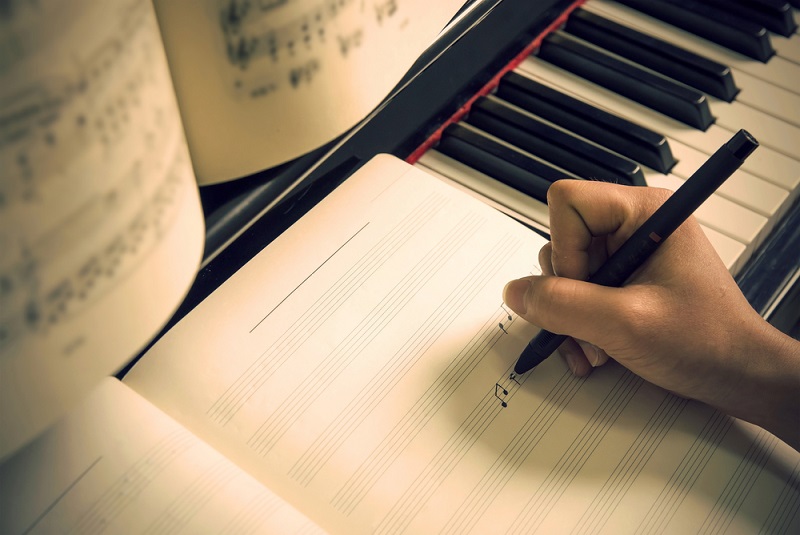
 Sheet Music Giant is a site for those who wants to access popular sheet music easily,
letting them download the sheet music for free for trial purposes.
It's completely free to download and try the listed sheet music, but you have to delete the files after 24 hours of trial.
Don't forget, if you like the piece of music you have just learned playing,
treat the artist with respect, and go buy the original sheet music.
Sheet Music Giant is a site for those who wants to access popular sheet music easily,
letting them download the sheet music for free for trial purposes.
It's completely free to download and try the listed sheet music, but you have to delete the files after 24 hours of trial.
Don't forget, if you like the piece of music you have just learned playing,
treat the artist with respect, and go buy the original sheet music.
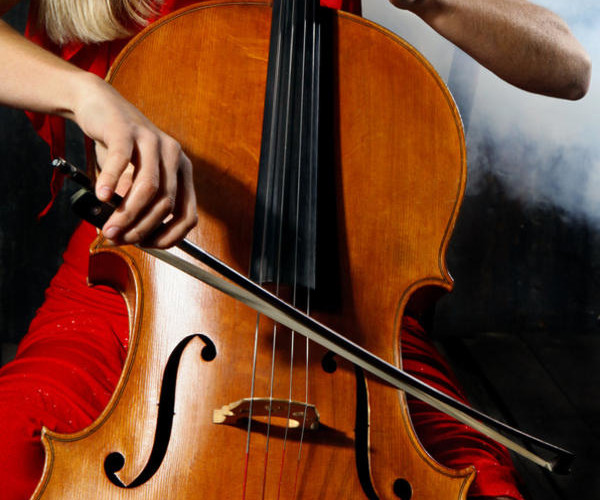
Cello Sheet Music
 "... if you wanted to chart new territories and head off over the horizon, you had to make sure you weren't overly influenced by what others were doing ... so it didn't matter what other bands were doing ... we did what we were doing ..." Jimmy Page - Led Zeppelin
Gustav Mahler
Gustav Mahler was an Austrian late-Romantic composer, and one of the leading conductors of his generation. As a composer he acted as a bridge between the 19th century Austro-German tradition and the modernism of the early 20th century.
The Doors
The Doors were an American rock band formed in 1965 in Los Angeles by vocalist Jim Morrison, keyboardist Ray Manzarek, drummer John Densmore, and guitarist Robby Krieger. They were considered a controversial band, due mostly to Morrison's cryptic lyrics and unpredictable stage persona. The band dissolved in March 1973, short of two years after Morrison's death in July 1971. According to the RIAA, they have sold over 32 million albums in the US alone.
The Doors' music during the 1965-68 era was a fusion of hard rock, blues-rock, and acid rock. The origins of The Doors lay in a chance meeting between acquaintances and fellow UCLA film school alumni Jim Morrison and Ray Manzarek on Venice Beach California in July 1965. Morrison told Manzarek he had been writing songs (Morrison said "I was taking notes at a fantasic rock-n-roll concert going on in my head") and, at Manzarek's encouragement, sang "Moonlight Drive". Impressed by Morrison's lyrics, Manzarek suggested they form a band.
The Doors' music during the 1965-68 era was a fusion of hard rock, blues-rock, and acid rock. The origins of The Doors lay in a chance meeting between acquaintances and fellow UCLA film school alumni Jim Morrison and Ray Manzarek on Venice Beach California in July 1965. Morrison told Manzarek he had been writing songs (Morrison said "I was taking notes at a fantasic rock-n-roll concert going on in my head") and, at Manzarek's encouragement, sang "Moonlight Drive". Impressed by Morrison's lyrics, Manzarek suggested they form a band.
Vivaldi
Antonio Lucio Vivaldi (March 4, 1678 â July 28, 1741), nicknamed il Prete Rosso ("The Red Priest"), was a Venetian priest and Baroque music composer, as well as a famous virtuoso violinist; he was born and raised in the Republic of Venice. The Four Seasons, a series of four violin concerti, is his best-known work and a highly popular Baroque piece.
Many of Vivaldi's compositions reflect a flamboyant, almost playful, exuberance. Most of Vivaldi's repertoire was rediscovered only in the first half of the 20th century in Turin and Genoa and was published in the second half. Vivaldi's music is innovative, breaking a consolidated tradition in schemes; he gave brightness to the formal and the rhythmic structure of the concerto, repeatedly looking for harmonic contrasts and innovative melodies and themes. Moreover, Vivaldi was able to compose nonacademic music, particularly meant to be appreciated by the wide public and not only by an intellectual minority. The joyful appearance of his music reveals in this regard a transmissible joy of composing; these are among the causes of the vast popularity of his music. This popularity soon made him famous in other countries such as France which was, at the time, very independent concerning its musical taste.
Vivaldi is considered one of the composers who brought Baroque music (with its typical contrast among heavy sonorities) to evolve into a classical style. Johann Sebastian Bach was deeply influenced by Vivaldi's concertos and arias (recalled in his Johannes Passion, Matthäuspassion, and cantatas). Bach transcribed a number of Vivaldi's concerti for solo keyboard, along with a number for orchestra, including the famous Concerto for Four Violins and Violoncello, Strings and Continuo (RV 580).
Many of Vivaldi's compositions reflect a flamboyant, almost playful, exuberance. Most of Vivaldi's repertoire was rediscovered only in the first half of the 20th century in Turin and Genoa and was published in the second half. Vivaldi's music is innovative, breaking a consolidated tradition in schemes; he gave brightness to the formal and the rhythmic structure of the concerto, repeatedly looking for harmonic contrasts and innovative melodies and themes. Moreover, Vivaldi was able to compose nonacademic music, particularly meant to be appreciated by the wide public and not only by an intellectual minority. The joyful appearance of his music reveals in this regard a transmissible joy of composing; these are among the causes of the vast popularity of his music. This popularity soon made him famous in other countries such as France which was, at the time, very independent concerning its musical taste.
Vivaldi is considered one of the composers who brought Baroque music (with its typical contrast among heavy sonorities) to evolve into a classical style. Johann Sebastian Bach was deeply influenced by Vivaldi's concertos and arias (recalled in his Johannes Passion, Matthäuspassion, and cantatas). Bach transcribed a number of Vivaldi's concerti for solo keyboard, along with a number for orchestra, including the famous Concerto for Four Violins and Violoncello, Strings and Continuo (RV 580).
Gustav Holst
Gustav Theodore Holst (21 September 1874 – 25 May 1934) was an English composer and was a music teacher for nearly 20 years. He is most famous for his orchestral suite The Planets. Having studied at the Royal College of Music in London, his early work was influenced by Ravel, Grieg, Richard Strauss, and fellow student Ralph Vaughan Williams, but most of his music is highly original, with influences from Hindu spiritualism and English folk tunes. Holst's music is well known for unconventional use of metre and haunting melodies.
Holst wrote almost 200 catalogued compositions, including orchestral suites, operas, ballets, concertos, choral hymns, and songs (see Selected works below).
Holst became music master at St Paul's Girls' School in 1905 and director of music at Morley College in 1907, continuing in both posts until retirement.
He was the brother of Hollywood actor Ernest Cossart and father of the composer and conductor Imogen Holst, who wrote a biography of him in 1938.
Holst wrote almost 200 catalogued compositions, including orchestral suites, operas, ballets, concertos, choral hymns, and songs (see Selected works below).
Holst became music master at St Paul's Girls' School in 1905 and director of music at Morley College in 1907, continuing in both posts until retirement.
He was the brother of Hollywood actor Ernest Cossart and father of the composer and conductor Imogen Holst, who wrote a biography of him in 1938.
W.A. Mozart
Wolfgang Amadeus Mozart (German: , full baptismal name Johannes Chrysostomus Wolfgangus Theophilus Mozart (27 January 1756 – 5 December 1791), was a prolific and influential composer of the Classical era. He composed over 600 works, many acknowledged as pinnacles of symphonic, concertante, chamber, piano, operatic, and choral music. He is among the most enduringly popular of classical composers.
Mozart showed prodigious ability from his earliest childhood in Salzburg. Already competent on keyboard and violin, he composed from the age of five and performed before European royalty; at 17 he was engaged as a court musician in Salzburg, but grew restless and traveled in search of a better position, always composing abundantly. While visiting Vienna in 1781, he was dismissed from his Salzburg position. He chose to stay in the capital, where he achieved fame but little financial security. During his final years in Vienna, he composed many of his best-known symphonies, concertos, and operas, and the Requiem. The circumstances of his early death have been much mythologized. He was survived by his wife Constanze and two sons.
Mozart learned voraciously from others, and developed a brilliance and maturity of style that encompassed the light and graceful along with the dark and passionate—the whole informed by a vision of humanity "redeemed through art, forgiven, and reconciled with nature and the absolute." His influence on subsequent Western art music is profound. Beethoven wrote his own early compositions in the shadow of Mozart, of whom Joseph Haydn wrote that "posterity will not see such a talent again in 100 years."
Mozart showed prodigious ability from his earliest childhood in Salzburg. Already competent on keyboard and violin, he composed from the age of five and performed before European royalty; at 17 he was engaged as a court musician in Salzburg, but grew restless and traveled in search of a better position, always composing abundantly. While visiting Vienna in 1781, he was dismissed from his Salzburg position. He chose to stay in the capital, where he achieved fame but little financial security. During his final years in Vienna, he composed many of his best-known symphonies, concertos, and operas, and the Requiem. The circumstances of his early death have been much mythologized. He was survived by his wife Constanze and two sons.
Mozart learned voraciously from others, and developed a brilliance and maturity of style that encompassed the light and graceful along with the dark and passionate—the whole informed by a vision of humanity "redeemed through art, forgiven, and reconciled with nature and the absolute." His influence on subsequent Western art music is profound. Beethoven wrote his own early compositions in the shadow of Mozart, of whom Joseph Haydn wrote that "posterity will not see such a talent again in 100 years."
Camille Saint-Saëns
Charles-Camille Saint-Saëns (French pronunciation: ; 9 October 1835 – 16 December 1921) was a French composer, organist, conductor, and pianist of the Romantic era. He is known especially for The Carnival of the Animals, Danse macabre, Samson and Delilah (Opera) , Piano Concerto No. 2, Cello Concerto No. 1, Havanaise, Introduction and Rondo Capriccioso, and his Symphony No. 3 (Organ Symphony).
Frank Bridge
Frank Bridge (26 February 1879 – 10 January 1941) was an English composer, violist and conductor.Bridge was born in Brighton and studied at the Royal College of Music in London from 1899 to 1903 under Charles Villiers Stanford and others. He played the viola in a number of string quartets, most notably the English String Quartet (along with Marjorie Hayward), and conducted, sometimes deputising for Henry Wood (Payne, Hindmarsh, and Foreman 2001), before devoting himself to composition, receiving the patronage of Elizabeth Sprague Coolidge (Banfield 1986, 62–86; Bray 1977, passim).
Wagner
Wilhelm Richard Wagner (22 May 1813, Leipzig, Germany - 13 February 1883, Venice, Italy) was a German composer, conductor, theatre director and essayist, primarily known for his operas (or "music dramas", as they were later called). Unlike most other great opera composers, Wagner wrote both the scenario and libretto for his works.
Wagner's compositions, particularly those of his later period, are notable for contrapuntal texture, rich chromaticism, harmonies and orchestration, and elaborate use of leitmotifs: musical themes associated with particular characters, locales or plot elements. Wagner pioneered advances in musical language, such as extreme chromaticism and quickly shifting tonal centres, which greatly influenced the development of European classical music.
He transformed musical thought through his idea of Gesamtkunstwerk ("total artwork"), the synthesis of all the poetic, visual, musical and dramatic arts, epitomized by his monumental four-opera cycle Der Ring des Nibelungen (1876). To try to stage these works as he imagined them, Wagner built his own opera house.
Wagner's musical style is often considered the epitome of classical music's Romantic period, due to its unprecedented exploration of emotional expression. He introduced new ideas in harmony and musical form, including extreme chromaticism. In Tristan und Isolde, he explored the limits of the traditional tonal system that gave keys and chords their identity, pointing the way to atonality in the 20th century. Some music historians date the beginning of modern classical music to the first notes of Tristan, the so-called Tristan chord.
Wagner's compositions, particularly those of his later period, are notable for contrapuntal texture, rich chromaticism, harmonies and orchestration, and elaborate use of leitmotifs: musical themes associated with particular characters, locales or plot elements. Wagner pioneered advances in musical language, such as extreme chromaticism and quickly shifting tonal centres, which greatly influenced the development of European classical music.
He transformed musical thought through his idea of Gesamtkunstwerk ("total artwork"), the synthesis of all the poetic, visual, musical and dramatic arts, epitomized by his monumental four-opera cycle Der Ring des Nibelungen (1876). To try to stage these works as he imagined them, Wagner built his own opera house.
Wagner's musical style is often considered the epitome of classical music's Romantic period, due to its unprecedented exploration of emotional expression. He introduced new ideas in harmony and musical form, including extreme chromaticism. In Tristan und Isolde, he explored the limits of the traditional tonal system that gave keys and chords their identity, pointing the way to atonality in the 20th century. Some music historians date the beginning of modern classical music to the first notes of Tristan, the so-called Tristan chord.
Richard Strauss
Richard Georg Strauss (German pronunciation: ; 11 June 1864 – 8 September 1949) was a German composer, conductor, pianist, and violinist. Considered a leading composer of the late Romantic and early modern eras, he has been described as a successor of Richard Wagner and Franz Liszt. Along with Gustav Mahler, he represents the late flowering of German Romanticism after Wagner, in which pioneering subtleties of orchestration are combined with an advanced harmonic style.
Mozart
Wolfgang Amadeus Mozart, full name Johann Chrysostom Wolfgang Amadeus Mozart (27 January 1756 â 5 December 1791) was a prolific and influential composer of the Classical era. His over 600 compositions include works widely acknowledged as pinnacles of symphonic, concertante, chamber, piano, operatic, and choral music. Mozart is among the most enduringly popular of classical composers, and many of his works are part of the standard concert repertoire.
Mozart's music, like Haydn's, stands as an archetypal example of the Classical style. His works spanned the period during which that style transformed from one exemplified by the style galant to one that began to incorporate some of the contrapuntal complexities of the late Baroque, complexities against which the galant style had been a reaction. Mozart's own stylistic development closely paralleled the development of the classical style as a whole. In addition, he was a versatile composer and wrote in almost every major genre, including symphony, opera, the solo concerto, chamber music including string quartet and string quintet, and the piano sonata. While none of these genres were new, the piano concerto was almost single-handedly developed and popularized by Mozart. He also wrote a great deal of religious music, including masses; and he composed many dances, divertimenti, serenades, and other forms of light entertainment.
The central traits of the classical style can be identified in Mozart's music. Clarity, balance, and transparency are hallmarks of his work.
Mozart's music, like Haydn's, stands as an archetypal example of the Classical style. His works spanned the period during which that style transformed from one exemplified by the style galant to one that began to incorporate some of the contrapuntal complexities of the late Baroque, complexities against which the galant style had been a reaction. Mozart's own stylistic development closely paralleled the development of the classical style as a whole. In addition, he was a versatile composer and wrote in almost every major genre, including symphony, opera, the solo concerto, chamber music including string quartet and string quintet, and the piano sonata. While none of these genres were new, the piano concerto was almost single-handedly developed and popularized by Mozart. He also wrote a great deal of religious music, including masses; and he composed many dances, divertimenti, serenades, and other forms of light entertainment.
The central traits of the classical style can be identified in Mozart's music. Clarity, balance, and transparency are hallmarks of his work.
Marcos Portugal
Marcos António da Fonseca Portugal, known as Marcos Portugal, or Marco Portogallo, was a Portuguese classical composer, who achieved great international fame for his operas.
Beethoven
Ludwig van Beethoven (16 December 1770 - 26 March 1827) was a German composer and pianist. He was a crucial figure in the transitional period between the Classical and Romantic eras in Western classical music, and remains one of the most respected and influential composers of all time.
Born in Bonn, then in the Electorate of Cologne (now in modern-day Germany), he moved to Vienna in his early twenties and settled there, studying with Joseph Haydn and quickly gaining a reputation as a virtuoso pianist. Beethoven's hearing gradually deteriorated beginning in his twenties, yet he continued to compose masterpieces, and to conduct and perform, even after he was completely deaf.
Born in Bonn, then in the Electorate of Cologne (now in modern-day Germany), he moved to Vienna in his early twenties and settled there, studying with Joseph Haydn and quickly gaining a reputation as a virtuoso pianist. Beethoven's hearing gradually deteriorated beginning in his twenties, yet he continued to compose masterpieces, and to conduct and perform, even after he was completely deaf.
J. S. Bach
Johann Sebastian Bach (21 March 1685, O.S.31 March 1685, N.S. – 28 July 1750, N.S.) was a German composer, organist, harpsichordist, violist, and violinist whose sacred and secular works for choir, orchestra, and solo instruments drew together the strands of the Baroque period and brought it to its ultimate maturity. Although he did not introduce new forms, he enriched the prevailing German style with a robust contrapuntal technique, an unrivalled control of harmonic and motivic organisation, and the adaptation of rhythms, forms and textures from abroad, particularly from Italy and France.
Revered for their intellectual depth, technical command and artistic beauty, Bach's works include the Brandenburg Concertos, the Goldberg Variations, the Partitas, The Well-Tempered Clavier, the Mass in B minor, the St Matthew Passion, the St John Passion, the Magnificat, A Musical Offering, The Art of Fugue, the English and French Suites, the Sonatas and Partitas for solo violin, the Cello Suites, more than 200 surviving cantatas, and a similar number of organ works, including the famous Toccata and Fugue in D minor and Passacaglia and Fugue in C minor, as well as the Great Eighteen Chorale Preludes and Organ Mass.
Bach's abilities as an organist were highly respected throughout Europe during his lifetime, although he was not widely recognised as a great composer until a revival of interest and performances of his music in the first half of the 19th century. He is now generally regarded as one of the main composers of the Baroque style, and as one of the greatest composers of all time.
Revered for their intellectual depth, technical command and artistic beauty, Bach's works include the Brandenburg Concertos, the Goldberg Variations, the Partitas, The Well-Tempered Clavier, the Mass in B minor, the St Matthew Passion, the St John Passion, the Magnificat, A Musical Offering, The Art of Fugue, the English and French Suites, the Sonatas and Partitas for solo violin, the Cello Suites, more than 200 surviving cantatas, and a similar number of organ works, including the famous Toccata and Fugue in D minor and Passacaglia and Fugue in C minor, as well as the Great Eighteen Chorale Preludes and Organ Mass.
Bach's abilities as an organist were highly respected throughout Europe during his lifetime, although he was not widely recognised as a great composer until a revival of interest and performances of his music in the first half of the 19th century. He is now generally regarded as one of the main composers of the Baroque style, and as one of the greatest composers of all time.
james newton howard
James Newton Howard (born June 9, 1951) is an American composer, conductor, and music producer. He has scored over 100 films and is the recipient of a Grammy Award, Emmy Award, and eight Academy Award nominations. His film scores include Pretty Woman (1990), The Fugitive (1993), The Devil's Advocate (1997), Dinosaur (2000), Atlantis: The Lost Empire (2001), Treasure Planet (2002), King Kong (2005), Batman Begins (2005), Blood Diamond (2006), The Dark Knight (2008), The Bourne Legacy (2012), The Hunger Games series (2012–2015) and Fantastic Beasts and Where to Find Them (2016). He has collaborated with directors M. Night Shyamalan, having scored nine of his films since The Sixth Sense, and Francis Lawrence, having scored all of his films since I Am Legend.
Edward Elgar
Sir Edward William Elgar, 1st Baronet OM, GCVO (2 June 1857 – 23 February 1934) was an English composer, many of whose works have entered the British and international classical concert repertoire. Among his best-known compositions are orchestral works including the Enigma Variations, the Pomp and Circumstance Marches, concertos for violin and cello, and two symphonies. He also composed choral works, including The Dream of Gerontius, chamber music and songs. He was appointed Master of the King's Musick in 1924.
Giuseppe Donizetti
Giuseppe Donizetti. Italian musician. Turkey in the 19th century who introduced the first in Turkey and western music band which Mûsikâ-i Humayun's development is the person who provided the largest contribution
Apocalyptica
Apocalyptica is a Finnish cello metal band, composed of classically trained cellists and, since 2005, a drummer. Three of the cellists are graduates of the Sibelius Academy in Helsinki, Finland. Their music features elements from classical music, neo-classical metal, thrash metal, and symphonic metal.
The Beatles
The Beatles were a pop and rock group from Liverpool, England formed in 1960. Primarily consisting of John Lennon (rhythm guitar, vocals), Paul McCartney (bass guitar, vocals), George Harrison (lead guitar, vocals) and Ringo Starr (drums, vocals) throughout their career, The Beatles are recognised for leading the mid-1960s musical "British Invasion" into the United States. Although their initial musical style was rooted in 1950s rock and roll and homegrown skiffle, the group explored genres ranging from Tin Pan Alley to psychedelic rock. Their clothes, styles, and statements made them trend-setters, while their growing social awareness saw their influence extend into the social and cultural revolutions of the 1960s. After the band broke up in 1970, all four members embarked upon solo careers.
The Beatles are one of the most commercially successful and critically acclaimed bands in the history of popular music, selling over a billion records internationally. In the United Kingdom, The Beatles released more than 40 different singles, albums, and EPs that reached number one, earning more number one albums (15) than any other group in UK chart history. This commercial success was repeated in many other countries; their record company, EMI, estimated that by 1985 they had sold over one billion records worldwide. According to the Recording Industry Association of America, The Beatles have sold more albums in the United States than any other band. In 2004, Rolling Stone magazine ranked The Beatles number one on its list of 100 Greatest Artists of All Time. According to that same magazine, The Beatles' innovative music and cultural impact helped define the 1960s, and their influence on pop culture is still evident today. In 2008, Billboard magazine released a list of top-selling Hot 100 artists to celebrate the chart's fiftieth anniversary; The Beatles reached #1 again.
The Beatles are one of the most commercially successful and critically acclaimed bands in the history of popular music, selling over a billion records internationally. In the United Kingdom, The Beatles released more than 40 different singles, albums, and EPs that reached number one, earning more number one albums (15) than any other group in UK chart history. This commercial success was repeated in many other countries; their record company, EMI, estimated that by 1985 they had sold over one billion records worldwide. According to the Recording Industry Association of America, The Beatles have sold more albums in the United States than any other band. In 2004, Rolling Stone magazine ranked The Beatles number one on its list of 100 Greatest Artists of All Time. According to that same magazine, The Beatles' innovative music and cultural impact helped define the 1960s, and their influence on pop culture is still evident today. In 2008, Billboard magazine released a list of top-selling Hot 100 artists to celebrate the chart's fiftieth anniversary; The Beatles reached #1 again.
Dietrich Buxtehude
Dieterich Buxtehude (German: ; Danish: Diderich, pronounced ; c. 1637/39 – 9 May 1707) was a Danish-German organist and composer of the Baroque period. His organ works represent a central part of the standard organ repertoire and are frequently performed at recitals and in church services. He composed in a wide variety of vocal and instrumental idioms, and his style strongly influenced many composers, including Johann Sebastian Bach, his student. Today, Buxtehude is considered one of the most important composers in Germany of the mid-Baroque.
Elton John & Bernie Taupin
Sir Elton Hercules John CBE (born Reginald Kenneth Dwight; 25 March 1947) is an English singer, songwriter, pianist, and composer. He has worked with lyricist Bernie Taupin since 1967; they have collaborated on more than 30 albums. John has sold more than 300 million records, making him one of the world's best-selling music artists. He has more than fifty Top 40 hits, as well as seven consecutive number-one albums in the United States, 58 Billboard Top 40 singles, 27 Top 10 singles, four of which peaked at number two and nine of which reached number one. His tribute single "Candle in the Wind 1997", rewritten in dedication to Diana, Princess of Wales, sold over 33 million copies worldwide and is the best-selling single in the history of the UK and US singles charts. He has also produced records and occasionally acted in films. John owned Watford F.C. from 1976 to 1987 and from 1997 to 2002, and is an honorary Life President of the club.
Max Reger
Max Reger Composer Description Johann Baptist Joseph Maximilian Reger is a German composer, pianist, organist, conductor and teacher. Date of birth: March 19, 1873, Brand, Germany Date and place of death: May 11, 1916, Leipzig, Germany
Bernard Herrmann
Bernard Herrmann (June 29, 1911 – December 24, 1975) was an American composer noted for his work in motion pictures.
An Academy Award-winner (for The Devil and Daniel Webster, 1941), Herrmann is particularly known for his collaborations with director Alfred Hitchcock, most famously Psycho, North by Northwest, The Man Who Knew Too Much, and Vertigo. He also composed notable scores for many other movies, including Citizen Kane, The Ghost and Mrs. Muir, Cape Fear, and Taxi Driver. He worked extensively in radio drama (most notably for Orson Welles), composed the scores for several fantasy films by Ray Harryhausen, and many TV programs including most notably Rod Serling's The Twilight Zone.
An Academy Award-winner (for The Devil and Daniel Webster, 1941), Herrmann is particularly known for his collaborations with director Alfred Hitchcock, most famously Psycho, North by Northwest, The Man Who Knew Too Much, and Vertigo. He also composed notable scores for many other movies, including Citizen Kane, The Ghost and Mrs. Muir, Cape Fear, and Taxi Driver. He worked extensively in radio drama (most notably for Orson Welles), composed the scores for several fantasy films by Ray Harryhausen, and many TV programs including most notably Rod Serling's The Twilight Zone.
Borodin
Alexander Porfiryevich Borodin (12 November 1833 – 27 February 1887) was a Russian Romantic composer and chemist of Georgian–Russian parentage. He was a member of the group of composers called The Five (or "The Mighty Handful"), who were dedicated to producing a specifically Russian kind of art music. He is best known for his symphonies, his two string quartets, and his opera Prince Igor. Music from Prince Igor and his string quartets was later adapted for the musical Kismet.
Andre ferrante
Andrea Ferrante is an Italian composer whose music is performed throughout Europe, Asia and the Americas and published by Videoradio and Rai Trade Labels, Edizioni Carrara and Edizioni Simeoli.
Vittorio Monti
Vittorio Monti (6 January 1868 – 20 June 1922) was an Italian composer, violinist, and conductor. Monti was born in Naples where he studied violin and composition at the Conservatorio di San Pietro a Majella. Around 1900 he got an assignment as the conductor for the Lamoureux Orchestra in Paris, where he wrote several ballets and operettas, for example Noël de Pierrot.
His only famous work is his Csárdás, written around 1904 and played by almost every gypsy orchestra.
His only famous work is his Csárdás, written around 1904 and played by almost every gypsy orchestra.
Walt disney
Walter Elias Disney (/ˈdɪzni/; December 5, 1901 – December 15, 1966) was an American entrepreneur, animator, voice actor and film producer. A pioneer of the American animation industry, he introduced several developments in the production of cartoons. As a film producer, Disney holds the record for most Academy Awards earned by an individual, having won 22 Oscars from 59 nominations. He was presented with two Golden Globe Special Achievement Awards and an Emmy Award, among other honors. Several of his films are included in the National Film Registry by the Library of Congress.
Roland Orzabal
Roland Jaime Orzabal de la Quintana (born 22 August 1961) is an English musician. He is a co-founder, main songwriter and joint vocalist of Tears for Fears, and has also produced other artists.
David Popper
Popper was a prolific composer of music for his instrument, writing four concertos, a Requiem for three cellos and orchestra (1891) and a number of smaller pieces which are still played today, including the ever-popular cello solo piece Tarantella. His shorter showpieces were written to highlight the unique sound and style native to the cello extending the instrument's range to heights with pieces such as Spinnlied (Spinning Song), Elfentanz (Dance of the Elves), or the Ungarische Rhapsodie (Hungarian Rhapsody). He also wrote instructional pieces. Popper is also famous for his High School of Cello Playing (Op. 73), a book of cello études that is used almost universally by advanced cello students.
Bond
Bond or BOND is an Australian/British string quartet that specialises in classical crossover and synth-pop music. The quartet has sold five million albums.
Chess
Chess is a musical with lyrics by Tim Rice and music by Björn Ulvaeus and Benny Andersson, formerly of ABBA. The story involves a romantic triangle between two players in a world chess championship, and a woman who manages one and falls in love with the other. Although the protagonists were not intended to represent any specific individuals, the characters’ personalities are loosely based on those of Victor Korchnoi and Bobby Fischer.
Following the pattern of Jesus Christ Superstar and Evita, a concept album of Chess was recorded in 1984, and generated a number of hit singles. The first theatrical version of Chess opened in London's West End in 1986 and played for three years. A much-altered production premiered on Broadway in 1988, but most critics gave it a poor reception, and it failed to attract large audiences. In spite of this failure in the United States, Chess, like Candide and other "cult" musicals, is frequently revised for new productions, many of which try to merge elements from both the London and Broadway versions.
Chess came seventh in a BBC Radio 2 listener poll of the United Kingdom's "Number One Essential Musicals."
Following the pattern of Jesus Christ Superstar and Evita, a concept album of Chess was recorded in 1984, and generated a number of hit singles. The first theatrical version of Chess opened in London's West End in 1986 and played for three years. A much-altered production premiered on Broadway in 1988, but most critics gave it a poor reception, and it failed to attract large audiences. In spite of this failure in the United States, Chess, like Candide and other "cult" musicals, is frequently revised for new productions, many of which try to merge elements from both the London and Broadway versions.
Chess came seventh in a BBC Radio 2 listener poll of the United Kingdom's "Number One Essential Musicals."
Aram Khachaturian
Aram Ilyich Khachaturian (Armenian: Արամ Խաչատրյան; Russian: Ара́м Ильи́ч Хачатуря́н; June 6 1903 – May 1, 1978) was a prominent Soviet Armenian composer. Khachaturian's works were often influenced by classical Russian music and Armenian folk music. He is most famous for the Adagio of Spartacus and Phrygia from his ballet Spartacus, and for the "Sabre Dance" from his ballet Gayane and the adagio from the same ballet, much used in films since its first use in Stanley Kubrick's 2001: A Space Odyssey.
Chopin
Frédéric Chopin (1 March 1810 – 17 October 1849) was a Polish composer and virtuoso pianist of the Romantic period. He is widely regarded as the greatest Polish composer, and ranks as one of music's greatest tone poets.
He was born in the village of Żelazowa Wola, in the Duchy of Warsaw, to a Polish mother and French-expatriate father, and in his early life was regarded as a child-prodigy pianist. In November 1830, at the age of 20, Chopin went abroad; following the suppression of the Polish November Uprising of 1830–31, he became one of many expatriates of the Polish "Great Emigration."
In Paris, he made a comfortable living as a composer and piano teacher, while giving few public performances. A Polish patriot,
Chopin's extant compositions were written primarily for the piano as a solo instrument. Though technically demanding, Chopin's style emphasizes nuance and expressive depth rather than virtuosity. Chopin invented musical forms such as the ballade and was responsible for major innovations in forms such as the piano sonata, waltz, nocturne, étude, impromptu and prelude. His works are mainstays of Romanticism in 19th-century classical music.
He was born in the village of Żelazowa Wola, in the Duchy of Warsaw, to a Polish mother and French-expatriate father, and in his early life was regarded as a child-prodigy pianist. In November 1830, at the age of 20, Chopin went abroad; following the suppression of the Polish November Uprising of 1830–31, he became one of many expatriates of the Polish "Great Emigration."
In Paris, he made a comfortable living as a composer and piano teacher, while giving few public performances. A Polish patriot,
Chopin's extant compositions were written primarily for the piano as a solo instrument. Though technically demanding, Chopin's style emphasizes nuance and expressive depth rather than virtuosity. Chopin invented musical forms such as the ballade and was responsible for major innovations in forms such as the piano sonata, waltz, nocturne, étude, impromptu and prelude. His works are mainstays of Romanticism in 19th-century classical music.
Rimsky-Korsakov
Nikolai Andreyevich Rimsky-Korsakov (Russian: Никола́й Андре́евич Ри́мский-Ко́рсаков, Nikolaj Andreevič Rimskij-Korsakov, Russian pronunciation: ) (18 March 1844, – 21 June 1908) was a Russian composer, and a member of the group of composers known as The Five. He was a master of orchestration. His best-known orchestral compositions—Capriccio Espagnol, the Russian Easter Festival Overture, and the symphonic suite Scheherazade—are considered staples of the classical music repertoire, along with suites and excerpts from some of his 15 operas. Scheherazade is an example of his frequent use of fairy tale and folk subjects.
Rimsky-Korsakov believed, as did fellow composer Mily Balakirev and critic Vladimir Stasov, in developing a nationalistic style of classical music. This style employed Russian folk song and lore along with exotic harmonic, melodic and rhythmic elements in a practice known as musical orientalism, and eschewed traditional Western compositional methods. However, Rimsky-Korsakov appreciated Western musical techniques after he became a professor of musical composition, harmony and orchestration at the Saint Petersburg Conservatory in 1871. He undertook a rigorous three-year program of self-education and became a master of Western methods, incorporating them alongside the influences of Mikhail Glinka and fellow members of The Five. His techniques of composition and orchestration were further enriched by his exposure to the works of Richard Wagner.
Rimsky-Korsakov believed, as did fellow composer Mily Balakirev and critic Vladimir Stasov, in developing a nationalistic style of classical music. This style employed Russian folk song and lore along with exotic harmonic, melodic and rhythmic elements in a practice known as musical orientalism, and eschewed traditional Western compositional methods. However, Rimsky-Korsakov appreciated Western musical techniques after he became a professor of musical composition, harmony and orchestration at the Saint Petersburg Conservatory in 1871. He undertook a rigorous three-year program of self-education and became a master of Western methods, incorporating them alongside the influences of Mikhail Glinka and fellow members of The Five. His techniques of composition and orchestration were further enriched by his exposure to the works of Richard Wagner.
Nina Simone
Nina Simone was an American singer, songwriter, pianist, arranger, and civil rights activist who worked in a broad range of musical styles including classical, jazz, blues, folk, R&B, gospel, and pop.
Eric Satie
Éric Alfred Leslie Satie (Honfleur, 17 May 1866 – Paris, 1 July 1925) was a French composer and pianist. Starting with his first composition in 1884, he signed his name as Erik Satie.
Satie was introduced as a "gymnopedist" in 1887, shortly before writing his most famous compositions, the Gymnopédies. Later, he also referred to himself as a "phonometrician" (meaning "someone who measures sounds") preferring this designation to that of "musician", after having been called "a clumsy but subtle technician" in a book on contemporary French composers published in 1911.
In addition to his body of music, Satie also left a remarkable set of writings, having contributed work for a range of publications, from the dadaist 391 to the American Vanity Fair. Although in later life he prided himself on always publishing his work under his own name, in the late nineteenth century he appears to have used pseudonyms such as Virginie Lebeau and François de Paule in some of his published writings.
Satie was a colourful figure in the early 20th century Parisian avant-garde. He was a precursor to later artistic movements such as minimalism, repetitive music, and the Theatre of the Absurd.
Satie was introduced as a "gymnopedist" in 1887, shortly before writing his most famous compositions, the Gymnopédies. Later, he also referred to himself as a "phonometrician" (meaning "someone who measures sounds") preferring this designation to that of "musician", after having been called "a clumsy but subtle technician" in a book on contemporary French composers published in 1911.
In addition to his body of music, Satie also left a remarkable set of writings, having contributed work for a range of publications, from the dadaist 391 to the American Vanity Fair. Although in later life he prided himself on always publishing his work under his own name, in the late nineteenth century he appears to have used pseudonyms such as Virginie Lebeau and François de Paule in some of his published writings.
Satie was a colourful figure in the early 20th century Parisian avant-garde. He was a precursor to later artistic movements such as minimalism, repetitive music, and the Theatre of the Absurd.
Jerry Goldsmith
Jerrald King "Jerry" Goldsmith (February 10, 1929 – July 21, 2004) was an American composer and conductor most known for his work in film and television scoring.
He composed scores for such noteworthy films as The Sand Pebbles, Planet of the Apes, Patton, Chinatown, The Wind and the Lion, The Omen, The Boys from Brazil, Alien, Poltergeist, Gremlins, Hoosiers, Total Recall, Basic Instinct, Rudy, Air Force One, L.A. Confidential, Mulan, The Mummy, three Rambo films, and five Star Trek films. He was nominated for six Grammy Awards, nine Golden Globes, four BAFTAs, and seventeen Academy Awards. In 1977 he was awarded an Oscar for The Omen.
He collaborated with some of the most prolific directors in film history, including Robert Wise (The Sand Pebbles, Star Trek: The Motion Picture), Howard Hawks (Rio Lobo), Otto Preminger (In Harm's Way), Joe Dante (Gremlins, The 'Burbs, Small Soldiers), Roman Polanski (Chinatown), Ridley Scott (Alien, Legend), Steven Spielberg (Poltergeist, Twilight Zone: The Movie), and Paul Verhoeven (Total Recall, Basic Instinct). However, his most notable collaboration was arguably that with Franklin J. Schaffner, for whom Goldsmith scored such films as Planet of the Apes, Patton, Papillon, and The Boys from Brazil.
He composed scores for such noteworthy films as The Sand Pebbles, Planet of the Apes, Patton, Chinatown, The Wind and the Lion, The Omen, The Boys from Brazil, Alien, Poltergeist, Gremlins, Hoosiers, Total Recall, Basic Instinct, Rudy, Air Force One, L.A. Confidential, Mulan, The Mummy, three Rambo films, and five Star Trek films. He was nominated for six Grammy Awards, nine Golden Globes, four BAFTAs, and seventeen Academy Awards. In 1977 he was awarded an Oscar for The Omen.
He collaborated with some of the most prolific directors in film history, including Robert Wise (The Sand Pebbles, Star Trek: The Motion Picture), Howard Hawks (Rio Lobo), Otto Preminger (In Harm's Way), Joe Dante (Gremlins, The 'Burbs, Small Soldiers), Roman Polanski (Chinatown), Ridley Scott (Alien, Legend), Steven Spielberg (Poltergeist, Twilight Zone: The Movie), and Paul Verhoeven (Total Recall, Basic Instinct). However, his most notable collaboration was arguably that with Franklin J. Schaffner, for whom Goldsmith scored such films as Planet of the Apes, Patton, Papillon, and The Boys from Brazil.
Zdenko Fibich
Zdeněk Fibich (Czech pronunciation: , 21 December 1850 – 15 October 1900) was a Czech composer of classical music. Among his compositions are chamber works (including two string quartets, a piano trio, piano quartet and a quintet for piano, strings and winds), symphonic poems, three symphonies, at least seven operas (the most famous probably Šárka and The Bride of Messina), melodramas including the substantial trilogy Hippodamia, liturgical music including a mass – a missa brevis; and a large cycle (almost 400 pieces, from the 1890s) of piano works called Moods, Impressions, and Reminiscences. The piano cycle served as a diary of sorts of his love for a piano pupil. He was born in Všebořice (Šebořice) near Čáslav.
Dmitri Shostakovich
Dmitri Dmitriyevich Shostakovich, Russian composer. The USSR Supreme Soviet MP was awarded the Order of Lenin. The composer, who wrote the most important symphonies of the 20th century, produced many works, including soundtrack, song and jazz.
Beatles
The Beatles were an English rock band formed in Liverpool in 1960. Their best-known lineup, consisting of John Lennon, Paul McCartney, George Harrison, and Ringo Starr, became the greatest and most influential act of the rock era, introducing more innovations into popular music than any other rock band of the 20th century. Rooted in skiffle and 1950s rock and roll, the Beatles later utilized several genres, ranging from pop ballads to psychedelic rock, often incorporating classical elements in innovative ways. In the early 1960s, their enormous popularity first emerged as "Beatlemania", but as their songwriting grew in sophistication, they came to be perceived by many fans and cultural observers as an embodiment of the ideals shared by the era's sociocultural revolutions.
The band built their reputation playing clubs in Liverpool and Hamburg over a three-year period from 1960. Manager Brian Epstein moulded them into a professional act and producer George Martin enhanced their musical potential. They gained popularity in the United Kingdom after their first modest hit, "Love Me Do", in late 1962. They acquired the nickname the "Fab Four" as Beatlemania grew in Britain over the following year, and by early 1964 they had become international stars, leading the "British Invasion" of the United States pop market. From 1965 on, the Beatles produced what many critics consider their finest material, including the innovative and widely influential albums Rubber Soul (1965), Revolver (1966), Sgt Pepper's Lonely Hearts Club Band (1967), The Beatles (1968), and Abbey Road (1969). After their break-up in 1970, they each enjoyed successful musical careers. Lennon was shot and killed in December 1980, and Harrison died of lung cancer in November 2001. McCartney and Starr remain musically active.
The band built their reputation playing clubs in Liverpool and Hamburg over a three-year period from 1960. Manager Brian Epstein moulded them into a professional act and producer George Martin enhanced their musical potential. They gained popularity in the United Kingdom after their first modest hit, "Love Me Do", in late 1962. They acquired the nickname the "Fab Four" as Beatlemania grew in Britain over the following year, and by early 1964 they had become international stars, leading the "British Invasion" of the United States pop market. From 1965 on, the Beatles produced what many critics consider their finest material, including the innovative and widely influential albums Rubber Soul (1965), Revolver (1966), Sgt Pepper's Lonely Hearts Club Band (1967), The Beatles (1968), and Abbey Road (1969). After their break-up in 1970, they each enjoyed successful musical careers. Lennon was shot and killed in December 1980, and Harrison died of lung cancer in November 2001. McCartney and Starr remain musically active.
Astor Piazzolla
Ástor Pantaleón Piazzolla (March 11, 1921 – July 4, 1992) was an Argentine tango composer and bandoneón player. His oeuvre revolutionized the traditional tango into a new style termed nuevo tango, incorporating elements from jazz and classical music. An excellent bandoneonist, he regularly performed his own compositions with different ensembles.
Piazzolla's nuevo tango was distinct from the traditional tango in its incorporation of elements of jazz, its use of extended harmonies and dissonance, its use of counterpoint, and its ventures into extended compositional forms. As Argentine psychoanalyst Carlos Kuri has pointed out, Piazzolla's fusion of tango with this wide range of other recognizable Western musical elements was so successful that it produced a new individual style transcending these influences. It is precisely this success, and individuality, that makes it hard to pin down where particular influences reside in his compositions, but some aspects are clear. The use of the passacaglia technique of a circulating bass line and harmonic sequence, invented and much used in 17th and 18th century baroque music but also central to the idea of jazz "changes", predominates in most of Piazzolla's mature compositions. Another clear reference to the baroque is the often complex and virtuosic counterpoint that sometimes follows strict fugal behavior but more often simply allows each performer in the group to assert his voice. A further technique that emphasises this sense of democracy and freedom among the musicians is improvisation that is borrowed from jazz in concept, but in practice involves a different vocabulary of scales and rhythms that stay within the parameters of the established tango sound-world. Pablo Ziegler has been particularly responsible for developing this aspect of the style both within Piazzolla's groups and since the composer's death.
Piazzolla's nuevo tango was distinct from the traditional tango in its incorporation of elements of jazz, its use of extended harmonies and dissonance, its use of counterpoint, and its ventures into extended compositional forms. As Argentine psychoanalyst Carlos Kuri has pointed out, Piazzolla's fusion of tango with this wide range of other recognizable Western musical elements was so successful that it produced a new individual style transcending these influences. It is precisely this success, and individuality, that makes it hard to pin down where particular influences reside in his compositions, but some aspects are clear. The use of the passacaglia technique of a circulating bass line and harmonic sequence, invented and much used in 17th and 18th century baroque music but also central to the idea of jazz "changes", predominates in most of Piazzolla's mature compositions. Another clear reference to the baroque is the often complex and virtuosic counterpoint that sometimes follows strict fugal behavior but more often simply allows each performer in the group to assert his voice. A further technique that emphasises this sense of democracy and freedom among the musicians is improvisation that is borrowed from jazz in concept, but in practice involves a different vocabulary of scales and rhythms that stay within the parameters of the established tango sound-world. Pablo Ziegler has been particularly responsible for developing this aspect of the style both within Piazzolla's groups and since the composer's death.
Evanesence
Evanescence (/ˌɛvəˈnɛsns, ˌiːvə-/) is an American rock band founded in Little Rock, Arkansas, in 1995 by singer and pianist Amy Lee and guitarist Ben Moody. After recording independent albums, the band released their first full-length album, Fallen, on Wind-up Records in 2003. Fallen sold more than 17 million copies worldwide and helped the band win two Grammy Awards out of six nominations. A year later, Evanescence released their first live album, Anywhere but Home, which sold more than one million copies worldwide. In 2006, the band released their second studio album, The Open Door, which sold more than five million copies
Guiseppe Verdi
Giuseppe Fortunino Francesco Verdi (Italian pronunciation: ; 10 October 1813 – 27 January 1901) was an Italian Romantic composer, mainly of opera. He was one of the most influential composers of the 19th century. His works are frequently performed in opera houses throughout the world and, transcending the boundaries of the genre, some of his themes have long since taken root in popular culture - such as "La donna è mobile" from Rigoletto, "Va, pensiero" (The Chorus of the Hebrew Slaves) from Nabucco, "Libiamo ne' lieti calici" (The Drinking Song) from La traviata and the "Grand March" from Aida. Although his work was sometimes criticized for using a generally diatonic rather than a chromatic musical idiom and having a tendency toward melodrama, Verdi’s masterworks dominate the standard repertoire a century and a half after their composition.
Verdi's predecessors who influenced his music were Rossini, Bellini, Giacomo Meyerbeer and, most notably, Gaetano Donizetti and Saverio Mercadante. With the exception of Otello and Aida, he was free of Wagner's influence. Although respectful of Gounod, Verdi was careful not to learn anything from the Frenchman whom many of Verdi's contemporaries regarded as the greatest living composer. Some strains in Aida suggest at least a superficial familiarity with the works of the Russian composer Mikhail Glinka, whom Franz Liszt, after his tour of the Russian Empire as a pianist, popularized in Western Europe.
Throughout his career, Verdi rarely utilised the high C in his tenor arias, citing the fact that the opportunity to sing that particular note in front of an audience distracts the performer before and after the note appears. However, he did provide high Cs to Duprez in Jérusalem and to Tamberlick in the original version of La forza del destino. The high C often heard in the aria Di quella pira does not appear in Verdi's score.
Verdi's predecessors who influenced his music were Rossini, Bellini, Giacomo Meyerbeer and, most notably, Gaetano Donizetti and Saverio Mercadante. With the exception of Otello and Aida, he was free of Wagner's influence. Although respectful of Gounod, Verdi was careful not to learn anything from the Frenchman whom many of Verdi's contemporaries regarded as the greatest living composer. Some strains in Aida suggest at least a superficial familiarity with the works of the Russian composer Mikhail Glinka, whom Franz Liszt, after his tour of the Russian Empire as a pianist, popularized in Western Europe.
Throughout his career, Verdi rarely utilised the high C in his tenor arias, citing the fact that the opportunity to sing that particular note in front of an audience distracts the performer before and after the note appears. However, he did provide high Cs to Duprez in Jérusalem and to Tamberlick in the original version of La forza del destino. The high C often heard in the aria Di quella pira does not appear in Verdi's score.
Bach
Johann Sebastian Bach (31 March 1685 – 28 July 1750) was a German composer and organist whose sacred and secular works for choir, orchestra, and solo instruments drew together the strands of the Baroque period and brought it to its ultimate maturity. Although he introduced no new forms, he enriched the prevailing German style with a robust contrapuntal technique, an unrivalled control of harmonic and motivic organisation in composition for diverse musical forces, and the adaptation of rhythms and textures from abroad, particularly Italy and France.
Revered for their intellectual depth and technical and artistic beauty, Bach's works include the Brandenburg concertos; the Goldberg Variations; the English Suites, French Suites, Partitas, and Well-Tempered Clavier; the Mass in B Minor; the St. Matthew Passion; the St. John Passion; The Musical Offering; The Art of Fugue; the Sonatas and Partitas for violin solo; the Cello Suites; more than 200 surviving cantatas; and a similar number of organ works, including the celebrated Toccata and Fugue in D Minor.
While Bach's fame as an organist was great during his lifetime, he was not particularly well-known as a composer. His adherence to Baroque forms and contrapuntal style was considered "old-fashioned" by his contemporaries, especially late in his career when the musical fashion tended towards Rococo and later Classical styles. A revival of interest and performances of his music began early in the 19th century, and he is now widely considered to be one of the greatest composers in the Western tradition.
Revered for their intellectual depth and technical and artistic beauty, Bach's works include the Brandenburg concertos; the Goldberg Variations; the English Suites, French Suites, Partitas, and Well-Tempered Clavier; the Mass in B Minor; the St. Matthew Passion; the St. John Passion; The Musical Offering; The Art of Fugue; the Sonatas and Partitas for violin solo; the Cello Suites; more than 200 surviving cantatas; and a similar number of organ works, including the celebrated Toccata and Fugue in D Minor.
While Bach's fame as an organist was great during his lifetime, he was not particularly well-known as a composer. His adherence to Baroque forms and contrapuntal style was considered "old-fashioned" by his contemporaries, especially late in his career when the musical fashion tended towards Rococo and later Classical styles. A revival of interest and performances of his music began early in the 19th century, and he is now widely considered to be one of the greatest composers in the Western tradition.