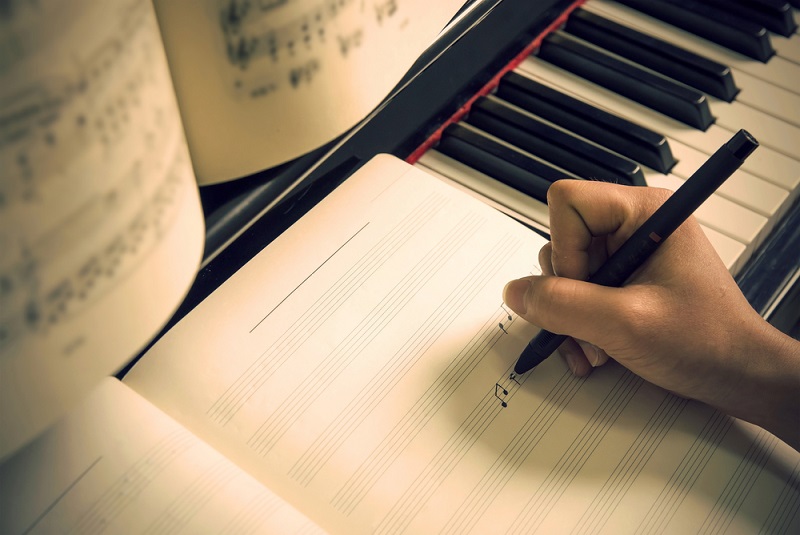
 Sheet Music Giant is a site for those who wants to access popular sheet music easily,
letting them download the sheet music for free for trial purposes.
It's completely free to download and try the listed sheet music, but you have to delete the files after 24 hours of trial.
Don't forget, if you like the piece of music you have just learned playing,
treat the artist with respect, and go buy the original sheet music.
Sheet Music Giant is a site for those who wants to access popular sheet music easily,
letting them download the sheet music for free for trial purposes.
It's completely free to download and try the listed sheet music, but you have to delete the files after 24 hours of trial.
Don't forget, if you like the piece of music you have just learned playing,
treat the artist with respect, and go buy the original sheet music.
Latest Sheet Music
Paul Baloche
Paul Baloche (born on June 4, 1962) is an American Christian music artist, worship leader, and singer-songwriter. A native of Maple Shade, New Jersey, Baloche is currently the worship pastor at Community Christian Fellowship in Lindale, Texas. Baloche composes on piano and acoustic guitar, favoring guitar when leading worship. His wife, Rita Baloche, is also a Christian songwriter. Baloche is one of the writers for Compassionart, a charity founded by Martin Smith from Delirious?.
Several Christian artists, such as Michael W. Smith and SONICFLOOd, have recorded Baloche's songs. Many of his songs are among the most performed songs in services according to CCLI, a company that handles copyright licensing of Christian songs and other resource materials for use in churches. Among them are "Open the Eyes of My Heart" (ranked number 2) and "Above All" (ranked number 22), cowritten with Lenny Leblanc. "Above All" was nominated for Song of the Year in both the 2002 and 2003 Dove Awards, and in 2002, Michael W. Smith's recording of that song won Inspirational Recorded Song of the Year. Baloche was also nominated for Songwriter of the Year in 2002. In 2009, Baloche won a Dove Award for Inspiration Recorded Song of the Year as coauthor of "A New Hallelujah" with Michael W. and Debbie Smith.
Baloche uses his position as a recording artist to provide resources for churches. His catalog of six albums is focused on providing worship music for the listener to worship along with, and for churches to use in their own services. His albums are released by Hosanna! Music, a division of Integrity Music. Through Integrity, Baloche has also written a book, God Songs, and released instructional DVDs that cover a variety of issues central to contemporary worship, such as music styles, music theory, creating flow in worship, and guitar techniques (including his methods on open chord voicings). In addition to his material output, Baloche participates in several seminars for worship leaders and musicians throughout North America and Asia.
The 2006 release A Greater Song is a live recording featuring songs by Baloche, some cowritten with worship artists including Matt Redman ("A Greater Song") and former Integrity Music president Don Moen ("Thank You Lord").
The 2009 release Glorious featured the single "Just To Be With You," which Baloche explained "is simply about intimacy with God."
Several Christian artists, such as Michael W. Smith and SONICFLOOd, have recorded Baloche's songs. Many of his songs are among the most performed songs in services according to CCLI, a company that handles copyright licensing of Christian songs and other resource materials for use in churches. Among them are "Open the Eyes of My Heart" (ranked number 2) and "Above All" (ranked number 22), cowritten with Lenny Leblanc. "Above All" was nominated for Song of the Year in both the 2002 and 2003 Dove Awards, and in 2002, Michael W. Smith's recording of that song won Inspirational Recorded Song of the Year. Baloche was also nominated for Songwriter of the Year in 2002. In 2009, Baloche won a Dove Award for Inspiration Recorded Song of the Year as coauthor of "A New Hallelujah" with Michael W. and Debbie Smith.
Baloche uses his position as a recording artist to provide resources for churches. His catalog of six albums is focused on providing worship music for the listener to worship along with, and for churches to use in their own services. His albums are released by Hosanna! Music, a division of Integrity Music. Through Integrity, Baloche has also written a book, God Songs, and released instructional DVDs that cover a variety of issues central to contemporary worship, such as music styles, music theory, creating flow in worship, and guitar techniques (including his methods on open chord voicings). In addition to his material output, Baloche participates in several seminars for worship leaders and musicians throughout North America and Asia.
The 2006 release A Greater Song is a live recording featuring songs by Baloche, some cowritten with worship artists including Matt Redman ("A Greater Song") and former Integrity Music president Don Moen ("Thank You Lord").
The 2009 release Glorious featured the single "Just To Be With You," which Baloche explained "is simply about intimacy with God."
Avishai Cohen
Avishai Cohen is an Israeli jazz double bassist, composer, singer, and arranger.
Paul de Leeuw
Paul Henri de Leeuw is a Dutch television comedian, singer and actor. De Leeuw gained national fame in the late eighties and early nineties with television shows for broadcasting company VARA.
Astor Piazzolla
Ástor Pantaleón Piazzolla (March 11, 1921 – July 4, 1992) was an Argentine tango composer and bandoneón player. His oeuvre revolutionized the traditional tango into a new style termed nuevo tango, incorporating elements from jazz and classical music. An excellent bandoneonist, he regularly performed his own compositions with different ensembles.
Piazzolla's nuevo tango was distinct from the traditional tango in its incorporation of elements of jazz, its use of extended harmonies and dissonance, its use of counterpoint, and its ventures into extended compositional forms. As Argentine psychoanalyst Carlos Kuri has pointed out, Piazzolla's fusion of tango with this wide range of other recognizable Western musical elements was so successful that it produced a new individual style transcending these influences. It is precisely this success, and individuality, that makes it hard to pin down where particular influences reside in his compositions, but some aspects are clear. The use of the passacaglia technique of a circulating bass line and harmonic sequence, invented and much used in 17th and 18th century baroque music but also central to the idea of jazz "changes", predominates in most of Piazzolla's mature compositions. Another clear reference to the baroque is the often complex and virtuosic counterpoint that sometimes follows strict fugal behavior but more often simply allows each performer in the group to assert his voice. A further technique that emphasises this sense of democracy and freedom among the musicians is improvisation that is borrowed from jazz in concept, but in practice involves a different vocabulary of scales and rhythms that stay within the parameters of the established tango sound-world. Pablo Ziegler has been particularly responsible for developing this aspect of the style both within Piazzolla's groups and since the composer's death.
Piazzolla's nuevo tango was distinct from the traditional tango in its incorporation of elements of jazz, its use of extended harmonies and dissonance, its use of counterpoint, and its ventures into extended compositional forms. As Argentine psychoanalyst Carlos Kuri has pointed out, Piazzolla's fusion of tango with this wide range of other recognizable Western musical elements was so successful that it produced a new individual style transcending these influences. It is precisely this success, and individuality, that makes it hard to pin down where particular influences reside in his compositions, but some aspects are clear. The use of the passacaglia technique of a circulating bass line and harmonic sequence, invented and much used in 17th and 18th century baroque music but also central to the idea of jazz "changes", predominates in most of Piazzolla's mature compositions. Another clear reference to the baroque is the often complex and virtuosic counterpoint that sometimes follows strict fugal behavior but more often simply allows each performer in the group to assert his voice. A further technique that emphasises this sense of democracy and freedom among the musicians is improvisation that is borrowed from jazz in concept, but in practice involves a different vocabulary of scales and rhythms that stay within the parameters of the established tango sound-world. Pablo Ziegler has been particularly responsible for developing this aspect of the style both within Piazzolla's groups and since the composer's death.
Chris Tomlin
Christopher Dwayne Tomlin (born May 4, 1972) is a Christian worship leader and songwriter from Grand Saline, Texas, United States. He is a staff member at Austin Stone Community Church and is signed to EMI's sixstepsrecords. Tomlin also leads worship at many Passion events. Some of his most well-known songs are "How Great Is Our God", "Indescribable", "Forever", "Famous One", "We Fall Down", "Holy Is the Lord" and "Made to Worship".
According to the Christian Copyright Licensing International, Tomlin is the most sung Christian artist in the United States. He was awarded Male Vocalist at the 2006 and 2007 Gospel Music Awards, and was named Artist of the Year in 2007 and 2008. Chris Tomlin will be releasing his 7th studio album "Hello Love" which is due September 2nd 2008.
According to the Christian Copyright Licensing International, Tomlin is the most sung Christian artist in the United States. He was awarded Male Vocalist at the 2006 and 2007 Gospel Music Awards, and was named Artist of the Year in 2007 and 2008. Chris Tomlin will be releasing his 7th studio album "Hello Love" which is due September 2nd 2008.
Vivaldi
Antonio Lucio Vivaldi (March 4, 1678 â July 28, 1741), nicknamed il Prete Rosso ("The Red Priest"), was a Venetian priest and Baroque music composer, as well as a famous virtuoso violinist; he was born and raised in the Republic of Venice. The Four Seasons, a series of four violin concerti, is his best-known work and a highly popular Baroque piece.
Many of Vivaldi's compositions reflect a flamboyant, almost playful, exuberance. Most of Vivaldi's repertoire was rediscovered only in the first half of the 20th century in Turin and Genoa and was published in the second half. Vivaldi's music is innovative, breaking a consolidated tradition in schemes; he gave brightness to the formal and the rhythmic structure of the concerto, repeatedly looking for harmonic contrasts and innovative melodies and themes. Moreover, Vivaldi was able to compose nonacademic music, particularly meant to be appreciated by the wide public and not only by an intellectual minority. The joyful appearance of his music reveals in this regard a transmissible joy of composing; these are among the causes of the vast popularity of his music. This popularity soon made him famous in other countries such as France which was, at the time, very independent concerning its musical taste.
Vivaldi is considered one of the composers who brought Baroque music (with its typical contrast among heavy sonorities) to evolve into a classical style. Johann Sebastian Bach was deeply influenced by Vivaldi's concertos and arias (recalled in his Johannes Passion, Matthäuspassion, and cantatas). Bach transcribed a number of Vivaldi's concerti for solo keyboard, along with a number for orchestra, including the famous Concerto for Four Violins and Violoncello, Strings and Continuo (RV 580).
Many of Vivaldi's compositions reflect a flamboyant, almost playful, exuberance. Most of Vivaldi's repertoire was rediscovered only in the first half of the 20th century in Turin and Genoa and was published in the second half. Vivaldi's music is innovative, breaking a consolidated tradition in schemes; he gave brightness to the formal and the rhythmic structure of the concerto, repeatedly looking for harmonic contrasts and innovative melodies and themes. Moreover, Vivaldi was able to compose nonacademic music, particularly meant to be appreciated by the wide public and not only by an intellectual minority. The joyful appearance of his music reveals in this regard a transmissible joy of composing; these are among the causes of the vast popularity of his music. This popularity soon made him famous in other countries such as France which was, at the time, very independent concerning its musical taste.
Vivaldi is considered one of the composers who brought Baroque music (with its typical contrast among heavy sonorities) to evolve into a classical style. Johann Sebastian Bach was deeply influenced by Vivaldi's concertos and arias (recalled in his Johannes Passion, Matthäuspassion, and cantatas). Bach transcribed a number of Vivaldi's concerti for solo keyboard, along with a number for orchestra, including the famous Concerto for Four Violins and Violoncello, Strings and Continuo (RV 580).
Franz Xaver Gruber
Franz Xaver Gruber, was an Austrian primary school teacher, church organist and composer in the village of Arnsdorf, who is best known for composing the music to "Stille Nacht"
Hanon
Charles-Louis Hanon (born in Renescure, France 2 July 1819, died in Boulogne-sur-Mer, France 19 March 1900) was a French piano pedagogue and composer. He is best known for his work The Virtuoso Pianist In 60 Exercises, which have become the most widely used exercises in modern piano teaching. Piano students all over the world know of Hanon’s famous training exercises for pianists. Both Sergei Rachmaninov and Josef Lhévinne claimed Hanon to be the secret of why the Russian piano school delivered an explosion of virtuosi in their time, for the Hanon exercises have been obliged for a long time throughout Russian conservatories; there were special examinations in which one had to know all exercises by heart to be played in all tonalities in highly advanced speed.
Although the value of Hanon's exercises is highly recognized by most of the greatest pedagoges and pianists, it is not completely without its detractors. Some critics have questioned the merits of the independent finger technique which the exercises seek to cultivate, with some pedagogues, such as Abby Whiteside considering them to be actively harmful.
It has been a recent trend for music schools to hold a Hanon Marathon, Church Street School for Music and Art being the first to have coined the term and held the event, in which Hanon exercises are played competitively.
Other works of Hanon include 50 instructional pieces, Méthode Élémentaire de Piano, and a collection of 50 Ecclesiastical Chants.
Charles Nunzio, now in his nineties, wrote "Hanon for Accordion", a two-volume set of exercises for Piano Accordion based on a similar philosophy, which has recently been reissued in an updated edition. A Hanon for Guitar has also been written.
Although the value of Hanon's exercises is highly recognized by most of the greatest pedagoges and pianists, it is not completely without its detractors. Some critics have questioned the merits of the independent finger technique which the exercises seek to cultivate, with some pedagogues, such as Abby Whiteside considering them to be actively harmful.
It has been a recent trend for music schools to hold a Hanon Marathon, Church Street School for Music and Art being the first to have coined the term and held the event, in which Hanon exercises are played competitively.
Other works of Hanon include 50 instructional pieces, Méthode Élémentaire de Piano, and a collection of 50 Ecclesiastical Chants.
Charles Nunzio, now in his nineties, wrote "Hanon for Accordion", a two-volume set of exercises for Piano Accordion based on a similar philosophy, which has recently been reissued in an updated edition. A Hanon for Guitar has also been written.
Mozart
Wolfgang Amadeus Mozart, full name Johann Chrysostom Wolfgang Amadeus Mozart (27 January 1756 â 5 December 1791) was a prolific and influential composer of the Classical era. His over 600 compositions include works widely acknowledged as pinnacles of symphonic, concertante, chamber, piano, operatic, and choral music. Mozart is among the most enduringly popular of classical composers, and many of his works are part of the standard concert repertoire.
Mozart's music, like Haydn's, stands as an archetypal example of the Classical style. His works spanned the period during which that style transformed from one exemplified by the style galant to one that began to incorporate some of the contrapuntal complexities of the late Baroque, complexities against which the galant style had been a reaction. Mozart's own stylistic development closely paralleled the development of the classical style as a whole. In addition, he was a versatile composer and wrote in almost every major genre, including symphony, opera, the solo concerto, chamber music including string quartet and string quintet, and the piano sonata. While none of these genres were new, the piano concerto was almost single-handedly developed and popularized by Mozart. He also wrote a great deal of religious music, including masses; and he composed many dances, divertimenti, serenades, and other forms of light entertainment.
The central traits of the classical style can be identified in Mozart's music. Clarity, balance, and transparency are hallmarks of his work.
Mozart's music, like Haydn's, stands as an archetypal example of the Classical style. His works spanned the period during which that style transformed from one exemplified by the style galant to one that began to incorporate some of the contrapuntal complexities of the late Baroque, complexities against which the galant style had been a reaction. Mozart's own stylistic development closely paralleled the development of the classical style as a whole. In addition, he was a versatile composer and wrote in almost every major genre, including symphony, opera, the solo concerto, chamber music including string quartet and string quintet, and the piano sonata. While none of these genres were new, the piano concerto was almost single-handedly developed and popularized by Mozart. He also wrote a great deal of religious music, including masses; and he composed many dances, divertimenti, serenades, and other forms of light entertainment.
The central traits of the classical style can be identified in Mozart's music. Clarity, balance, and transparency are hallmarks of his work.
Serban Nichifor
Șerban Nichifor OCB (born 25 August 1954) is a Romanian composer, cellist and music educator.Șerban Nichifor was born on 25 August 1954 to Ermil Nichifor (1916–1997) and Livia Nichifor, née Balint (1922–2017) in Bucharest, Romania. Both his parents were physicians. His father was also a musician and conductor of the Orchestra of Physicians in Bucharest.
Traditional
Dido & Rolo Armstrong
Rollo was born to an Irish publisher and a French-English poet. His younger sister is singer Dido. He helped write and produce her multi-million selling albums No Angel, Life for Rent, Safe Trip Home and Still on My Mind. He studied at the University of York and was an active member of the student radio station URY.
Yoann le Dantec
Yoann Le Dantec, Category: Artist, Albums: Futur antérieur, Imaginary Soundtrack, Vol. 1, Imaginary Soundtrack, Vol. 4, Creative Soundtracks
Yasunori Mitsuda
Yasunori Mitsuda (光田 康典 Mitsuda Yasunori?, born January 21, 1972) is a Japanese video game composer, sound programmer, and musician. He has composed music for or worked on over 35 games, and has contributed to over 15 other albums. He is best known for his compositions for the video games Chrono Trigger, Chrono Cross, Shadow Hearts, Shadow Hearts: Covenant, Xenogears, Xenosaga Episode I, and Mario Party. He began composing video game music for his own games in high school, and after graduation attended Junior College of Music in Tokyo. In 1992 upon graduation he joined Square (now Square Enix) as a composer after seeing a magazine advertisement in an office he was visiting with his professor.
Despite his job title as a composer, Mitsuda worked for two years as a sound engineer. In 1994, after threatening to quit to Square's vice president, Hironobu Sakaguchi, he was assigned to compose the soundtrack to Chrono Trigger. After the game's success and the music's acclaim, he went on to compose several other games for Square, including Xenogears. In 1998 Mitsuda left Square to work as a freelance composer, founding his own music production studio, Procyon Studio, in 2001 as well as his own record label, Sleigh Bells. The company has since expanded to nine employees, and Mitsuda continues to compose for video games, as well as for anime series and his own independent albums.
Despite his job title as a composer, Mitsuda worked for two years as a sound engineer. In 1994, after threatening to quit to Square's vice president, Hironobu Sakaguchi, he was assigned to compose the soundtrack to Chrono Trigger. After the game's success and the music's acclaim, he went on to compose several other games for Square, including Xenogears. In 1998 Mitsuda left Square to work as a freelance composer, founding his own music production studio, Procyon Studio, in 2001 as well as his own record label, Sleigh Bells. The company has since expanded to nine employees, and Mitsuda continues to compose for video games, as well as for anime series and his own independent albums.
Howard Blake
Howard Blake OBE (born 28 October 1938, London) is an English composer whose career has spanned over 50 years and produced more than 650 works. Most successful is his soundtrack for Channel 4’s 1982 film The Snowman including the song Walking In The Air. He is increasingly recognised for his classical works including concertos, oratorios, ballets, operas and many instrumental pieces. The New Grove Dictionary of Music and Musicians states: ‘Howard Blake has achieved fame as pianist, conductor and composer
Antonio Carlos Jobim
Antonio Carlos Brasileiro de Almeida Jobim (January 25, 1927 in Rio de Janeiro – December 8, 1994 in New York City), also known as Tom Jobim, was a Grammy Award-winning Brazilian songwriter, composer, arranger, singer, and pianist/guitarist. A primary force behind the creation of the bossa nova style, Jobim is acknowledged as one of the most influential popular composers of the 20th century. His songs have been performed by many singers and instrumentalists within Brazil and internationally.
Georg Philipp Telemann
Georg Philipp Telemann was a German Baroque composer and multi-instrumentalist. Almost completely self-taught in music, he became a composer against his family's wishes.
Coolio
Coolio (born Artis Leon Ivey, Jr., August 1, 1963) is an American Grammy Award-winning rapper and actor. The artist began to be recognized with the single "Fantastic Voyage", which he put up for sale in 1994. The song "Gangsta's Paradise", which was released the following year and included in the soundtrack of the movie Objectionable Thoughts, peaked at number one on the American music chart.
Koji Kondo
Koji Kondo (近藤浩治 Kondō Kōji?, born August 13, 1960) is a Japanese video game composer and sound director who has been employed at Nintendo since 1984. He is best known for scoring numerous titles in the Mario and The Legend of Zelda series.
My Chemical Romance
My Chemical Romance (often shortened to MCR or My Chem) is an American rock quintet that formed in 2001. The current members of the band are Gerard Way, Mikey Way, Frank Iero, Ray Toro and Bob Bryar. Shortly after forming, the band signed to Eyeball Records and released their debut album I Brought You My Bullets, You Brought Me Your Love in 2002. They signed with Reprise Records the next year and released their major label debut Three Cheers for Sweet Revenge in 2004. The album was a commercial success, selling over one million copies. The band followed this success with 2006's The Black Parade, featuring their hit singles, "Welcome to the Black Parade", "Famous Last Words", "I Don't Love You", and "Teenagers". The band also filmed a live DVD in Mexico City, which was released on July 1, 2008.
Taylor Swift
Taylor Alison Swift (born December 13, 1989) is an American country-pop singer-songwriter. In 2006, she released her debut single "Tim McGraw", which peaked at number six on the Billboard country charts. Later in October 2006, she released her self-titled debut album, which produced five hit singles on the Billboard Hot Country Songs charts and was certified 3× Multi-Platinum by the RIAA. The New York Times described Swift as "one of pop's finest songwriters, country’s foremost pragmatist and more in touch with her inner life than most adults".
According to Nielsen SoundScan, Swift was the biggest selling artist of 2008 in America with combined sales of more than four million albums. Swift's Fearless and her self-titled album finished 2008 at number three and number six respectively, with sales of 2.1 and 1.5 million. She was the first artist in the history of Nielsen SoundScan to have two different albums in the Top 10 on the year end album chart. Fearless has topped the Billboard 200 in 11 non-consecutive weeks. No album has spent more time at number one since 1999-2000. It also was the first album by a female artist in country music history to log eight weeks at #1 on The Billboard 200. In mid-January 2009, Swift became the first country artist to top the 2 million mark in paid downloads with three different songs. As of the week ending February 8, 2009, Swift's single "Love Story" became the country song with most paid downloads in history and the first country song to top the Mainstream Top 40 chart. According to the 2009 issue of Forbes, Swift is ranked as the 69th most powerful celebrity with over $18 million dollars in earnings this year.
According to Nielsen SoundScan, Swift was the biggest selling artist of 2008 in America with combined sales of more than four million albums. Swift's Fearless and her self-titled album finished 2008 at number three and number six respectively, with sales of 2.1 and 1.5 million. She was the first artist in the history of Nielsen SoundScan to have two different albums in the Top 10 on the year end album chart. Fearless has topped the Billboard 200 in 11 non-consecutive weeks. No album has spent more time at number one since 1999-2000. It also was the first album by a female artist in country music history to log eight weeks at #1 on The Billboard 200. In mid-January 2009, Swift became the first country artist to top the 2 million mark in paid downloads with three different songs. As of the week ending February 8, 2009, Swift's single "Love Story" became the country song with most paid downloads in history and the first country song to top the Mainstream Top 40 chart. According to the 2009 issue of Forbes, Swift is ranked as the 69th most powerful celebrity with over $18 million dollars in earnings this year.
Danny Elfman
Daniel Robert "Danny" Elfman (born May 29, 1953) is an American musician, best known for composing music for television and movies, and leading the rock band Oingo Boingo as singer/songwriter from 1976 until its breakup in 1995. He is a frequent collaborator with long-time friend Tim Burton, and has scored all but two of his films. He was nominated for four Academy Awards and won a Grammy Award for Tim Burton's Batman and an Emmy Award for his Desperate Housewives theme. Elfman also wrote the theme for the video game Fable. He is also famous for creating The Simpsons main title theme, and his role as Jack Skellington's singing voice in The Nightmare Before Christmas. He is the Uncle in-law to actress Jenna Elfman.
Scarlatti
Giuseppe Domenico Scarlatti was an Italian composer. He is classified primarily as a Baroque composer chronologically, although his music was influential in the development of the Classical style and he was one of the few Baroque composers to transition into the classical period.
Henry Purcell
Henry Purcell (pronounced /ˈpɜrsəl/; 10 September 1659 (?) – 21 November 1695), was an English organist and Baroque composer of secular and sacred music. Although Purcell incorporated Italian and French stylistic elements into his compositions, his legacy was a uniquely English form of Baroque music.
Arcangelo Corelli
Arcangelo Corelli (17 February 1653 – 8 January 1713) was an Italian violinist and composer of Baroque music.
Corelli was born at Fusignano, in the current-day province of Ravenna, although at the time it was in the province of Ferrara. Little is known about his early life. His master on the violin was Giovanni Battista Bassani. Matteo Simonelli, the well-known singer of the pope’s chapel, taught him composition.
He gained his first major success in Paris at the age of nineteen, and to this he owed his European reputation. From Paris, Corelli went to Germany. In 1681 he was in the service of the electoral prince of Bavaria; between 1680 and 1685 he spent a considerable time in the house of his friend and fellow violinist-composer Cristiano Farinelli (believed to be the uncle of the celebrated castrato Farinelli).
In 1685 Corelli was in Rome, where he led the festival performances of music for Queen Christina of Sweden, and he was also a favorite of Cardinal Pietro Ottoboni, grandnephew of another Cardinal Pietro Ottoboni, who in 1689 became Pope Alexander VIII. From 1689 to 1690 he was in Modena; the Duke of Modena was generous to him. In 1708 he returned to Rome, living in the palace of Cardinal Ottoboni. His visit to Naples, at the invitation of the king, took place in the same year.
The style of execution introduced by Corelli and preserved by his pupils, such as Francesco Geminiani, Pietro Locatelli, and many others, was of vital importance for the development of violin playing. It has been said that the paths of all of the famous violinist-composers of 18th-century Italy led to Arcangelo Corelli who was their "iconic point of reference." (Toussaint Loviko, in the program notes to Italian Violin Concertos, Veritas, 2003)
Corelli was born at Fusignano, in the current-day province of Ravenna, although at the time it was in the province of Ferrara. Little is known about his early life. His master on the violin was Giovanni Battista Bassani. Matteo Simonelli, the well-known singer of the pope’s chapel, taught him composition.
He gained his first major success in Paris at the age of nineteen, and to this he owed his European reputation. From Paris, Corelli went to Germany. In 1681 he was in the service of the electoral prince of Bavaria; between 1680 and 1685 he spent a considerable time in the house of his friend and fellow violinist-composer Cristiano Farinelli (believed to be the uncle of the celebrated castrato Farinelli).
In 1685 Corelli was in Rome, where he led the festival performances of music for Queen Christina of Sweden, and he was also a favorite of Cardinal Pietro Ottoboni, grandnephew of another Cardinal Pietro Ottoboni, who in 1689 became Pope Alexander VIII. From 1689 to 1690 he was in Modena; the Duke of Modena was generous to him. In 1708 he returned to Rome, living in the palace of Cardinal Ottoboni. His visit to Naples, at the invitation of the king, took place in the same year.
The style of execution introduced by Corelli and preserved by his pupils, such as Francesco Geminiani, Pietro Locatelli, and many others, was of vital importance for the development of violin playing. It has been said that the paths of all of the famous violinist-composers of 18th-century Italy led to Arcangelo Corelli who was their "iconic point of reference." (Toussaint Loviko, in the program notes to Italian Violin Concertos, Veritas, 2003)
Kylie Minogue
Kylie Ann Minogue (born 28 May 1968), is an Australian pop singer-songwriter and occasional actress. She rose to prominence in the late 1980s through her role in the Australian television soap opera Neighbours, before commencing her career as a pop artist in 1987.
Signed to a contract by British songwriters and producers Stock, Aitken & Waterman in 1988, she achieved a string of hit records throughout the world. Her popularity waned during the early 1990s, leading her to part company from Stock, Aitken & Waterman in 1992. During the mid to late 90s, Minogue distanced herself from her earlier work and attempted to establish herself as a credible and independent performer and songwriter. Her projects were widely publicised, but her albums failed to attract a substantial audience and resulted in the lowest sales of her career at the time. She returned to popularity as a pop artist in 2000, and became well-known for her elaborate music videos and expensively mounted stage shows.
In Australia, Europe and Asia, Minogue has become one of her generation's most recognisable celebrities. In Australia, after being dismissed early in her career by some critics, she has been widely acclaimed for her many achievements. Minogue returned to performing and recording in the late 2000s after a period of convalescence, and was awarded with an OBE in 2008 for services to music. She has sold in excess of 60 million records.
Signed to a contract by British songwriters and producers Stock, Aitken & Waterman in 1988, she achieved a string of hit records throughout the world. Her popularity waned during the early 1990s, leading her to part company from Stock, Aitken & Waterman in 1992. During the mid to late 90s, Minogue distanced herself from her earlier work and attempted to establish herself as a credible and independent performer and songwriter. Her projects were widely publicised, but her albums failed to attract a substantial audience and resulted in the lowest sales of her career at the time. She returned to popularity as a pop artist in 2000, and became well-known for her elaborate music videos and expensively mounted stage shows.
In Australia, Europe and Asia, Minogue has become one of her generation's most recognisable celebrities. In Australia, after being dismissed early in her career by some critics, she has been widely acclaimed for her many achievements. Minogue returned to performing and recording in the late 2000s after a period of convalescence, and was awarded with an OBE in 2008 for services to music. She has sold in excess of 60 million records.
Gordon lightfoot
Gordon Meredith Lightfoot Jr. CC OOnt (born November 17, 1938) is a Canadian singer-songwriter and guitarist who achieved international success in folk, folk-rock, and country music. He is credited with helping to define the folk-pop sound of the 1960s and 1970s. He is often referred to as Canada's greatest songwriter and is known internationally as a folk-rock legend.
Michael W. Smith
Michael W. Smith (born October 7, 1957) is a Grammy Award-winning American singer and songwriter. He is one of the best-selling and most influential artists in Contemporary Christian Music, and he has achieved considerable success in the mainstream music industry as well. Smith is a three-time Grammy Award winner, and he has earned 34 Dove Awards. Over the course of his 24-year career, he has sold more than 13 million albums and he has recorded 29 number-one hit songs, fourteen gold albums, and five platinum albums. Mr. Smith is an American Music Award recipient and he was named one of People magazine's most beautiful people.
Handel
George Frideric Handel (Friday, 23 February 1685 - Saturday, 14 April 1759) was a German-born Baroque composer who is famous for his operas, oratorios and concerti grossi. Born as Georg Friedrich Handel in Halle, he spent most of his adult life in England, becoming a subject of the British crown on 22 January 1727. His most famous works are Messiah, an oratorio set to texts from the King James Bible; Water Music; and Music for the Royal Fireworks. Strongly influenced by the techniques of the great composers of the Italian Baroque and the English composer Henry Purcell, his music was known to many significant composers who came after him, including Haydn, Mozart, and Beethoven.
Handel's compositions include 42 operas; 29 oratorios; more than 120 cantatas, trios and duets; numerous arias; chamber music; a large number of ecumenical pieces; odes and serenatas; and sixteen organ concerti. His most famous work, the Messiah oratorio with its "Hallelujah" chorus, is among the most popular works in choral music and has become a centerpiece of the Christmas season. Also popular are the Opus 3 and 6 Concerti Grossi, as well as "The Cuckoo and the Nightingale", in which birds are heard calling during passages played in different keys representing the vocal ranges of two birds. Also notable are his sixteen keyboard suites, especially The Harmonious Blacksmith.
Handel introduced various previously uncommon musical instruments in his works: the viola d'amore and violetta marina (Orlando), the lute (Ode for St. Cecilia's Day), three trombones (Saul), clarinets or small high cornets (Tamerlano), theorbo, French horn (Water Music), lyrichord, double bassoon, viola da gamba, bell chimes, positive organ, and harp (Giulio Cesare, Alexander's Feast).
Handel's compositions include 42 operas; 29 oratorios; more than 120 cantatas, trios and duets; numerous arias; chamber music; a large number of ecumenical pieces; odes and serenatas; and sixteen organ concerti. His most famous work, the Messiah oratorio with its "Hallelujah" chorus, is among the most popular works in choral music and has become a centerpiece of the Christmas season. Also popular are the Opus 3 and 6 Concerti Grossi, as well as "The Cuckoo and the Nightingale", in which birds are heard calling during passages played in different keys representing the vocal ranges of two birds. Also notable are his sixteen keyboard suites, especially The Harmonious Blacksmith.
Handel introduced various previously uncommon musical instruments in his works: the viola d'amore and violetta marina (Orlando), the lute (Ode for St. Cecilia's Day), three trombones (Saul), clarinets or small high cornets (Tamerlano), theorbo, French horn (Water Music), lyrichord, double bassoon, viola da gamba, bell chimes, positive organ, and harp (Giulio Cesare, Alexander's Feast).
Isaac Albeniz
Isaac Albéniz i Pascual (Spanish pronunciation: ) (May 29, 1860 – May 18, 1909) was a Spanish pianist and composer best known for his piano works based on folk music.
Albéniz’ Suite Española Op.47 is comprised mainly of pieces written in 1886, and grouped together in 1887 in honor of the Queen of Spain. Like many of Albéniz' piano pieces, these works are miniature tone pictures of different geographical regions and musical idioms of Spain. The eight original titles are Granada, Cataluna, Sevilla, Cadiz, Asturias, Aragon, Castilla and Cuba but only the first three titles and Cuba appeared in the original collection. The other pieces were published in later collections, often with different titles. The publisher Hofmeister published all eight titles of Suite Espanola in 1911 after Albéniz’ death, appropriating other pieces for the other four titles so those pieces do not always accurately reflect the geographic designation of the titles, most obviously in the case of Asturias (Leyenda) whose Andalusian flamenco rhythms bear little resemblance to the music of the northern province Asturias. The opus number 47 assigned by Hofmeister has no relation to any chronological order in Albéniz’ oeuvre, in which opus numbers were randomly given by publishers or by Albéniz himself, with some pieces appearing in more than one collection.
Albéniz’ Suite Española Op.47 is comprised mainly of pieces written in 1886, and grouped together in 1887 in honor of the Queen of Spain. Like many of Albéniz' piano pieces, these works are miniature tone pictures of different geographical regions and musical idioms of Spain. The eight original titles are Granada, Cataluna, Sevilla, Cadiz, Asturias, Aragon, Castilla and Cuba but only the first three titles and Cuba appeared in the original collection. The other pieces were published in later collections, often with different titles. The publisher Hofmeister published all eight titles of Suite Espanola in 1911 after Albéniz’ death, appropriating other pieces for the other four titles so those pieces do not always accurately reflect the geographic designation of the titles, most obviously in the case of Asturias (Leyenda) whose Andalusian flamenco rhythms bear little resemblance to the music of the northern province Asturias. The opus number 47 assigned by Hofmeister has no relation to any chronological order in Albéniz’ oeuvre, in which opus numbers were randomly given by publishers or by Albéniz himself, with some pieces appearing in more than one collection.
Alexander Scriabin
Alexander Nikolayevich Scriabin (/skriˈæbɪn/; Russian: Алекса́ндр Никола́евич Скря́бин; 6 January 1872 – 27 April 1915) was a Russian composer and pianist. Scriabin's early work is characterised by a lyrical and idiosyncratic tonal language influenced by Frédéric Chopin. Later in his career, independently of Arnold Schoenberg, Scriabin developed a substantially atonal and much more dissonant musical system, accorded to mysticism. Scriabin was influenced by synesthesia, and associated colors with the various harmonic tones of his atonal scale, while his color-coded circle of fifths was also influenced by theosophy. He is considered by some to be the main Russian Symbolist composer.
Scriabin was one of the most innovative and most controversial of early modern composers. The Great Soviet Encyclopedia said of Scriabin that, "No composer has had more scorn heaped or greater love bestowed..." Leo Tolstoy once described Scriabin's music as "a sincere expression of genius." Scriabin had a major impact on the music world over time, and influenced composers like Roy Agnew, Nikolai Roslavets, Sergei Prokofiev and Igor Stravinsky. Scriabin's importance in the Soviet musical scene, and internationally, drastically declined. "No one was more famous during their lifetime, and few were more quickly ignored after death." In the 1970s, for instance, there were only three recordings of his complete (published) sonatas. Yet Scriabin's work has steadily regained popularity in recent years.
Scriabin was one of the most innovative and most controversial of early modern composers. The Great Soviet Encyclopedia said of Scriabin that, "No composer has had more scorn heaped or greater love bestowed..." Leo Tolstoy once described Scriabin's music as "a sincere expression of genius." Scriabin had a major impact on the music world over time, and influenced composers like Roy Agnew, Nikolai Roslavets, Sergei Prokofiev and Igor Stravinsky. Scriabin's importance in the Soviet musical scene, and internationally, drastically declined. "No one was more famous during their lifetime, and few were more quickly ignored after death." In the 1970s, for instance, there were only three recordings of his complete (published) sonatas. Yet Scriabin's work has steadily regained popularity in recent years.
Maksim Mrvica
Maksim Mrvica (Croatian pronunciation: ; born May 3, 1975) is a popular pianist from Croatia. In 2003, Maksim released one of his first albums, The Piano Player.
Maksim has music videos for The Gypsy Maid, New World Concerto, Somewhere In Time, Nostradamus; directed by Tony van den Ende, Kolibre; directed by Tony van den Ende, Exodus, Olympic Dream, The Flight of the Bumble Bee, Prelude in C, Anthem and Child in Paradise.
Maksim has music videos for The Gypsy Maid, New World Concerto, Somewhere In Time, Nostradamus; directed by Tony van den Ende, Kolibre; directed by Tony van den Ende, Exodus, Olympic Dream, The Flight of the Bumble Bee, Prelude in C, Anthem and Child in Paradise.
BABELL William
William Babell (or Babel) (c. 1690 - 23 September 1723) was an English musician, composer and prolific arranger of vocal music for harpsichord.He received his musical training from his father, Charles Babel, a bassoonist in the Drury Lane orchestra, Johann Christoph Pepusch and possibly George Frideric Handel. He played violin in the private band of George I and appeared as a harpsichordist from 1711, often appearing with William Corbett, James Paisible and later Matthew Dubourg. He was associated with Lincoln's Inn Fields Theatre. From November 1718 until his death, he was organist at All Hallows, Bread Street, and was succeeded by John Stanley.
Ludwig van Beethoven
Ludwig van Beethoven (/ˈlʊdvɪɡ væn ˈbeɪt(h)oʊvən/ (About this soundlisten); German: (About this soundlisten); baptised 17 December 1770 – 26 March 1827) was a German composer and pianist. A crucial figure in the transition between the classical and romantic eras in classical music, he remains one of the most recognized and influential musicians of this period, and is considered to be one of the greatest composers of all time.
Beethoven was born in Bonn, the capital of the Electorate of Cologne, and part of the Holy Roman Empire. He displayed his musical talents at an early age and was vigorously taught by his father Johann van Beethoven, and was later taught by composer and conductor Christian Gottlob Neefe. At age 21, he moved to Vienna and studied composition with Joseph Haydn. Beethoven then gained a reputation as a virtuoso pianist, and was soon courted by Prince Lichnowsky for compositions, which resulted in Opus 1 in 1795.
Beethoven was born in Bonn, the capital of the Electorate of Cologne, and part of the Holy Roman Empire. He displayed his musical talents at an early age and was vigorously taught by his father Johann van Beethoven, and was later taught by composer and conductor Christian Gottlob Neefe. At age 21, he moved to Vienna and studied composition with Joseph Haydn. Beethoven then gained a reputation as a virtuoso pianist, and was soon courted by Prince Lichnowsky for compositions, which resulted in Opus 1 in 1795.
Carl Philipp Emanuel Bach
Carl Philipp Emanuel Bach (8 March 1714 – 14 December 1788) was a German musician and composer, the second of three sons of Johann Sebastian Bach and Maria Barbara Bach. He was a crucial composer in the transition between the Baroque and Classical periods, and one of the founders of the Classical style, composing in the Rococo and Classical periods. His second name was given in honor of Georg Philipp Telemann, a friend of Emanuel's father and his godfather.
Through the latter half of the 18th century, the reputation of Emanuel Bach stood very high. Wolfgang Amadeus Mozart said of him, "He is the father, we are the children." The best part of Joseph Haydn's training was derived from a study of his work. Ludwig van Beethoven expressed for his genius the most cordial admiration and regard. This position he owes mainly to his keyboard sonatas, which mark an important epoch in the history of musical form. Lucid in style, delicate and tender in expression, they are even more notable for the freedom and variety of their structural design; they break away altogether from both the Italian and the Viennese schools, moving instead toward the cyclical and improvisatory forms that would become common several generations later.
The content of his work is full of invention and, most importantly, extreme unpredictability, and wide emotional range even within a single work, a style that may be categorised as Empfindsamer Stil. It is no less sincere in thought than polished and felicitous in phrase. He was probably the first composer of eminence who made free use of harmonic colour for its own sake since the time of Lassus, Monteverdi, and Gesualdo. In this way, he compares well with the most important representatives of the First Viennese School. In fact he exerted enormous influence on the North German School of composers, in particular Georg Anton Benda, Bernhard Joachim Hagen, Ernst Wilhelm Wolf, Johann Gottfried Müthel, Friedrich Wilhelm Rust and many others. His influence was not limited to his contemporaries, and extended to Felix Mendelssohn and Carl Maria von Weber.
Through the latter half of the 18th century, the reputation of Emanuel Bach stood very high. Wolfgang Amadeus Mozart said of him, "He is the father, we are the children." The best part of Joseph Haydn's training was derived from a study of his work. Ludwig van Beethoven expressed for his genius the most cordial admiration and regard. This position he owes mainly to his keyboard sonatas, which mark an important epoch in the history of musical form. Lucid in style, delicate and tender in expression, they are even more notable for the freedom and variety of their structural design; they break away altogether from both the Italian and the Viennese schools, moving instead toward the cyclical and improvisatory forms that would become common several generations later.
The content of his work is full of invention and, most importantly, extreme unpredictability, and wide emotional range even within a single work, a style that may be categorised as Empfindsamer Stil. It is no less sincere in thought than polished and felicitous in phrase. He was probably the first composer of eminence who made free use of harmonic colour for its own sake since the time of Lassus, Monteverdi, and Gesualdo. In this way, he compares well with the most important representatives of the First Viennese School. In fact he exerted enormous influence on the North German School of composers, in particular Georg Anton Benda, Bernhard Joachim Hagen, Ernst Wilhelm Wolf, Johann Gottfried Müthel, Friedrich Wilhelm Rust and many others. His influence was not limited to his contemporaries, and extended to Felix Mendelssohn and Carl Maria von Weber.
Bach
Johann Sebastian Bach (31 March 1685 – 28 July 1750) was a German composer and organist whose sacred and secular works for choir, orchestra, and solo instruments drew together the strands of the Baroque period and brought it to its ultimate maturity. Although he introduced no new forms, he enriched the prevailing German style with a robust contrapuntal technique, an unrivalled control of harmonic and motivic organisation in composition for diverse musical forces, and the adaptation of rhythms and textures from abroad, particularly Italy and France.
Revered for their intellectual depth and technical and artistic beauty, Bach's works include the Brandenburg concertos; the Goldberg Variations; the English Suites, French Suites, Partitas, and Well-Tempered Clavier; the Mass in B Minor; the St. Matthew Passion; the St. John Passion; The Musical Offering; The Art of Fugue; the Sonatas and Partitas for violin solo; the Cello Suites; more than 200 surviving cantatas; and a similar number of organ works, including the celebrated Toccata and Fugue in D Minor.
While Bach's fame as an organist was great during his lifetime, he was not particularly well-known as a composer. His adherence to Baroque forms and contrapuntal style was considered "old-fashioned" by his contemporaries, especially late in his career when the musical fashion tended towards Rococo and later Classical styles. A revival of interest and performances of his music began early in the 19th century, and he is now widely considered to be one of the greatest composers in the Western tradition.
Revered for their intellectual depth and technical and artistic beauty, Bach's works include the Brandenburg concertos; the Goldberg Variations; the English Suites, French Suites, Partitas, and Well-Tempered Clavier; the Mass in B Minor; the St. Matthew Passion; the St. John Passion; The Musical Offering; The Art of Fugue; the Sonatas and Partitas for violin solo; the Cello Suites; more than 200 surviving cantatas; and a similar number of organ works, including the celebrated Toccata and Fugue in D Minor.
While Bach's fame as an organist was great during his lifetime, he was not particularly well-known as a composer. His adherence to Baroque forms and contrapuntal style was considered "old-fashioned" by his contemporaries, especially late in his career when the musical fashion tended towards Rococo and later Classical styles. A revival of interest and performances of his music began early in the 19th century, and he is now widely considered to be one of the greatest composers in the Western tradition.
Dvorak
Antonín Leopold Dvořák (September 8, 1841 – May 1, 1904) was a Czech composer of Romantic music, who employed the idioms and melodies of the folk music of his native Bohemia and Moravia. His works include operas, symphonic, choral and chamber music. His best-known works are his New World Symphony (particularly the slow movement), as well as his Slavonic Dances, American String Quartet, and Cello Concerto in B minor.
Dvořák wrote in a variety of forms: his nine symphonies generally stick to classical models that Beethoven would have recognised, but he also worked in the newly developed symphonic poem form and the influence of Richard Wagner is apparent in some works. Many of his works also show the influence of Czech folk music, both in terms of rhythms and melodic shapes; perhaps the best known examples are the two sets of Slavonic Dances. Dvořák also wrote operas (the best known of which is Rusalka); serenades for string orchestra and wind ensemble; chamber music (including a number of string quartets, and quintets); songs; choral music; and piano music.
Dvořák wrote in a variety of forms: his nine symphonies generally stick to classical models that Beethoven would have recognised, but he also worked in the newly developed symphonic poem form and the influence of Richard Wagner is apparent in some works. Many of his works also show the influence of Czech folk music, both in terms of rhythms and melodic shapes; perhaps the best known examples are the two sets of Slavonic Dances. Dvořák also wrote operas (the best known of which is Rusalka); serenades for string orchestra and wind ensemble; chamber music (including a number of string quartets, and quintets); songs; choral music; and piano music.
J. S. Bach
Johann Sebastian Bach (21 March 1685, O.S.31 March 1685, N.S. – 28 July 1750, N.S.) was a German composer, organist, harpsichordist, violist, and violinist whose sacred and secular works for choir, orchestra, and solo instruments drew together the strands of the Baroque period and brought it to its ultimate maturity. Although he did not introduce new forms, he enriched the prevailing German style with a robust contrapuntal technique, an unrivalled control of harmonic and motivic organisation, and the adaptation of rhythms, forms and textures from abroad, particularly from Italy and France.
Revered for their intellectual depth, technical command and artistic beauty, Bach's works include the Brandenburg Concertos, the Goldberg Variations, the Partitas, The Well-Tempered Clavier, the Mass in B minor, the St Matthew Passion, the St John Passion, the Magnificat, A Musical Offering, The Art of Fugue, the English and French Suites, the Sonatas and Partitas for solo violin, the Cello Suites, more than 200 surviving cantatas, and a similar number of organ works, including the famous Toccata and Fugue in D minor and Passacaglia and Fugue in C minor, as well as the Great Eighteen Chorale Preludes and Organ Mass.
Bach's abilities as an organist were highly respected throughout Europe during his lifetime, although he was not widely recognised as a great composer until a revival of interest and performances of his music in the first half of the 19th century. He is now generally regarded as one of the main composers of the Baroque style, and as one of the greatest composers of all time.
Revered for their intellectual depth, technical command and artistic beauty, Bach's works include the Brandenburg Concertos, the Goldberg Variations, the Partitas, The Well-Tempered Clavier, the Mass in B minor, the St Matthew Passion, the St John Passion, the Magnificat, A Musical Offering, The Art of Fugue, the English and French Suites, the Sonatas and Partitas for solo violin, the Cello Suites, more than 200 surviving cantatas, and a similar number of organ works, including the famous Toccata and Fugue in D minor and Passacaglia and Fugue in C minor, as well as the Great Eighteen Chorale Preludes and Organ Mass.
Bach's abilities as an organist were highly respected throughout Europe during his lifetime, although he was not widely recognised as a great composer until a revival of interest and performances of his music in the first half of the 19th century. He is now generally regarded as one of the main composers of the Baroque style, and as one of the greatest composers of all time.
Andrew Lloyd Webber
Andrew Lloyd Webber, Baron Lloyd-Webber (born 22 March 1948) is an English composer of musical theatre, the elder son of organist William Lloyd Webber and brother of the cellist Julian Lloyd Webber. Lloyd Webber started composing at the age of six, and published his first piece at the age of nine.
Lloyd Webber has achieved great popular success, with several musicals that have run for more than a decade both in the West End and on Broadway. He has composed 13 musicals, a song cycle, a set of variations, two film scores, and a Latin Requiem Mass. He has also gained a number of honours, including a knighthood in 1992, followed by a peerage from the British Government for services to Music, seven Tony Awards (and 40 nominations), three Grammy Awards (with an additional 60 nominations), an Academy Award (two other nominations), seven Olivier Awards (with 100 nominations), a Golden Globe, and the Kennedy Center Honors in 2006. Several of his songs, notably "The Music of the Night" from The Phantom of the Opera, "I Don't Know How to Love Him" from Jesus Christ Superstar, "Don't Cry for Me, Argentina" from Evita, "Any Dream Will Do" from Joseph and the Amazing Technicolor Dreamcoat and "Memory" from Cats have been widely recorded and were hits outside of their parent musicals. His company, the Really Useful Group, is one of the largest theatre operators in London.
Producers in several parts of the UK have staged productions, including national tours, of Lloyd Webber's musicals under licence from the Really Useful Group. According to britishhitsongwriters.com, he is the one hundredth most successful songwriter in U.K. singles chart history, based on weeks that his compositions have spent on the chart.
Lloyd Webber has achieved great popular success, with several musicals that have run for more than a decade both in the West End and on Broadway. He has composed 13 musicals, a song cycle, a set of variations, two film scores, and a Latin Requiem Mass. He has also gained a number of honours, including a knighthood in 1992, followed by a peerage from the British Government for services to Music, seven Tony Awards (and 40 nominations), three Grammy Awards (with an additional 60 nominations), an Academy Award (two other nominations), seven Olivier Awards (with 100 nominations), a Golden Globe, and the Kennedy Center Honors in 2006. Several of his songs, notably "The Music of the Night" from The Phantom of the Opera, "I Don't Know How to Love Him" from Jesus Christ Superstar, "Don't Cry for Me, Argentina" from Evita, "Any Dream Will Do" from Joseph and the Amazing Technicolor Dreamcoat and "Memory" from Cats have been widely recorded and were hits outside of their parent musicals. His company, the Really Useful Group, is one of the largest theatre operators in London.
Producers in several parts of the UK have staged productions, including national tours, of Lloyd Webber's musicals under licence from the Really Useful Group. According to britishhitsongwriters.com, he is the one hundredth most successful songwriter in U.K. singles chart history, based on weeks that his compositions have spent on the chart.
The Manhattan Transfer
The Manhattan Transfer is a Grammy award-winning jazz vocal group founded in 1969 that has explored a cappella, vocalese, swing, standards, Brazilian jazz, rhythm and blues, and pop music.There have been two editions of the Manhattan Transfer, with Tim Hauser the only person to be part of both. The first group consisted of Hauser, Erin Dickins, Marty Nelson, Pat Rosalia, and Gene Pistilli. The second version of the group, formed in 1972, consisted of Hauser, Alan Paul, Janis Siegel, and Laurel Massé. In 1979, Massé left the group after being badly injured in a car accident and was replaced by Cheryl Bentyne. The group's long-time pianist, Yaron Gershovsky, accompanied the group on tour and served as music director.
Andy Williams
Howard Andrew "Andy" Williams (born December 3, 1927) is an American pop singer. Andy Williams has recorded 18 Gold and three Platinum certified albums. When Ronald Reagan was president, he declared Andy's voice to be "a national treasure". He had his own popular TV variety show from 1962–71. He also owns his own theater, the Moon River Theatre in Branson, Missouri.
Williams' solo career began in 1952 after his brothers left the act. He recorded six sides for RCA Victor's label "X," but none of them were popular hits.
After finally landing a spot as a regular on Steve Allen's Tonight Show in 1955, he was signed to a recording contract with Cadence Records, a small label in New York run by conductor Archie Bleyer. His third single, "Canadian Sunset" (1956) hit the Top Ten, and was soon followed by his only Billboard #1 hit, "Butterfly" (a cover of a Charlie Gracie record on which Williams imitated Elvis Presley). More hits followed, including "The Hawaiian Wedding Song" (U.S. #11), "Are You Sincere" (U.S. #3), "The Village of St. Bernadette" (U.S. #7), "Lonely Street" (U.S. #5), and "I Like Your Kind Of Love" (U.S. #8) before Williams moved to Columbia Records in 1961, having moved from New York to Los Angeles and gaining another hit with "Can't Get Used to Losing You" (U.S. #2). In terms of chart popularity, the Cadence era was Williams' peak although songs he introduced on Columbia became much bigger standards.
During the 1960s, Williams became one of the most popular vocalists in the country and was signed to what was at that time the biggest recording contract in history. He was primarily an album artist, and at one time he had earned more gold albums than any solo performer except Frank Sinatra, Johnny Mathis and Elvis Presley. By 1973 he had earned as many as 18 gold album awards. Among his hit albums from this period were Moon River, Days of Wine and Roses (number one for 16 weeks in mid-1963), The Andy Williams Christmas Album, Dear Heart, The Shadow of Your Smile, Love, Andy, Get Together with Andy Williams, and Love Story. These recordings, along with his natural affinity for the music of the 1960s and early 1970s, combined to make him one of the premier easy listening singers of that era. In the UK, Williams continued to reach high chart status until 1978. The albums Can't Help Falling In Love (1970), Andy Williams Show (1970) Home Lovin Man ( #1 1971), Solitaire (1973), The Way We Were (1974) and Reflections (1978) all reached the Top 10.
Building on his experience with Allen and some short-term variety shows in the 1950s, he became the star of his own weekly television variety show in 1962. This series, The Andy Williams Show, won three Emmy Awards for outstanding variety program. Among his series regulars were the Osmond Brothers. He gave up the variety show in 1971 while it was still popular and retrenched to three specials per year. His Christmas specials, which appeared regularly until 1974 and intermittently from 1982 into the 1990s, were among the most popular of the genre. Williams has recorded eight Christmas albums over the years and has been penned as Mr. Christmas.
Williams hosted the most Grammy telecasts, from the 13th Annual Grammy Awards in 1971 through the 19th Annual Grammy Awards in 1977, totaling seven consecutive shows. He returned to television to do a syndicated half-hour series in 1976–77.
Williams' solo career began in 1952 after his brothers left the act. He recorded six sides for RCA Victor's label "X," but none of them were popular hits.
After finally landing a spot as a regular on Steve Allen's Tonight Show in 1955, he was signed to a recording contract with Cadence Records, a small label in New York run by conductor Archie Bleyer. His third single, "Canadian Sunset" (1956) hit the Top Ten, and was soon followed by his only Billboard #1 hit, "Butterfly" (a cover of a Charlie Gracie record on which Williams imitated Elvis Presley). More hits followed, including "The Hawaiian Wedding Song" (U.S. #11), "Are You Sincere" (U.S. #3), "The Village of St. Bernadette" (U.S. #7), "Lonely Street" (U.S. #5), and "I Like Your Kind Of Love" (U.S. #8) before Williams moved to Columbia Records in 1961, having moved from New York to Los Angeles and gaining another hit with "Can't Get Used to Losing You" (U.S. #2). In terms of chart popularity, the Cadence era was Williams' peak although songs he introduced on Columbia became much bigger standards.
During the 1960s, Williams became one of the most popular vocalists in the country and was signed to what was at that time the biggest recording contract in history. He was primarily an album artist, and at one time he had earned more gold albums than any solo performer except Frank Sinatra, Johnny Mathis and Elvis Presley. By 1973 he had earned as many as 18 gold album awards. Among his hit albums from this period were Moon River, Days of Wine and Roses (number one for 16 weeks in mid-1963), The Andy Williams Christmas Album, Dear Heart, The Shadow of Your Smile, Love, Andy, Get Together with Andy Williams, and Love Story. These recordings, along with his natural affinity for the music of the 1960s and early 1970s, combined to make him one of the premier easy listening singers of that era. In the UK, Williams continued to reach high chart status until 1978. The albums Can't Help Falling In Love (1970), Andy Williams Show (1970) Home Lovin Man ( #1 1971), Solitaire (1973), The Way We Were (1974) and Reflections (1978) all reached the Top 10.
Building on his experience with Allen and some short-term variety shows in the 1950s, he became the star of his own weekly television variety show in 1962. This series, The Andy Williams Show, won three Emmy Awards for outstanding variety program. Among his series regulars were the Osmond Brothers. He gave up the variety show in 1971 while it was still popular and retrenched to three specials per year. His Christmas specials, which appeared regularly until 1974 and intermittently from 1982 into the 1990s, were among the most popular of the genre. Williams has recorded eight Christmas albums over the years and has been penned as Mr. Christmas.
Williams hosted the most Grammy telecasts, from the 13th Annual Grammy Awards in 1971 through the 19th Annual Grammy Awards in 1977, totaling seven consecutive shows. He returned to television to do a syndicated half-hour series in 1976–77.
Eko Fresh
Ekrem Bora, better known by his stage name Eko Fresh, is a German rapper of Turkish and Kurdish descent.
Ravel
Joseph-Maurice Ravel (March 7, 1875 – December 28, 1937) was a French composer of Impressionist music known especially for his melodies, orchestral and instrumental textures and effects. Much of his piano music, chamber music, vocal music and orchestral music has entered the standard concert repertoire.
Ravel's piano compositions, such as Jeux d'eau, Miroirs and Gaspard de la Nuit, demand considerable virtuosity from the performer, and his orchestral music, including Daphnis et Chloé and his arrangement of Modest Mussorgsky's Pictures at an Exhibition, uses a variety of sound and instrumentation very effectively.
Ravel is perhaps known best for his orchestral work, Boléro (1928), which he considered trivial and once described as "a piece for orchestra without music."
According to SACEM, Ravel's estate earns more royalties than that of any other French musician. According to international copyright law, Ravel's works are public domain since January 1, 2008 in most countries. In France, due to anomalous copyright law extensions to account for the two world wars, they will not enter the public domain until 2015.
Ravel's piano compositions, such as Jeux d'eau, Miroirs and Gaspard de la Nuit, demand considerable virtuosity from the performer, and his orchestral music, including Daphnis et Chloé and his arrangement of Modest Mussorgsky's Pictures at an Exhibition, uses a variety of sound and instrumentation very effectively.
Ravel is perhaps known best for his orchestral work, Boléro (1928), which he considered trivial and once described as "a piece for orchestra without music."
According to SACEM, Ravel's estate earns more royalties than that of any other French musician. According to international copyright law, Ravel's works are public domain since January 1, 2008 in most countries. In France, due to anomalous copyright law extensions to account for the two world wars, they will not enter the public domain until 2015.
Brahms
Johannes Brahms (May 7, 1833 â April 3, 1897) was a German composer of the Romantic period. He was born in Hamburg and in his later years he settled in Vienna, Austria.
Brahms maintained a Classical sense of form and order in his works â in contrast to the opulence of the music of many of his contemporaries. Thus many admirers (though not necessarily Brahms himself) saw him as the champion of traditional forms and "pure music," as opposed to the New German embrace of program music.
Brahms venerated Beethoven: in the composer's home, a marble bust of Beethoven looked down on the spot where he composed, and some passages in his works are reminiscent of Beethoven's style. The main theme of the finale of Brahms's First Symphony is reminiscent of the main theme of the finale of Beethoven's Ninth, and when this resemblance was pointed out to Brahms he replied that any ass â jeder Esel â could see that.
Ein deutsches Requiem was partially inspired by his mother's death in 1865, but also incorporates material from a Symphony he started in 1854, but abandoned following Schumann's suicide attempt. He once wrote that the Requiem "belonged to Schumann". The first movement of this abandoned Symphony was re-worked as the first movement of the First Piano Concerto.
Brahms also loved the Classical composers Mozart and Haydn. He collected first editions and autographs of their works, and edited performing editions. He also studied the music of pre-classical composers, including Giovanni Gabrieli, Johann Adolph Hasse, Heinrich Schütz and especially Johann Sebastian Bach. His friends included leading musicologists, and with Friedrich Chrysander he edited an edition of the works of François Couperin. He looked to older music for inspiration in the arts of strict counterpoint; the themes of some of his works are modelled on Baroque sources, such as Bach's The Art of Fugue in the fugal finale of Cello Sonata No. 1, or the same composer's Cantata No. 150 in the passacaglia theme of the Fourth Symphony's finale.
Brahms maintained a Classical sense of form and order in his works â in contrast to the opulence of the music of many of his contemporaries. Thus many admirers (though not necessarily Brahms himself) saw him as the champion of traditional forms and "pure music," as opposed to the New German embrace of program music.
Brahms venerated Beethoven: in the composer's home, a marble bust of Beethoven looked down on the spot where he composed, and some passages in his works are reminiscent of Beethoven's style. The main theme of the finale of Brahms's First Symphony is reminiscent of the main theme of the finale of Beethoven's Ninth, and when this resemblance was pointed out to Brahms he replied that any ass â jeder Esel â could see that.
Ein deutsches Requiem was partially inspired by his mother's death in 1865, but also incorporates material from a Symphony he started in 1854, but abandoned following Schumann's suicide attempt. He once wrote that the Requiem "belonged to Schumann". The first movement of this abandoned Symphony was re-worked as the first movement of the First Piano Concerto.
Brahms also loved the Classical composers Mozart and Haydn. He collected first editions and autographs of their works, and edited performing editions. He also studied the music of pre-classical composers, including Giovanni Gabrieli, Johann Adolph Hasse, Heinrich Schütz and especially Johann Sebastian Bach. His friends included leading musicologists, and with Friedrich Chrysander he edited an edition of the works of François Couperin. He looked to older music for inspiration in the arts of strict counterpoint; the themes of some of his works are modelled on Baroque sources, such as Bach's The Art of Fugue in the fugal finale of Cello Sonata No. 1, or the same composer's Cantata No. 150 in the passacaglia theme of the Fourth Symphony's finale.
Giovanni Allevi
Giovanni Allevi (; born in Ascoli Piceno, April 9, 1969) is an Italian pianist and composerAllevi attained a "first-class diploma" both in piano at the "F. Morlacchi" conservatoire in Perugia and in composition at the "G. Verdi" academy of music in Milan. He graduated cum laude in Philosophy with a thesis entitled "Il vuoto nella Fisica contemporanea" (The Void in Contemporary Physics) and he attended the Accademia Internazionale di Alto Perfezionamento in Arezzo, under maestro Carlo Alberto Neri.
Bleach
Ichigo Kurosaki never asked for the ability to see ghosts -- he was born with the gift. When his family is attacked by a Hollow -- a malevolent lost soul -- Ichigo becomes a Soul Reaper, dedicating his life to protecting the innocent and helping the tortured spirits themselves find peace.
Annie
Annie is a 1982 musical film based upon the popular 1977 stage musical of the same name, with music by Charles Strouse, lyrics by Martin Charnin, and the book by Thomas Meehan. It was released in 1982 by Columbia Pictures.
The film version was directed by John Huston, and starred Carol Burnett and Albert Finney. This was Huston's first and only film musical.
The film version was directed by John Huston, and starred Carol Burnett and Albert Finney. This was Huston's first and only film musical.
The Academy Is...
The Academy Is... was an American rock band from Chicago, Illinois, formed in 2003. Before disbanding, they were signed by the Decaydance imprint of the Fueled by Ramen label.
Johnny Marks
John David Marks (November 10, 1909 – September 3, 1985) was an American songwriter. He specialized in Christmas songs and wrote many holiday standards, including "Rudolph, the Red-Nosed Reindeer" (a hit for Gene Autry and others), "Rockin' Around the Christmas Tree" (a hit for Brenda Lee), "A Holly Jolly Christmas" (recorded by the Quinto Sisters and later by Burl Ives), "Silver and Gold" (for Burl Ives), "I Heard the Bells on Christmas Day" (introduced by Bing Crosby), and "Run Rudolph Run" (recorded by Chuck Berry).