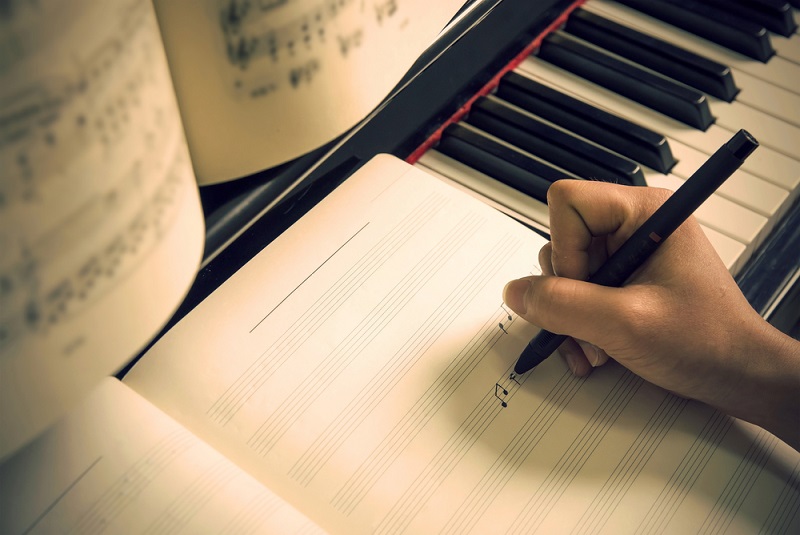
 Sheet Music Giant is a site for those who wants to access popular sheet music easily,
letting them download the sheet music for free for trial purposes.
It's completely free to download and try the listed sheet music, but you have to delete the files after 24 hours of trial.
Don't forget, if you like the piece of music you have just learned playing,
treat the artist with respect, and go buy the original sheet music.
Sheet Music Giant is a site for those who wants to access popular sheet music easily,
letting them download the sheet music for free for trial purposes.
It's completely free to download and try the listed sheet music, but you have to delete the files after 24 hours of trial.
Don't forget, if you like the piece of music you have just learned playing,
treat the artist with respect, and go buy the original sheet music.
Latest Sheet Music
Owen Pallett
Michael James Owen Pallett (born September 7, 1979) is a Canadian composer, violinist, keyboardist, and vocalist, who performs solo as Owen Pallett or, before 2010, under the name Final Fantasy. As Final Fantasy, Pallett won the 2006 Polaris Music Prize for the album He Poos Clouds.From the age of 3, Pallett studied classical violin, and composed their first piece at age 13. A notable early composition includes some of the music for the game Traffic Department 2192; Pallett moved on to scoring films, to composing two operas while in university. Apart from the indie music scene, Pallett has had commissions from the Barbican, Toronto Symphony Orchestra, National Ballet of Canada, Bang on a Can, Ecstatic Music Festival, the Vancouver CBC Orchestra, and Fine Young Classicals.
Bach
Johann Sebastian Bach (31 March 1685 – 28 July 1750) was a German composer and organist whose sacred and secular works for choir, orchestra, and solo instruments drew together the strands of the Baroque period and brought it to its ultimate maturity. Although he introduced no new forms, he enriched the prevailing German style with a robust contrapuntal technique, an unrivalled control of harmonic and motivic organisation in composition for diverse musical forces, and the adaptation of rhythms and textures from abroad, particularly Italy and France.
Revered for their intellectual depth and technical and artistic beauty, Bach's works include the Brandenburg concertos; the Goldberg Variations; the English Suites, French Suites, Partitas, and Well-Tempered Clavier; the Mass in B Minor; the St. Matthew Passion; the St. John Passion; The Musical Offering; The Art of Fugue; the Sonatas and Partitas for violin solo; the Cello Suites; more than 200 surviving cantatas; and a similar number of organ works, including the celebrated Toccata and Fugue in D Minor.
While Bach's fame as an organist was great during his lifetime, he was not particularly well-known as a composer. His adherence to Baroque forms and contrapuntal style was considered "old-fashioned" by his contemporaries, especially late in his career when the musical fashion tended towards Rococo and later Classical styles. A revival of interest and performances of his music began early in the 19th century, and he is now widely considered to be one of the greatest composers in the Western tradition.
Revered for their intellectual depth and technical and artistic beauty, Bach's works include the Brandenburg concertos; the Goldberg Variations; the English Suites, French Suites, Partitas, and Well-Tempered Clavier; the Mass in B Minor; the St. Matthew Passion; the St. John Passion; The Musical Offering; The Art of Fugue; the Sonatas and Partitas for violin solo; the Cello Suites; more than 200 surviving cantatas; and a similar number of organ works, including the celebrated Toccata and Fugue in D Minor.
While Bach's fame as an organist was great during his lifetime, he was not particularly well-known as a composer. His adherence to Baroque forms and contrapuntal style was considered "old-fashioned" by his contemporaries, especially late in his career when the musical fashion tended towards Rococo and later Classical styles. A revival of interest and performances of his music began early in the 19th century, and he is now widely considered to be one of the greatest composers in the Western tradition.
Traditional
Yiruma
Yiruma (born February 15 1978, Seoul, Korea) is a South Korean piano music composer. He is married to Son Hye-im.
Yiruma is well-known throughout the world, and his albums are sold all over Asia, as well as the United States and Europe. His most famous pieces are "Kiss the Rain", and also "River Flows in You". These pieces are widely mistaken for being associated with the movie Twilight. Although he formerly held dual citizenship as a citizen of the United Kingdom and South Korea, in July 2006 he gave up his British citizenship and entered the Republic of Korea Navy to begin his military service, which is compulsory for all male South Koreans. He has lived in Osaka, Japan for 5 years to promote album sales before giving up his dual citizenship.
Yiruma is well-known throughout the world, and his albums are sold all over Asia, as well as the United States and Europe. His most famous pieces are "Kiss the Rain", and also "River Flows in You". These pieces are widely mistaken for being associated with the movie Twilight. Although he formerly held dual citizenship as a citizen of the United Kingdom and South Korea, in July 2006 he gave up his British citizenship and entered the Republic of Korea Navy to begin his military service, which is compulsory for all male South Koreans. He has lived in Osaka, Japan for 5 years to promote album sales before giving up his dual citizenship.
Puccini
Giacomo Antonio Domenico Michele Secondo Maria Puccini (December 22, 1858 – November 29, 1924) was an Italian composer whose operas, including La Bohème, Tosca, and Madama Butterfly, are among the most frequently performed in the standard repertoire. Some of his arias, such as "O Mio Babbino Caro" from Gianni Schicchi, "Che gelida manina" from La Bohème, and "Nessun Dorma" from Turandot, have become part of popular culture.
The subject of Puccini's style is one that has been long avoided by musicologists; this avoidance can perhaps be attributed to the perception that his work, with its emphasis on melody and evident popular appeal, lacked "seriousness" (a similar prejudice beset Rachmaninoff during his lifetime). Despite the place Puccini clearly occupies in the popular tradition of Verdi, his style of orchestration also shows the strong influence of Wagner, matching specific orchestral configurations and timbres to different dramatic moments. His operas contain an unparalleled manipulation of orchestral colors, with the orchestra often creating the scene’s atmosphere.
The structures of Puccini's works are also noteworthy. While it is to an extent possible to divide his operas into arias or numbers (like Verdi's), his scores generally present a very strong sense of continuous flow and connectivity, perhaps another sign of Wagner’s influence. Like Wagner, Puccini used leitmotifs to connote characters (or combinations of characters). This is apparent in Tosca, where the three chords which signal the beginning of the opera are used throughout to announce Scarpia. Several motifs are also linked to Mimi and the Bohemians in La Bohème and to Cio-Cio-San's eventual suicide in Butterfly. Unlike Wagner, though, Puccini's motifs are static: where Wagner's motifs develop into more complicated figures as the characters develop, Puccini's remain more or less identical throughout the opera (in this respect anticipating the themes of modern musical theatre).
The subject of Puccini's style is one that has been long avoided by musicologists; this avoidance can perhaps be attributed to the perception that his work, with its emphasis on melody and evident popular appeal, lacked "seriousness" (a similar prejudice beset Rachmaninoff during his lifetime). Despite the place Puccini clearly occupies in the popular tradition of Verdi, his style of orchestration also shows the strong influence of Wagner, matching specific orchestral configurations and timbres to different dramatic moments. His operas contain an unparalleled manipulation of orchestral colors, with the orchestra often creating the scene’s atmosphere.
The structures of Puccini's works are also noteworthy. While it is to an extent possible to divide his operas into arias or numbers (like Verdi's), his scores generally present a very strong sense of continuous flow and connectivity, perhaps another sign of Wagner’s influence. Like Wagner, Puccini used leitmotifs to connote characters (or combinations of characters). This is apparent in Tosca, where the three chords which signal the beginning of the opera are used throughout to announce Scarpia. Several motifs are also linked to Mimi and the Bohemians in La Bohème and to Cio-Cio-San's eventual suicide in Butterfly. Unlike Wagner, though, Puccini's motifs are static: where Wagner's motifs develop into more complicated figures as the characters develop, Puccini's remain more or less identical throughout the opera (in this respect anticipating the themes of modern musical theatre).
Kelly Clarkson
Kelly Brianne Clarkson (born April 24, 1982) is an American pop rock singer, songwriter, and occasional actress. Clarkson made her debut under RCA Records after she won the highly-publicized first season of the television series American Idol in 2002. She was originally marketed as a pop musician with her debut album Thankful (2003). With the release of her multi-platinum second album Breakaway (2004), Clarkson moved to a more pop rock-oriented style of music. Clarkson's third album, entitled My December, was released on June 26, 2007. Her fourth album is due in fall 2008. Clarkson has sold over 19 million albums worldwide. Clarkson is the most successful American Idol alumna, with eight of her singles becoming Top 10 hits on the Billboard Hot 100. In 2008, she joined Vh1's list of 10 sexiest women of the new millennium at #8. She also hit #28 on Vh1's Top 30 Hottest Rock Front women.
Lonestar
Lonestar is an American country music group consisting of lead singer Cody Collins, Michael Britt (lead guitar, background vocals), Keech Rainwater (drums) and Dean Sams (keyboard, melodica, background vocals). Collins replaced former lead vocalist Richie McDonald, who left in November 2007 for a solo career. John Rich, was also the band's bass guitarist and second lead vocalist until 1998, when he left for a solo career of his own, before founding the duo Big & Rich in 2003. Since Rich's departure, Lonestar has not had an official bass guitarist.
Lonestar made its debut on the Billboard country music charts in 1995 with the Top 10 single "Tequila Talkin'". Since then, they have amassed a total of twenty-seven singles on the country charts, with nine of those singles reaching Number One. Their biggest crossover hit was 1999's "Amazed", a crossover hit that reached Number One on both the country charts and the Billboard Hot 100, becoming the first single to do so since Kenny Rogers and Dolly Parton's "Islands in the Stream" in 1983. To date, the group has also recorded eight studio albums and a Greatest Hits compilation; three of their albums have been certified gold, while three more have been certified platinum or higher.
Lonestar made its debut on the Billboard country music charts in 1995 with the Top 10 single "Tequila Talkin'". Since then, they have amassed a total of twenty-seven singles on the country charts, with nine of those singles reaching Number One. Their biggest crossover hit was 1999's "Amazed", a crossover hit that reached Number One on both the country charts and the Billboard Hot 100, becoming the first single to do so since Kenny Rogers and Dolly Parton's "Islands in the Stream" in 1983. To date, the group has also recorded eight studio albums and a Greatest Hits compilation; three of their albums have been certified gold, while three more have been certified platinum or higher.
Ned Washington
Ned Washington (born Edward Michael Washington, August 15, 1901 – December 20, 1976) was an American lyricist born in Scranton, Pennsylvania.Washington was nominated for eleven Academy Awards from 1940 to 1962. He won the Best Original Song award twice: in 1940 for "When You Wish Upon a Star" in Pinocchio and in 1952 for "High Noon (Do Not Forsake Me, Oh My Darlin')" in High Noon.
Antonio Bazzini
Antonio Bazzini (11 March 1818 – 10 February 1897) was an Italian violinist, composer and teacher. As a composer his most enduring work is his chamber music which has earned him a central place in the Italian instrumental renaissance of the 19th century. However, his success as a composer was overshadowed by his reputation as one of the finest concert violinists of the nineteenth century. He also contributed to a portion of Messa per Rossini, specifically the first section of II. Sequentia, Dies Irae.
Jeff Wayne
Jeffry Wayne (born 1 July 1943) is an American-born naturalized British composer, musician and lyricist. In 1978, he released Jeff Wayne's Musical Version of The War of the Worlds, his musical adaptation of H. G. Wells' science-fiction novel The War of the Worlds. Wayne wrote approximately 3,000 advertising jingles in the 1970s which appeared on television in the United Kingdom, notably a Gordon's Gin commercial which was covered by The Human League. Wayne also composed numerous well-known television themes, including Good Morning Britain (TV-am), ITV's The Big Match and World of Sport, BBC's Sixty Minutes, and for 24 years, the UK's first news radio station, LBC.
Charmaine Sheh
Charmaine Sheh Sze-man is a Hong Kong actress. After winning second runner-up in the 1997 Miss Hong Kong pageant, Sheh signed a contract with TVB in 1998.
The Wreckers
The Wreckers is an American country pop duo formed in 2004 by singer-songwriters Michelle Branch and Jessica Harp, both of whom had solo success before joining as a duo. In 2006, the duo released its debut album Stand Still, Look Pretty, which produced a Number One single on the Billboard Hot Country Songs in its lead-off single "Leave the Pieces." The album, which also produced two more Top 40 country hits, peaked at number 4 on the US Country chart. As of early August, 2007, both Jessica Harp and Michelle Branch announced that they were putting the duo on hold.
Led Zeppelin
Led Zeppelin were an English rock band formed in 1968 by Jimmy Page (guitar), Robert Plant (vocals), John Paul Jones (bass guitar, keyboards) and John Bonham (drums). With their heavy, guitar-driven sound, Led Zeppelin are regarded as one of the first heavy metal bands. However, the band's individualistic style draws from many sources and transcends any one genre. Their rock-infused interpretation of the blues and folk genres also incorporated rockabilly, reggae, soul, funk, classical, Celtic, Indian, Arabic, pop, Latin and country. The band did not release the popular songs from their albums as singles in the UK, as they preferred to develop the concept of album-oriented rock.
Close to 30 years after disbanding following Bonham's death in 1980, the band continues to be held in high regard for their artistic achievements, commercial success and broad influence. The band have sold more than 300 million albums worldwide, including 111.5 million sales in the United States and they have had all of their original studio albums reach the U.S. Billboard Top 10, with six reaching the number one spot. Led Zeppelin are ranked No. 1 on VH1's 100 Greatest Artists of Hard Rock. Rolling Stone magazine has described Led Zeppelin as "the heaviest band of all time" and "the biggest band of the 70s".
On 10 December 2007 the surviving members of Led Zeppelin reunited (along with deceased drummer John Bonham's son Jason) for the Ahmet Ertegün Tribute Concert at The O2 in London.
Close to 30 years after disbanding following Bonham's death in 1980, the band continues to be held in high regard for their artistic achievements, commercial success and broad influence. The band have sold more than 300 million albums worldwide, including 111.5 million sales in the United States and they have had all of their original studio albums reach the U.S. Billboard Top 10, with six reaching the number one spot. Led Zeppelin are ranked No. 1 on VH1's 100 Greatest Artists of Hard Rock. Rolling Stone magazine has described Led Zeppelin as "the heaviest band of all time" and "the biggest band of the 70s".
On 10 December 2007 the surviving members of Led Zeppelin reunited (along with deceased drummer John Bonham's son Jason) for the Ahmet Ertegün Tribute Concert at The O2 in London.
Pink Martini
Thomas Lauderdale worked in politics in 1994 in his hometown of Portland, Oregon. He considered the music at most fundraisers loud and boring. He founded Pink Martini as a remedy, crossing the genres of jazz, classical music, and traditional pop to appeal to a broad audience. During the following year, he called China Forbes, a classmate from Harvard, and invited her to join the band. Their first single, "Sympathique", was nominated for Song of the Year at the Victoires de la Musique Awards in France.
Forbes is monolingual but sings in 15 languages. "All of us in Pink Martini have studied different languages as well as different styles of music from different parts of the world," says Lauderdale. "So inevitably, our repertoire is wildly diverse. At one moment, you feel like you're in the middle of a samba parade in Rio de Janeiro, and in the next moment, you're in a French music hall of the 1930s or a palazzo in Napoli. It's a bit like an urban musical travelogue. We're very much an American band, but we spend a lot of time abroad and therefore have the incredible diplomatic opportunity to represent a broader, more inclusive America… the America which remains the most heterogeneously populated country in the world… composed of people of every country, every language, every religion." Featuring 10–12 musicians, Pink Martini performs its multilingual repertoire on concert stages and with symphony orchestras throughout the world.
Forbes is monolingual but sings in 15 languages. "All of us in Pink Martini have studied different languages as well as different styles of music from different parts of the world," says Lauderdale. "So inevitably, our repertoire is wildly diverse. At one moment, you feel like you're in the middle of a samba parade in Rio de Janeiro, and in the next moment, you're in a French music hall of the 1930s or a palazzo in Napoli. It's a bit like an urban musical travelogue. We're very much an American band, but we spend a lot of time abroad and therefore have the incredible diplomatic opportunity to represent a broader, more inclusive America… the America which remains the most heterogeneously populated country in the world… composed of people of every country, every language, every religion." Featuring 10–12 musicians, Pink Martini performs its multilingual repertoire on concert stages and with symphony orchestras throughout the world.
The Fray
The Fray is a Grammy Award-nominated four-piece piano rock American band from Denver, Colorado. Formed in 2002 by schoolmates Isaac Slade and Joe King, the band released their debut album How to Save a Life in 2005. The band is best known for the song "How to Save a Life", which charted in the top three of the Billboard Hot 100 and was also a top 5 single in Canada, Australia, Ireland, Sweden, and the United Kingdom. The Fray also found national success with the song "Over My Head (Cable Car)", which became a top ten hit in the United States and Canada. How to Save a Life was certified double platinum by the Recording Industry Association of America and was also certified platinum in Australia and New Zealand.
The Fray was formed in 2002, and currently consists of Isaac Slade (vocals and piano), Joe King (guitar and vocals), Dave Welsh (guitar) and Ben Wysocki (drums and percussion). While the band has no official bass guitarist, Dan Lavery of Tonic has been the touring bassist since March 2007. Prior to Dan joining the touring fold, Jimmy Stofer, also a member of the band Hello Kavita, was employed as the band's touring bassist from 2005 through February 2007.
The Fray was formed in 2002, and currently consists of Isaac Slade (vocals and piano), Joe King (guitar and vocals), Dave Welsh (guitar) and Ben Wysocki (drums and percussion). While the band has no official bass guitarist, Dan Lavery of Tonic has been the touring bassist since March 2007. Prior to Dan joining the touring fold, Jimmy Stofer, also a member of the band Hello Kavita, was employed as the band's touring bassist from 2005 through February 2007.
Victor Herbert
Victor August Herbert (February 1, 1859 – May 26, 1924) was an Irish-born, German-raised American composer, cellist and conductor. Although Herbert enjoyed important careers as a cello soloist and conductor, he is best known for composing many successful operettas that premiered on Broadway from the 1890s to World War I. He was also prominent among the tin pan alley composers and was later a founder of the American Society of Composers, Authors, and Publishers (ASCAP). A prolific composer, Herbert produced two operas, a cantata, 43 operettas, incidental music to 10 plays, 31 compositions for orchestra, nine band compositions, nine cello compositions, five violin compositions with piano or orchestra, 22 piano compositions and numerous songs, choral compositions and orchestrations of works by other composers, among other music.
In the early 1880s, Herbert began a career as a cellist in Vienna, Austria, and Stuttgart, Germany, during which he began to compose orchestral music. Herbert and his opera singer wife, Therese Förster, moved to the U.S. in 1886 when both were engaged by the Metropolitan Opera. In the U.S., Herbert continued his performing career, while also teaching at the National Conservatory of Music, conducting and composing. His most notable instrumental compositions were his Cello Concerto No. 2 in E minor, Op. 30 (1894), which entered the standard repertoire, and his Auditorium Festival March (1901). He led the Pittsburgh Symphony from 1898 to 1904 and then founded the Victor Herbert Orchestra, which he conducted throughout the rest of his life.
Herbert began to compose operettas in 1894, producing several successes, including The Serenade (1897) and The Fortune Teller (1898). Even more successful were some of the operettas that he wrote after the turn of the 20th century: Babes in Toyland (1903), Mlle. Modiste (1905), The Red Mill (1906), Naughty Marietta (1910), Sweethearts (1913) and Eileen (1917). After World War I, with the change of popular musical tastes, Herbert began to compose musicals and contributed music to other composers' shows. While some of these were well-received, he never again achieved the level of success that he had enjoyed with his most popular operettas.
In the early 1880s, Herbert began a career as a cellist in Vienna, Austria, and Stuttgart, Germany, during which he began to compose orchestral music. Herbert and his opera singer wife, Therese Förster, moved to the U.S. in 1886 when both were engaged by the Metropolitan Opera. In the U.S., Herbert continued his performing career, while also teaching at the National Conservatory of Music, conducting and composing. His most notable instrumental compositions were his Cello Concerto No. 2 in E minor, Op. 30 (1894), which entered the standard repertoire, and his Auditorium Festival March (1901). He led the Pittsburgh Symphony from 1898 to 1904 and then founded the Victor Herbert Orchestra, which he conducted throughout the rest of his life.
Herbert began to compose operettas in 1894, producing several successes, including The Serenade (1897) and The Fortune Teller (1898). Even more successful were some of the operettas that he wrote after the turn of the 20th century: Babes in Toyland (1903), Mlle. Modiste (1905), The Red Mill (1906), Naughty Marietta (1910), Sweethearts (1913) and Eileen (1917). After World War I, with the change of popular musical tastes, Herbert began to compose musicals and contributed music to other composers' shows. While some of these were well-received, he never again achieved the level of success that he had enjoyed with his most popular operettas.
Pietro Cimara
Pietro Cimara (10 November 1887 – 1 October 1967) was an Italian composer, conductor and pianist.He was born in 10 November 1887 in Rome .He was a student of Respighi at the Accademia di Santa Cecilia in Rome. His output included many songs. He was published by Francesco Bongiovanni of Bologna.He came a United States citizen on January 22, 1946.
Josh Groban
Joshua Winslow Groban (born February 27, 1981) is a Grammy-nominated American singer-songwriter. He has concentrated his career so far mostly in concert singing and recordings, although he has stated that he wishes to pursue musical theater in the future.
Various music critics have described Groban's voice in different ways, with some referring to him as a tenor and others as a baritone. In performance, Groban's music goes as low as G2 (as in the song "To Where You Are") and extends up to at least B4 flat or the B flat above middle C (as heard in "You Raise Me Up"). He also hits a High B during the Baywatch theme song in his Emmy performance of TV Theme Songs on September 21, 2008.This places his voice lower than the tenor range on the low end, and just short of Tenor C, and therefore above the baritone range, on the high end.
Some of Groban's musical influences have been Radiohead, Paul Simon, Sting, Peter Gabriel, and Björk. He says he is able to look up to anyone, musically, who has pushed the boundaries and stepped outside of the box. As for vocal influences, "anyone who told a story with their songs," including Mandy Patinkin, Klaus Nomi, George Hearn, and Luciano Pavarotti.
Various music critics have described Groban's voice in different ways, with some referring to him as a tenor and others as a baritone. In performance, Groban's music goes as low as G2 (as in the song "To Where You Are") and extends up to at least B4 flat or the B flat above middle C (as heard in "You Raise Me Up"). He also hits a High B during the Baywatch theme song in his Emmy performance of TV Theme Songs on September 21, 2008.This places his voice lower than the tenor range on the low end, and just short of Tenor C, and therefore above the baritone range, on the high end.
Some of Groban's musical influences have been Radiohead, Paul Simon, Sting, Peter Gabriel, and Björk. He says he is able to look up to anyone, musically, who has pushed the boundaries and stepped outside of the box. As for vocal influences, "anyone who told a story with their songs," including Mandy Patinkin, Klaus Nomi, George Hearn, and Luciano Pavarotti.
Spanish Harlem Orchestra
Spanish Harlem Orchestra is a Latin dance music orchestra based in the United States, founded by Aaron Levinson and Oscar Hernandez. Their debut album was released in October 2002. The orchestra often tours worldwide.
Pierre barret
French writer and journalist Pierre Barret, 52, died at his suburban Paris home after a lengthy illness, sources close to the family said. Barret, who died of cancer Tuesday, was a former president of the Europe 1 radio network and general director of L'Express news magazine.
Art Tatum
Arthur "Art" Tatum Jr. (October 13, 1909 – November 5, 1956) was an American jazz pianist and virtuoso. He was nearly blind.
Tatum is widely acknowledged as one of the greatest jazz pianists of all time. Critic Scott Yanow wrote, "Tatum's quick reflexes and boundless imagination kept his improvisations filled with fresh (and sometimes futuristic) ideas that put him way ahead of his contemporaries ... Art Tatum's recordings still have the ability to scare modern pianists."
Tatum is widely acknowledged as one of the greatest jazz pianists of all time. Critic Scott Yanow wrote, "Tatum's quick reflexes and boundless imagination kept his improvisations filled with fresh (and sometimes futuristic) ideas that put him way ahead of his contemporaries ... Art Tatum's recordings still have the ability to scare modern pianists."
Billy Joel
William Martin Joel (born May 9, 1949) is an American pianist and singer-songwriter. He released his first hit song, "Piano Man", in 1973. According to the RIAA, he is the sixth best-selling recording artist in the United States.
Joel had Top 10 hits in the '70s, '80s, and '90s; is a six-time Grammy Award winner, and has sold in excess of 150 million albums worldwide. He was inducted into the Songwriter's Hall of Fame (Class of 1992), the Rock and Roll Hall of Fame (Class of 1999), and the Long Island Music Hall of Fame (Class of 2006). Joel "retired" from recording pop music in 1993 but continued to tour (sometimes with Elton John). In 2001 he subsequently released Fantasies & Delusions, a CD of classical compositions for piano. In 2007 he returned to recording with a single entitled "All My Life," followed by an extensive "World Tour" from 2006-2008, covering many of the major world cities.
Joel had Top 10 hits in the '70s, '80s, and '90s; is a six-time Grammy Award winner, and has sold in excess of 150 million albums worldwide. He was inducted into the Songwriter's Hall of Fame (Class of 1992), the Rock and Roll Hall of Fame (Class of 1999), and the Long Island Music Hall of Fame (Class of 2006). Joel "retired" from recording pop music in 1993 but continued to tour (sometimes with Elton John). In 2001 he subsequently released Fantasies & Delusions, a CD of classical compositions for piano. In 2007 he returned to recording with a single entitled "All My Life," followed by an extensive "World Tour" from 2006-2008, covering many of the major world cities.
Vivaldi
Antonio Lucio Vivaldi (March 4, 1678 â July 28, 1741), nicknamed il Prete Rosso ("The Red Priest"), was a Venetian priest and Baroque music composer, as well as a famous virtuoso violinist; he was born and raised in the Republic of Venice. The Four Seasons, a series of four violin concerti, is his best-known work and a highly popular Baroque piece.
Many of Vivaldi's compositions reflect a flamboyant, almost playful, exuberance. Most of Vivaldi's repertoire was rediscovered only in the first half of the 20th century in Turin and Genoa and was published in the second half. Vivaldi's music is innovative, breaking a consolidated tradition in schemes; he gave brightness to the formal and the rhythmic structure of the concerto, repeatedly looking for harmonic contrasts and innovative melodies and themes. Moreover, Vivaldi was able to compose nonacademic music, particularly meant to be appreciated by the wide public and not only by an intellectual minority. The joyful appearance of his music reveals in this regard a transmissible joy of composing; these are among the causes of the vast popularity of his music. This popularity soon made him famous in other countries such as France which was, at the time, very independent concerning its musical taste.
Vivaldi is considered one of the composers who brought Baroque music (with its typical contrast among heavy sonorities) to evolve into a classical style. Johann Sebastian Bach was deeply influenced by Vivaldi's concertos and arias (recalled in his Johannes Passion, Matthäuspassion, and cantatas). Bach transcribed a number of Vivaldi's concerti for solo keyboard, along with a number for orchestra, including the famous Concerto for Four Violins and Violoncello, Strings and Continuo (RV 580).
Many of Vivaldi's compositions reflect a flamboyant, almost playful, exuberance. Most of Vivaldi's repertoire was rediscovered only in the first half of the 20th century in Turin and Genoa and was published in the second half. Vivaldi's music is innovative, breaking a consolidated tradition in schemes; he gave brightness to the formal and the rhythmic structure of the concerto, repeatedly looking for harmonic contrasts and innovative melodies and themes. Moreover, Vivaldi was able to compose nonacademic music, particularly meant to be appreciated by the wide public and not only by an intellectual minority. The joyful appearance of his music reveals in this regard a transmissible joy of composing; these are among the causes of the vast popularity of his music. This popularity soon made him famous in other countries such as France which was, at the time, very independent concerning its musical taste.
Vivaldi is considered one of the composers who brought Baroque music (with its typical contrast among heavy sonorities) to evolve into a classical style. Johann Sebastian Bach was deeply influenced by Vivaldi's concertos and arias (recalled in his Johannes Passion, Matthäuspassion, and cantatas). Bach transcribed a number of Vivaldi's concerti for solo keyboard, along with a number for orchestra, including the famous Concerto for Four Violins and Violoncello, Strings and Continuo (RV 580).
Dream Theater
Dream Theater is an American progressive metal band formed in 1985 under the name Majesty by John Petrucci, John Myung, and Mike Portnoy while they attended Berklee College of Music in Massachusetts, before they dropped out to support the band. Though a number of lineup changes followed, the three original members remain today along with James LaBrie and Jordan Rudess.
Dream Theater has become a successful progressive metal band. Although the band has had one successful hit ("Pull Me Under" in 1992, which received extensive MTV rotation), they have remained relatively out of the mainstream.
The band is well known for the technical proficiency of its instrumentalists, who have won many awards from music instruction magazines. Dream Theater's members have collaborated with many other notable musicians. Guitarist John Petrucci has been named as the third player on the G3 tour six times, more than any other invited guitarist, following in the footsteps of Eric Johnson and Robert Fripp. Drummer Mike Portnoy has won 23 awards from Modern Drummer Magazine and is also the second youngest person (at the age of 37) to be inducted into the Rock Drummer Hall of Fame.
The band's highest selling album is the gold selling Images and Words (1992), which reached #61 on the Billboard 200 charts. Both the 1994 release Awake and their 2002 release Six Degrees of Inner Turbulence also entered the charts at #32 and #46 respectively and received mostly positive reviews. Six Degrees of Inner Turbulence also led to Dream Theater becoming the initial band reviewed in the Music Section of Entertainment Weekly during its opening week of release, despite the magazine generally preferring more mainstream music. In 2007, Systematic Chaos entered US Billboard 200 at #19. Dream Theater has sold over two million albums in the U.S., and over 8 million records worldwide. The band's tenth studio album, Black Clouds & Silver Linings, was released on June 23, 2009. It entered the US Billboard 200 at #6 and Eurochart Hot 100 at #1, marking their highest entry on either chart. Currently the musician and writer Jose Aranda is writing a doctoral thesis book about Dream Theater and the meaning of music.
Dream Theater has become a successful progressive metal band. Although the band has had one successful hit ("Pull Me Under" in 1992, which received extensive MTV rotation), they have remained relatively out of the mainstream.
The band is well known for the technical proficiency of its instrumentalists, who have won many awards from music instruction magazines. Dream Theater's members have collaborated with many other notable musicians. Guitarist John Petrucci has been named as the third player on the G3 tour six times, more than any other invited guitarist, following in the footsteps of Eric Johnson and Robert Fripp. Drummer Mike Portnoy has won 23 awards from Modern Drummer Magazine and is also the second youngest person (at the age of 37) to be inducted into the Rock Drummer Hall of Fame.
The band's highest selling album is the gold selling Images and Words (1992), which reached #61 on the Billboard 200 charts. Both the 1994 release Awake and their 2002 release Six Degrees of Inner Turbulence also entered the charts at #32 and #46 respectively and received mostly positive reviews. Six Degrees of Inner Turbulence also led to Dream Theater becoming the initial band reviewed in the Music Section of Entertainment Weekly during its opening week of release, despite the magazine generally preferring more mainstream music. In 2007, Systematic Chaos entered US Billboard 200 at #19. Dream Theater has sold over two million albums in the U.S., and over 8 million records worldwide. The band's tenth studio album, Black Clouds & Silver Linings, was released on June 23, 2009. It entered the US Billboard 200 at #6 and Eurochart Hot 100 at #1, marking their highest entry on either chart. Currently the musician and writer Jose Aranda is writing a doctoral thesis book about Dream Theater and the meaning of music.
Charly Garcia
Charly García (born Carlos Alberto García, 23 October 1951) is an Argentine singer-songwriter, musician and record producer. With a vast and renowned career, he formed and headlined two of the most popular bands in Argentina's rock history: Sui Generis in the 1970s and Serú Girán in the 1980s, plus cult status groups like progressive-rock act La Máquina de Hacer Pájaros and folk rock supergroup PorSuiGieco, both also in the 1970s. Since the 1980s García has worked mostly as a solo musician. His main instrument is the piano, followed by guitar and keyboards.
Tom Turpin
Thomas Million John Turpin (November 18, 1871 – August 13, 1922) was an American composer of ragtime music.
Tom Turpin was born in Savannah, Georgia, a son of John L. Turpin and Lulu Waters Turpin. In his early twenties he opened a saloon in St. Louis, Missouri which became a meeting-place for local pianists and an incubation point for early folk ragtime, such as musician Joe Jordan. Turpin himself is credited with the first published rag by an African-American, his "Harlem Rag" of 1897 (it was composed by 1892, a year before ragtime's introduction to the world at the 1893 Worlds Fair). His other published rags include "Bowery Buck," "Ragtime Nightmare," "St. Louis Rag," and "The Buffalo Rag".
Tom Turpin was born in Savannah, Georgia, a son of John L. Turpin and Lulu Waters Turpin. In his early twenties he opened a saloon in St. Louis, Missouri which became a meeting-place for local pianists and an incubation point for early folk ragtime, such as musician Joe Jordan. Turpin himself is credited with the first published rag by an African-American, his "Harlem Rag" of 1897 (it was composed by 1892, a year before ragtime's introduction to the world at the 1893 Worlds Fair). His other published rags include "Bowery Buck," "Ragtime Nightmare," "St. Louis Rag," and "The Buffalo Rag".
Les ogres de Barback
Les Ogres de Barback is a French musical group formed in 1994 by two brothers and two sisters: Fred, Sam, and the twins Alice and Mathilde Burguière. They all are multi-instrumentalists, have various influences and collaborated many times with other artists.
Mika
Mica Penniman (born 18 August 1983), known as Mika, is a Lebanese-born, London-based, Grammy-nominated and BRIT Award-winning singer-songwriter, who has a recording contract with Casablanca Records and Universal Music. He rose to fame around the end of 2006 and the start of 2007. His birth name is Michael Holbrook Penniman.
Bruno Mars
Peter Gene Hernandez (born October 8, 1985), better known by his stage name Bruno Mars, is an American singer-songwriter and music producer. Raised in Honolulu, Hawaii by a family of musicians, Mars began making music at a young age. After performing in various musical venues in his hometown throughout his childhood, he decided to pursue a musical career. Mars began producing songs for other artists, joining production team The Smeezingtons.
He became recognized as a solo artist after lending his vocals and co-writing the hooks for the songs "Nothin' on You" by B.o.B, and "Billionaire" by Travie McCoy. He also co-wrote the hits "Right Round" by Flo Rida featuring Kesha, "Wavin' Flag" by K'naan, and "Fuck You!" by Cee Lo Green. In October 2010, he released his debut album, Doo-Wops & Hooligans. Anchored by the singles "Just the Way You Are" and "Grenade", the album peaked at number three on the Billboard 200. He has been nominated for seven Grammys at the 53rd Grammy Awards, which will be held on February 13, 2011.
He became recognized as a solo artist after lending his vocals and co-writing the hooks for the songs "Nothin' on You" by B.o.B, and "Billionaire" by Travie McCoy. He also co-wrote the hits "Right Round" by Flo Rida featuring Kesha, "Wavin' Flag" by K'naan, and "Fuck You!" by Cee Lo Green. In October 2010, he released his debut album, Doo-Wops & Hooligans. Anchored by the singles "Just the Way You Are" and "Grenade", the album peaked at number three on the Billboard 200. He has been nominated for seven Grammys at the 53rd Grammy Awards, which will be held on February 13, 2011.
ZUN
ZUN" and is the main programmer, scriptwriter, graphic artist, and music composer. His real name is Jun'ya Ōta
Haydn
Franz Joseph Haydn (March 31, 1732 – May 31, 1809) was one of the most prominent composers of the classical period, and is called by some the "Father of the Symphony" and "Father of the String Quartet".
A life-long resident of Austria, Haydn spent most of his career as a court musician for the wealthy Hungarian Esterházy family on their remote estate. Isolated from other composers and trends in music until the later part of his long life, he was, as he put it, "forced to become original".
Although Haydn is still often called "Franz Joseph Haydn", the composer did not use the name "Franz" during his lifetime and this misnomer is avoided by modern scholars and historians. Joseph Haydn was the brother of Michael Haydn, himself a highly regarded composer, and Johann Evangelist Haydn, a tenor.
A central characteristic of Haydn's music is the development of larger structures out of very short, simple musical motifs, often derived from standard accompanying figures. The music is often quite formally concentrated, and the important musical events of a movement can unfold rather quickly.
Haydn's work was central to the development of what came to be called sonata form. His practice, however, differed in some ways from that of Mozart and Beethoven, his younger contemporaries who likewise excelled in this form of composition. Haydn was particularly fond of the so-called "monothematic exposition", in which the music that establishes the dominant key is similar or identical to the opening theme. Haydn also differs from Mozart and Beethoven in his recapitulation sections, where he often rearranges the order of themes compared to the exposition and uses extensive thematic development.
Perhaps more than any other composer's, Haydn's music is known for its humour. The most famous example is the sudden loud chord in the slow movement of his "Surprise" symphony; Haydn's many other musical jokes include numerous false endings (e.g., in the quartets Op. 33 No. 2 and Op. 50 No. 3), and the remarkable rhythmic illusion placed in the trio section of the third movement of Op. 50 No. 1.
A life-long resident of Austria, Haydn spent most of his career as a court musician for the wealthy Hungarian Esterházy family on their remote estate. Isolated from other composers and trends in music until the later part of his long life, he was, as he put it, "forced to become original".
Although Haydn is still often called "Franz Joseph Haydn", the composer did not use the name "Franz" during his lifetime and this misnomer is avoided by modern scholars and historians. Joseph Haydn was the brother of Michael Haydn, himself a highly regarded composer, and Johann Evangelist Haydn, a tenor.
A central characteristic of Haydn's music is the development of larger structures out of very short, simple musical motifs, often derived from standard accompanying figures. The music is often quite formally concentrated, and the important musical events of a movement can unfold rather quickly.
Haydn's work was central to the development of what came to be called sonata form. His practice, however, differed in some ways from that of Mozart and Beethoven, his younger contemporaries who likewise excelled in this form of composition. Haydn was particularly fond of the so-called "monothematic exposition", in which the music that establishes the dominant key is similar or identical to the opening theme. Haydn also differs from Mozart and Beethoven in his recapitulation sections, where he often rearranges the order of themes compared to the exposition and uses extensive thematic development.
Perhaps more than any other composer's, Haydn's music is known for its humour. The most famous example is the sudden loud chord in the slow movement of his "Surprise" symphony; Haydn's many other musical jokes include numerous false endings (e.g., in the quartets Op. 33 No. 2 and Op. 50 No. 3), and the remarkable rhythmic illusion placed in the trio section of the third movement of Op. 50 No. 1.
Giovanno Battista Bononcini
Giovanni Bononcini (or Buononcini) (18 July 1670 – 9 July 1747) (sometimes cited also as Giovanni Battista Bononcini) was an Italian Baroque composer, cellist, singer and teacher, one of a family of string players and composersBononcini was born in Modena, Italy, the oldest of three sons. His father, Giovanni Maria Bononcini (1642–1678), was a violinist and a composer, and his younger brother, Antonio Maria Bononcini, was also a composer. An orphan from the age of 8, Giovanni Battista studied in the music school of Giovanni Paolo Colonna at San Petronio Basilica in Bologna (perhaps in 1680 or 1681)
Tom Manders
Antoon (Tom) Manders was a Dutch artist, comedian and cabaret performer. In later role, he became better known as Dorus.
Although his birth was officially recorded as having happened on October 24, he was actually born on the 23. His father had him registered one day later because, for a child born on Sunday, he would not get a day off work.Already at a young age, his talent for drawing became apparent. He attended the Royal Academy of Art in The Hague, Netherlands for 3 years and was active, among other things, as an advertisement painter and designer of posters. Later he also designed decors for theatre and cabaret, regularly for Lou Bandy, Wim Kan and theatre Carré in Amsterdam.
Although his birth was officially recorded as having happened on October 24, he was actually born on the 23. His father had him registered one day later because, for a child born on Sunday, he would not get a day off work.Already at a young age, his talent for drawing became apparent. He attended the Royal Academy of Art in The Hague, Netherlands for 3 years and was active, among other things, as an advertisement painter and designer of posters. Later he also designed decors for theatre and cabaret, regularly for Lou Bandy, Wim Kan and theatre Carré in Amsterdam.
Brent England
Brent England is a drummer, percussionist, arranger, and composer. He spent much of the first two decades of the 2000s as a recording artist on numerous records ...
Glenn Miller Orchestra
This article is about the band that Glenn Miller fronted. For the band that performed after his disappearance, see Glenn Miller Orchestra (1956–present).
Glenn Miller and His Orchestra
Glenn Miller Band.jpg
Glenn Miller and His Orchestra, on the set of Sun Valley Serenade, 1941
Background information
Genres Dance band, Swing
Years active April 1938 – September 1942
Labels
Bluebird Victor
Website www.glennmiller.com
Past members see members section
Glenn Miller and His Orchestra was an American swing dance band formed by Glenn Miller in 1938. Arranged around a clarinet and tenor saxophone playing melody, and three other saxophones playing harmony, the band became the most popular and commercially successful dance orchestra of the Swing era and one of the greatest singles charting acts of the 20th century.
Miller began professionally recording in New York City as a sideman in the Hot jazz era of the late 1920s. With the arrival of virtuoso trombonists Jack Teagarden and Tommy Dorsey, Miller focused more on developing his arrangement skills. Writing for contemporaries and future stars such as Artie Shaw, and Benny Goodman, Miller gained prowess as an arranger by working in a variety of settings. Later, Miller largely improved his arranging and writing skills by studying under music theorist Joseph Schillinger.
In February 1937, Miller started an orchestra that briefly made records for Decca. With this group, Miller used an arrangement he wrote for British bandleader Ray Noble's American band in an attempt to form a clarinet-reed sound. This style developed over time, and eventually became known as the Glenn Miller sound. Frustrated with his agency over playing inconsistent bookings and lacking broad radio exposure, Miller gave the band notice in December 1937. Less than three months later, he was looking for members and forming a new band.
Miller began a partnership with Eli Oberstein, which led directly to a contract with Victor subsidiary Bluebird Records. Gaining notoriety at such engagements as the Paradise Restaurant and Frank Dailey–owned Meadowbrook and their corresponding nationwide broadcasts, Miller struck enormous popularity playing the Glen Island Casino in the summer of 1939. From late 1939 to mid-1942, Miller was the number-one band in the country, with few true rivals. Only Harry James' band began to equal Miller's in popularity as he wound down his career in the wake of the Second World War. The AFM strike prevented Miller from making any new recordings in the last two months of his band's existence, and they formally disbanded at the end of September 1942.
Miller's short-term chart successes have seldom been duplicated and his group's unprecedented dominance of early Your Hit Parade and Billboard singles charts, resulting in 16 number-one singles and 69 Top Ten hits, foreshadowed future record-breaking chart acts such as Elvis Presley and The Beatles.
Contents
1 Musical success
1.1 Beginnings
1.2 Glen Island Casino and Meadowbrook
1.3 Nationwide popularity
2 Radio success
3 Chart success
4 Past members
5 Discography
5.1 Singles
6 See also
7 References
8 External links
Musical success
Beginnings
By March 1938, Glenn was planning to form a new group. The newly reformed band featured several longtime associates of Miller. From his first orchestra, Miller invited back Hal McIntyre, and hired Paul Tanner, Wilbur Schwartz, Ray Eberle (who was the younger brother of Jimmy Dorsey's vocalist Bob Eberly), and his old friend Chummy MacGregor. Miller's perseverance, business expertise, combined with a penchant for showmanship and musical taste, provided the faith for financiers Mike Nidorf and Cy Shribman. Miller used the 'clarinet-lead' sound as the foundation for his new band, and this caught the attention of students at Northeastern campuses. They opened on April 16, 1938, at Raymor Ballroom in Boston. When the band reached New York, they were billed below Freddie Fisher and His Schnickelfritzers, a dance band comedy routine. From Vincent Lopez's group came Marion Hutton, who added enthusiasm and energy in her performances. On September 7, 1938, the band made their first recordings, "My Reverie", "King Porter Stomp" and "By the Waters of Minnetonka", in two parts. Keeping up radio dates, Miller was only booked for 1 more session the rest of the year.
Glen Island Casino and Meadowbrook
In March 1939, the Glenn Miller Orchestra was given its big break, when they were chosen to play the summer season at the prestigious Glen Island Casino located on the north shore of Long Island Sound in New Rochelle, New York. Frank Dailey, manager of The Meadowbrook Ballroom in Cedar Grove, New Jersey, immediately booked the band for a four-week stay in March and April, before Glen Island. The band was well-received and within days Dailey picked up a three-week extension offer. During this time, Bluebird recording dates became more common and Glenn added drummer Maurice Purtill and trumpeter Dale "Mickey" McMickle to stabilize personnel. Opening at Glen Island on May 17, 1939, the casino's radio broadcast antenna ensured the Miller band was heard around the country. In late August, the end of their summer season, they had nationwide attention.
George T. Simon, writer and one-time drummer for Miller, spoke of the Glen Island broadcasts:
Glen Island was the prestige place for people who listened to bands on radio. The band's first semi hit, "Little Brown Jug", came out just when it opened at Glen Island. That helped. And the clarinet lead in Glenn's arrangements was such a romantic sound! It caught the public fancy during this exposure. Miller began ending his broadcasts from Glen Island with his "Something Old, Something New" medleys. But the most important thing for Glenn's success was that he recorded "In the Mood" while he was at the casino. That made him the Michael Jackson of his day.
Nationwide popularity
Capitalizing on newfound popularity, Miller decided to add a trombone and a trumpet, giving the band a fuller sound. On April 4, 1939, Miller and his orchestra recorded "Moonlight Serenade". Considered one of the top songs of the swing era, and Miller's best composition, it soon became the theme song to start and end all of his radio performances.
Miller's most popular track "In the Mood" was recorded August 1, 1939. Famous for its opening and bass riffs as well as its "dueling" saxophone solos between Tex Beneke and Al Klink, the song hit number one on the Billboard charts, staying for a total of 30 weeks. Joe Garland compiled the song from riffs he'd heard in other songs, and is credited on the label. Elements of "In the Mood" can be found in earlier jazz recordings, such as Jimmy O'Bryant's "Clarinet Getaway", Wingy Manone's "Tar Paper Stomp", and Fletcher Henderson's "Hot and Anxious." Garland put these pieces together and initially offered the song, in a six-minute form, to Artie Shaw. Despite playing it for radio broadcast, Shaw found no success with it in this form. Miller purchased the song in June 1939 and asked Eddie Durham to arrange it for his orchestra, and Miller made final tweaks in Victor studios. In a 2000 interview for npr, trombonist Paul Tanner remembered recording the song and playing it live:
He would say, "You fellas do this, and you fellas do that, and let's hear it once." And then, "We're gonna cut from this spot to this spot in the arrangement, and in here we're gonna put a trumpet solo. And in this spot and this spot we're gonna cut way down here and we're gonna have the two saxophones have a little battle in there," and decided to make cuts. And then at the end, Alice , if you know the arrangement, at the end there are all those false endings that go on, and it kept getting softer and softer until Glenn would give the drummer a clue and he would hit the cowbell and then we would know that the next time we were to come on very loud. And the dancers just loved it. He tried it out on the dances at the Glen Island Casino, and they loved it. They couldn't figure out how we knew when to come in loud. But, you know, I told them, "Well, we have a sixth sense of that sort of thing." But actually, what happened is the drummer hit the cowbell, and we knew the next time was loud. And this was all Glenn's doing.
On February 5, 1940, Miller recorded "Tuxedo Junction", which hit number one and reportedly sold 115,000 copies within the first week of release, and placed 7th overall for the National Hit Parade that year. Bob Eberly said that it "sold 90,000 copies in the first week, at a time when 25,000 was considered a great seller". In April, the band chant track "Pennsylvania 6-5000", referencing the phone number for the Hotel Pennsylvania, which housed the Café Rouge, a common engagement and broadcasting spot for the band, was released and it too became an instant swing standard.
On January 1, 1941, following tensions regarding licensing fees, radio networks banned ASCAP songs from live performance. Miller had to work to reform his radio programs for BMI published tunes, temporarily switching his theme to "Slumber Song". In early 1941, Marion Hutton left the band to go on maternity leave. In the meantime, Miller needed an additional female vocalist, and he offered Dorothy Claire, then with Bobby Byrne's band, twice her salary. Claire went to work for Miller, despite her signature on a three-year contract with Byrne in November 1940, and Miller ignored Byrne's wishes for compensation. Byrne then launched a $25,000 lawsuit against the Miller orchestra's business dealings. Miller met with Byrne in Columbus, Ohio sometime in early March and settled the dispute – Claire went back to working with Byrne's band. Miller soon hired The Modernaires from Paul Whiteman, who was disbanding his orchestra. Still in need of a female vocalist, the wife of Modernaire Hal Dickinson, Paula Kelly, who had sung previously with Al Donahue, stepped up to fill in the role. The signing of the Modernaires significantly benefitted the Miller organization. Hip and popular with young listeners, the Modernaires' vocal range added a new dimension to Miller's recordings.
In late March, Miller and his orchestra began work on their first motion picture, Sun Valley Serenade. Previously, swing films such as Hollywood Hotel with Benny Goodman's orchestra had only featured bands for song performances; Miller reportedly insisted, perhaps even to the extent of contract clauses, that the plot of Sun Valley revolve around the band rather than only feature them. Harry Warren and Mack Gordon were commissioned to write songs for the film. The Miller band filmed and recorded an extended song-and-dance number featuring the Nicholas Brothers for what was soon to be its biggest selling record, surprise hit "Chattanooga Choo Choo". Despite criticism of the plot, Sun Valley Serenade was received with general positivity from critics, and Miller earned praise for his band's role in the film, with Barry Ulanov writing for Metronome:
Miller comes across as a convincing band leader, and, even more important, a convincing human being in this film. He’s on mostly for music, but most of the film is music and the dozen or so reels are a better showcase for the Glenn Miller band than they are for the Sonja Henie torso and limbs, with and without skates. Never has a movie made more of a popular band and never has a movie featuring such an organization presented its music so tastefully... Pictorially, Trigger Alpert and Maurice Purtill take the honors. Trigger hops around like mad and Maurice looks like the movies’ idea of a swing drummer, all right. They stay within the bounds of good taste, however ... the story is believable, and happily centers around the band, so that the whole thing is a triumph for Glenn Miller and the band.
Billboard top 10 chart for January 24, 1942, where Glenn Miller and His Orchestra hold five of the slots.
In October, ASCAP and the radio networks agreed on a new rate, and the band could finally play "Chattanooga" and their other songs on radio. W. Wallace Early, the manager of record sales for RCA Victor and Bluebird Records, presented the first ever gold record to Miller on February 10, 1942, saying:
It's a pleasure to be here tonight. And speaking of RCA Victor, we're mighty proud of that Chattanooga Choo Choo, and the man that made the record, Glenn Miller. You see it's been a long time – 15 years in fact – since any record has sold a million copies. And Chattanooga Choo Choo certainly put on steam and breezed right through that million mark by over 200,000 pressings. And we decided that Glenn should get a trophy. The best one we could think of is a gold record of Chattanooga. And now Glenn, it's yours – with the best wishes of RCA Victor Bluebird Records.
After the Pearl Harbor attack, Miller began incorporating more patriotic themes into his radio shows and recordings.
In early 1942, the band was upgraded from Bluebird to full-price Victor Records. Following very closely in the footsteps of its predecessor, the Miller band started work on their second film, Orchestra Wives in March. Once again, Gordon and Warren were recalled to compose the songs. The previous year, both had composed "At Last" but couldn't place it into Sun Valley Serenade. They worked over the arrangement, and it was displayed prominently in Orchestra Wives. Years later, it became a standard when recorded by Etta James. Akin to "Chattanooga", "(I've Got a Gal In) Kalamazoo" was filmed as a song and dance number featuring the Nicholas Brothers and also sold a million pressings, with Billboard ranking it among the most popular records of the year.
In mid–July, Miller and the band recorded thirteen sides, as James Petrillo, chief of the musicians' union, embarked on a 28-month recording ban. The strike prevented Miller from making additional records in his career, although Victor slowly released the last set of tracks, with "That Old Black Magic" hitting number one in May 1943, over eight months after his band ceased to exist.
Miller began privately sending letters to the Armed Forces in attempts to lead a modern military band. Accepted into the United States Navy and later transferred to the Army Air Forces, in early September he broke the news to the band and later that month they played their last radio shows. Miller surrendered his Chesterfield radio slot to Harry James.
Radio success
Radio played a pivotal role in the success of Miller and His Orchestra. Featured heavily on the format during their existence, many of their earlier programs from such venues as the Paradise Restaurant, Glen Island and the Meadowbrook Ballroom used remote connections to the National Broadcasting Company, on both NBC–Red and NBC–Blue.
The makers of Chesterfield Cigarettes hosted a half-hour radio show on CBS that featured King of Jazz Paul Whiteman. Whiteman decided to retire and recommended Glenn as a replacement. On December 27, 1939, Miller took over the program as Chesterfield Moonlight Serenade. During the first 13 weeks, The Andrews Sisters were featured as Chesterfield were worried over whether Miller could sustain his popularity. Their fear subsided, and the program, reformatted for 15 minutes, aired Tuesday, Wednesday and Thursday nights at 10:15pm. Miller and his band held the slot until their disbandment in 1942.
In 1940, the band broadcast from the first time from the Café Rouge at the Hotel Pennsylvania, soon to become a regular booking and a host of long-term engagements. By then, the Miller band had several NBC sustaining broadcasts in addition to three CBS programs, reaching American homes 6–7 days a week. In August, Miller's orchestra had an hour-long program on NBC–Blue, Glenn Miller's Sunset Serenade featuring prizes Miller paid for out-of-pocket. A review in Billboard commented, "Unusual length of the program allows Miller to display all the top items in his library."
Chart success
According to Paul Albone, of the 121 singles by Glenn Miller and His Orchestra that made the charts, 69 were Top Ten hits, and 16 reached number-one. In just a 4-year career, Miller and His Orchestra's songs spent a cumulative total of 664 weeks, nearly thirteen years, on the charts, 79 of which were at the number-one position. Miller also has the distinction of three posthumous albums reaching number-one on Billboard charts: Glenn Miller in 1945, its follow-up in 1947, and his original recordings repackaged for the release of The Glenn Miller Story in 1954.
Past members
Ray Anthony, who played trumpet with the band from 1940 to 1941, is the last surviving member as of 2019.
Discography
See also: Glenn Miller discography
Singles
Million-selling singles:
1939: "Little Brown Jug"
1939: "Moonlight Serenade"
1939: "In the Mood"
1940: "Tuxedo Junction"
1940: "Pennsylvania 6-5000"
1941: "Chattanooga Choo Choo"
1941: "A String of Pearls"
1941: "Moonlight Cocktail"
1942: "American Patrol"
1942: "(I've Got a Gal In) Kalamazoo"
See also
Glenn Miller
Swing music
Bandleader
Big band
References
"A Portrait of Glenn Miller" (PDF). www.colorado.edu. Glenn Miller Archive.
Gilliland, John (1994). Pop Chronicles the 40s: The Lively Story of Pop Music in the 40s (audiobook). ISBN 978-1-55935-147-8. OCLC 31611854. Tape 2, side A.
"Top Ten Hits 1939-1943" (PDF). colorado.edu. Glenn Miller Archive. September 2017. Retrieved October 12, 2018.
"Captain Swing - Glenn Miller - America in WWII magazine". www.americainwwii.com.
"A Bluebird Reverie – The First RCA Session". 1 April 2014.
Settlemier, Tyrone. "The Online 78 rpm Discographical Project". www.78discography.com.
"POP/JAZZ; GLENN MILLER SOUND OF 1939 AT GLEN ISLAND CASINO".
"Glenn Miller Orchestra – History". glennmillerorchestra.com.
http://ww Archived 2013-07-12 at the Wayback Machine w.glennmiller.com/index.php
"Army Band Hits High Note With Community".
Tsort. "Song title 150 - In the Mood". tsort.info.
""In the Mood"—Glenn Miller (1939)" (PDF). Library of Congress.
Spragg, Dennis. "In the Mood" (PDF). www.colorado.edu. Glenn Miller Archive.
"'In the Mood'". National Public Radio.
Simon, George T. Glenn Miller and His Orchestra. NY: Crowell, 1974.
Spragg, Dennis. "Sun Valley Serenade 75th Anniversary Commemoration" (PDF). Glenn Miller Archive.
Crowther, Bosley. "Sonia Henie in 'Sun Valley Serenade,' a Sparkling and Melodious Outdoor Picture, at the Roxy". The New York Times.
Murrells, Joseph (1978). The Book of Golden Discs (2nd ed.). London: Barrie and Jenkins Ltd. p. 4. ISBN 0-214-20512-6.
"Radio Recordings" (PDF). colorado.edu. Glenn Miller Archive.
Carter, Dick (January 3, 1942). "On the Air: Glenn Miller". Billboard. Retrieved 26 October 2014.
Whitburn, Joel. Pop Memories (1900-1940). Record Research.
Whitburn, Joel (2015). Pop Hits Singles and Albums, 1940-1954. Record Research. ISBN 978-0-89820-198-7.
Popa, Christopher. "Record Sales". Big Band Library.
External links
Wikimedia Commons has media related to Glenn Miller Orchestra.
Website of past vocalist Eileen Burns
YouTube Videos from 1983 GMO US and Japan Tour
vte
Glenn Miller and His Orchestra
Discography Timeline of members, 1938–1942
Number one hits
1939
"Wishing (Will Make It So)" "Stairway to the Stars" "Moon Love" "Over the Rainbow" "The Man With the Mandolin" "Blue Orchids" "In the Mood"
1940
"Tuxedo Junction" "The Woodpecker Song"
1941
"Song of the Volga Boatmen" "Chattanooga Choo Choo" "Elmer's Tune"
1942
"A String of Pearls" "Moonlight Cocktail" "(I've Got a Gal In) Kalamazoo"
1943
"That Old Black Magic"
Albums
Up Swing (1944) Smoke Rings (1944) Glenn Miller (1945) Glenn Miller Masterpieces, Volume II (1947) Glenn Miller Plays Selections From the Film "The Glenn Miller Story" (1954) The Glenn Miller Carnegie Hall Concert (1958) Pure Gold (1975)
Members
Vocalists
Marion Hutton Ray Eberle Tex Beneke Jack Lathrop Ernie Caceres Kay Starr Dorothy Claire Paula Kelly The Modernaires Skip Nelson
Musicians
Al Klink Al Mastren Paul Tanner Toby Tyler Tommy Mack Frank D’Annolfo Howard Gibeling Jimmy Priddy Wilbur Schwartz Stanley Aronson Hal McIntyre Tex Beneke Ernie Caceres Jimmy Abato Gabe Galinas Hal Tennyson Benny Feman Babe Russin Skip Martin Johnny Austin Lou Mucci Bob Price Charlie Hill Legh Knowles Mickey McMickle Clyde Hurley Johnny Best Zeke Zarchy Charles Frankhauser Billy May Ray Anthony Alec Fila Bill Graham Steve Lipkins Allan Reuss Arthur Ens Dick Fisher Jack Lathrop Bobby Hackett Bill Conway Chummy MacGregor Bob Spangler Cody Sandifer Frankie Carlson Maurice Purtill Rollie Bundock Tony Carlson Trigger Alpert Doc Goldberg
Arrangers
Jerry Gray Bill Finegan Glenn Miller Billy May
Composers
Glenn Miller Harry Warren Mack Gordon
Army Air Force
band alumni
The Crew Chiefs Addison Collins Jr. Johnny Desmond Peanuts Hucko Jack Lathrop Norman Leyden Ray McKinley Artie Malvin Ralph Patt Mel Powell George Siravo Charlie Spivak
Media
Films
Sun Valley Serenade (1941) Orchestra Wives (1942) The Glenn Miller Story (1954)
Publications
125 Jazz Breaks for Trombone (1927) Glenn Miller's Method for Orchestral Arranging (1943)
Related
List of songs written by Glenn Miller Dorsey Brothers Orchestra The Glenn Miller Story (Decca) (1954) Glenn Miller Orchestra (1956–present) Glenn Miller Time
Authority control Edit this at Wikidata
ISNI: 0000 0001 1536 8834 MusicBrainz: 9b87c1f6-23ae-469b-b710-ea5da2d3f848
Glenn Miller and His Orchestra
Glenn Miller Band.jpg
Glenn Miller and His Orchestra, on the set of Sun Valley Serenade, 1941
Background information
Genres Dance band, Swing
Years active April 1938 – September 1942
Labels
Bluebird Victor
Website www.glennmiller.com
Past members see members section
Glenn Miller and His Orchestra was an American swing dance band formed by Glenn Miller in 1938. Arranged around a clarinet and tenor saxophone playing melody, and three other saxophones playing harmony, the band became the most popular and commercially successful dance orchestra of the Swing era and one of the greatest singles charting acts of the 20th century.
Miller began professionally recording in New York City as a sideman in the Hot jazz era of the late 1920s. With the arrival of virtuoso trombonists Jack Teagarden and Tommy Dorsey, Miller focused more on developing his arrangement skills. Writing for contemporaries and future stars such as Artie Shaw, and Benny Goodman, Miller gained prowess as an arranger by working in a variety of settings. Later, Miller largely improved his arranging and writing skills by studying under music theorist Joseph Schillinger.
In February 1937, Miller started an orchestra that briefly made records for Decca. With this group, Miller used an arrangement he wrote for British bandleader Ray Noble's American band in an attempt to form a clarinet-reed sound. This style developed over time, and eventually became known as the Glenn Miller sound. Frustrated with his agency over playing inconsistent bookings and lacking broad radio exposure, Miller gave the band notice in December 1937. Less than three months later, he was looking for members and forming a new band.
Miller began a partnership with Eli Oberstein, which led directly to a contract with Victor subsidiary Bluebird Records. Gaining notoriety at such engagements as the Paradise Restaurant and Frank Dailey–owned Meadowbrook and their corresponding nationwide broadcasts, Miller struck enormous popularity playing the Glen Island Casino in the summer of 1939. From late 1939 to mid-1942, Miller was the number-one band in the country, with few true rivals. Only Harry James' band began to equal Miller's in popularity as he wound down his career in the wake of the Second World War. The AFM strike prevented Miller from making any new recordings in the last two months of his band's existence, and they formally disbanded at the end of September 1942.
Miller's short-term chart successes have seldom been duplicated and his group's unprecedented dominance of early Your Hit Parade and Billboard singles charts, resulting in 16 number-one singles and 69 Top Ten hits, foreshadowed future record-breaking chart acts such as Elvis Presley and The Beatles.
Contents
1 Musical success
1.1 Beginnings
1.2 Glen Island Casino and Meadowbrook
1.3 Nationwide popularity
2 Radio success
3 Chart success
4 Past members
5 Discography
5.1 Singles
6 See also
7 References
8 External links
Musical success
Beginnings
By March 1938, Glenn was planning to form a new group. The newly reformed band featured several longtime associates of Miller. From his first orchestra, Miller invited back Hal McIntyre, and hired Paul Tanner, Wilbur Schwartz, Ray Eberle (who was the younger brother of Jimmy Dorsey's vocalist Bob Eberly), and his old friend Chummy MacGregor. Miller's perseverance, business expertise, combined with a penchant for showmanship and musical taste, provided the faith for financiers Mike Nidorf and Cy Shribman. Miller used the 'clarinet-lead' sound as the foundation for his new band, and this caught the attention of students at Northeastern campuses. They opened on April 16, 1938, at Raymor Ballroom in Boston. When the band reached New York, they were billed below Freddie Fisher and His Schnickelfritzers, a dance band comedy routine. From Vincent Lopez's group came Marion Hutton, who added enthusiasm and energy in her performances. On September 7, 1938, the band made their first recordings, "My Reverie", "King Porter Stomp" and "By the Waters of Minnetonka", in two parts. Keeping up radio dates, Miller was only booked for 1 more session the rest of the year.
Glen Island Casino and Meadowbrook
In March 1939, the Glenn Miller Orchestra was given its big break, when they were chosen to play the summer season at the prestigious Glen Island Casino located on the north shore of Long Island Sound in New Rochelle, New York. Frank Dailey, manager of The Meadowbrook Ballroom in Cedar Grove, New Jersey, immediately booked the band for a four-week stay in March and April, before Glen Island. The band was well-received and within days Dailey picked up a three-week extension offer. During this time, Bluebird recording dates became more common and Glenn added drummer Maurice Purtill and trumpeter Dale "Mickey" McMickle to stabilize personnel. Opening at Glen Island on May 17, 1939, the casino's radio broadcast antenna ensured the Miller band was heard around the country. In late August, the end of their summer season, they had nationwide attention.
George T. Simon, writer and one-time drummer for Miller, spoke of the Glen Island broadcasts:
Glen Island was the prestige place for people who listened to bands on radio. The band's first semi hit, "Little Brown Jug", came out just when it opened at Glen Island. That helped. And the clarinet lead in Glenn's arrangements was such a romantic sound! It caught the public fancy during this exposure. Miller began ending his broadcasts from Glen Island with his "Something Old, Something New" medleys. But the most important thing for Glenn's success was that he recorded "In the Mood" while he was at the casino. That made him the Michael Jackson of his day.
Nationwide popularity
Capitalizing on newfound popularity, Miller decided to add a trombone and a trumpet, giving the band a fuller sound. On April 4, 1939, Miller and his orchestra recorded "Moonlight Serenade". Considered one of the top songs of the swing era, and Miller's best composition, it soon became the theme song to start and end all of his radio performances.
Miller's most popular track "In the Mood" was recorded August 1, 1939. Famous for its opening and bass riffs as well as its "dueling" saxophone solos between Tex Beneke and Al Klink, the song hit number one on the Billboard charts, staying for a total of 30 weeks. Joe Garland compiled the song from riffs he'd heard in other songs, and is credited on the label. Elements of "In the Mood" can be found in earlier jazz recordings, such as Jimmy O'Bryant's "Clarinet Getaway", Wingy Manone's "Tar Paper Stomp", and Fletcher Henderson's "Hot and Anxious." Garland put these pieces together and initially offered the song, in a six-minute form, to Artie Shaw. Despite playing it for radio broadcast, Shaw found no success with it in this form. Miller purchased the song in June 1939 and asked Eddie Durham to arrange it for his orchestra, and Miller made final tweaks in Victor studios. In a 2000 interview for npr, trombonist Paul Tanner remembered recording the song and playing it live:
He would say, "You fellas do this, and you fellas do that, and let's hear it once." And then, "We're gonna cut from this spot to this spot in the arrangement, and in here we're gonna put a trumpet solo. And in this spot and this spot we're gonna cut way down here and we're gonna have the two saxophones have a little battle in there," and decided to make cuts. And then at the end, Alice , if you know the arrangement, at the end there are all those false endings that go on, and it kept getting softer and softer until Glenn would give the drummer a clue and he would hit the cowbell and then we would know that the next time we were to come on very loud. And the dancers just loved it. He tried it out on the dances at the Glen Island Casino, and they loved it. They couldn't figure out how we knew when to come in loud. But, you know, I told them, "Well, we have a sixth sense of that sort of thing." But actually, what happened is the drummer hit the cowbell, and we knew the next time was loud. And this was all Glenn's doing.
On February 5, 1940, Miller recorded "Tuxedo Junction", which hit number one and reportedly sold 115,000 copies within the first week of release, and placed 7th overall for the National Hit Parade that year. Bob Eberly said that it "sold 90,000 copies in the first week, at a time when 25,000 was considered a great seller". In April, the band chant track "Pennsylvania 6-5000", referencing the phone number for the Hotel Pennsylvania, which housed the Café Rouge, a common engagement and broadcasting spot for the band, was released and it too became an instant swing standard.
On January 1, 1941, following tensions regarding licensing fees, radio networks banned ASCAP songs from live performance. Miller had to work to reform his radio programs for BMI published tunes, temporarily switching his theme to "Slumber Song". In early 1941, Marion Hutton left the band to go on maternity leave. In the meantime, Miller needed an additional female vocalist, and he offered Dorothy Claire, then with Bobby Byrne's band, twice her salary. Claire went to work for Miller, despite her signature on a three-year contract with Byrne in November 1940, and Miller ignored Byrne's wishes for compensation. Byrne then launched a $25,000 lawsuit against the Miller orchestra's business dealings. Miller met with Byrne in Columbus, Ohio sometime in early March and settled the dispute – Claire went back to working with Byrne's band. Miller soon hired The Modernaires from Paul Whiteman, who was disbanding his orchestra. Still in need of a female vocalist, the wife of Modernaire Hal Dickinson, Paula Kelly, who had sung previously with Al Donahue, stepped up to fill in the role. The signing of the Modernaires significantly benefitted the Miller organization. Hip and popular with young listeners, the Modernaires' vocal range added a new dimension to Miller's recordings.
In late March, Miller and his orchestra began work on their first motion picture, Sun Valley Serenade. Previously, swing films such as Hollywood Hotel with Benny Goodman's orchestra had only featured bands for song performances; Miller reportedly insisted, perhaps even to the extent of contract clauses, that the plot of Sun Valley revolve around the band rather than only feature them. Harry Warren and Mack Gordon were commissioned to write songs for the film. The Miller band filmed and recorded an extended song-and-dance number featuring the Nicholas Brothers for what was soon to be its biggest selling record, surprise hit "Chattanooga Choo Choo". Despite criticism of the plot, Sun Valley Serenade was received with general positivity from critics, and Miller earned praise for his band's role in the film, with Barry Ulanov writing for Metronome:
Miller comes across as a convincing band leader, and, even more important, a convincing human being in this film. He’s on mostly for music, but most of the film is music and the dozen or so reels are a better showcase for the Glenn Miller band than they are for the Sonja Henie torso and limbs, with and without skates. Never has a movie made more of a popular band and never has a movie featuring such an organization presented its music so tastefully... Pictorially, Trigger Alpert and Maurice Purtill take the honors. Trigger hops around like mad and Maurice looks like the movies’ idea of a swing drummer, all right. They stay within the bounds of good taste, however ... the story is believable, and happily centers around the band, so that the whole thing is a triumph for Glenn Miller and the band.
Billboard top 10 chart for January 24, 1942, where Glenn Miller and His Orchestra hold five of the slots.
In October, ASCAP and the radio networks agreed on a new rate, and the band could finally play "Chattanooga" and their other songs on radio. W. Wallace Early, the manager of record sales for RCA Victor and Bluebird Records, presented the first ever gold record to Miller on February 10, 1942, saying:
It's a pleasure to be here tonight. And speaking of RCA Victor, we're mighty proud of that Chattanooga Choo Choo, and the man that made the record, Glenn Miller. You see it's been a long time – 15 years in fact – since any record has sold a million copies. And Chattanooga Choo Choo certainly put on steam and breezed right through that million mark by over 200,000 pressings. And we decided that Glenn should get a trophy. The best one we could think of is a gold record of Chattanooga. And now Glenn, it's yours – with the best wishes of RCA Victor Bluebird Records.
After the Pearl Harbor attack, Miller began incorporating more patriotic themes into his radio shows and recordings.
In early 1942, the band was upgraded from Bluebird to full-price Victor Records. Following very closely in the footsteps of its predecessor, the Miller band started work on their second film, Orchestra Wives in March. Once again, Gordon and Warren were recalled to compose the songs. The previous year, both had composed "At Last" but couldn't place it into Sun Valley Serenade. They worked over the arrangement, and it was displayed prominently in Orchestra Wives. Years later, it became a standard when recorded by Etta James. Akin to "Chattanooga", "(I've Got a Gal In) Kalamazoo" was filmed as a song and dance number featuring the Nicholas Brothers and also sold a million pressings, with Billboard ranking it among the most popular records of the year.
In mid–July, Miller and the band recorded thirteen sides, as James Petrillo, chief of the musicians' union, embarked on a 28-month recording ban. The strike prevented Miller from making additional records in his career, although Victor slowly released the last set of tracks, with "That Old Black Magic" hitting number one in May 1943, over eight months after his band ceased to exist.
Miller began privately sending letters to the Armed Forces in attempts to lead a modern military band. Accepted into the United States Navy and later transferred to the Army Air Forces, in early September he broke the news to the band and later that month they played their last radio shows. Miller surrendered his Chesterfield radio slot to Harry James.
Radio success
Radio played a pivotal role in the success of Miller and His Orchestra. Featured heavily on the format during their existence, many of their earlier programs from such venues as the Paradise Restaurant, Glen Island and the Meadowbrook Ballroom used remote connections to the National Broadcasting Company, on both NBC–Red and NBC–Blue.
The makers of Chesterfield Cigarettes hosted a half-hour radio show on CBS that featured King of Jazz Paul Whiteman. Whiteman decided to retire and recommended Glenn as a replacement. On December 27, 1939, Miller took over the program as Chesterfield Moonlight Serenade. During the first 13 weeks, The Andrews Sisters were featured as Chesterfield were worried over whether Miller could sustain his popularity. Their fear subsided, and the program, reformatted for 15 minutes, aired Tuesday, Wednesday and Thursday nights at 10:15pm. Miller and his band held the slot until their disbandment in 1942.
In 1940, the band broadcast from the first time from the Café Rouge at the Hotel Pennsylvania, soon to become a regular booking and a host of long-term engagements. By then, the Miller band had several NBC sustaining broadcasts in addition to three CBS programs, reaching American homes 6–7 days a week. In August, Miller's orchestra had an hour-long program on NBC–Blue, Glenn Miller's Sunset Serenade featuring prizes Miller paid for out-of-pocket. A review in Billboard commented, "Unusual length of the program allows Miller to display all the top items in his library."
Chart success
According to Paul Albone, of the 121 singles by Glenn Miller and His Orchestra that made the charts, 69 were Top Ten hits, and 16 reached number-one. In just a 4-year career, Miller and His Orchestra's songs spent a cumulative total of 664 weeks, nearly thirteen years, on the charts, 79 of which were at the number-one position. Miller also has the distinction of three posthumous albums reaching number-one on Billboard charts: Glenn Miller in 1945, its follow-up in 1947, and his original recordings repackaged for the release of The Glenn Miller Story in 1954.
Past members
Ray Anthony, who played trumpet with the band from 1940 to 1941, is the last surviving member as of 2019.
Discography
See also: Glenn Miller discography
Singles
Million-selling singles:
1939: "Little Brown Jug"
1939: "Moonlight Serenade"
1939: "In the Mood"
1940: "Tuxedo Junction"
1940: "Pennsylvania 6-5000"
1941: "Chattanooga Choo Choo"
1941: "A String of Pearls"
1941: "Moonlight Cocktail"
1942: "American Patrol"
1942: "(I've Got a Gal In) Kalamazoo"
See also
Glenn Miller
Swing music
Bandleader
Big band
References
"A Portrait of Glenn Miller" (PDF). www.colorado.edu. Glenn Miller Archive.
Gilliland, John (1994). Pop Chronicles the 40s: The Lively Story of Pop Music in the 40s (audiobook). ISBN 978-1-55935-147-8. OCLC 31611854. Tape 2, side A.
"Top Ten Hits 1939-1943" (PDF). colorado.edu. Glenn Miller Archive. September 2017. Retrieved October 12, 2018.
"Captain Swing - Glenn Miller - America in WWII magazine". www.americainwwii.com.
"A Bluebird Reverie – The First RCA Session". 1 April 2014.
Settlemier, Tyrone. "The Online 78 rpm Discographical Project". www.78discography.com.
"POP/JAZZ; GLENN MILLER SOUND OF 1939 AT GLEN ISLAND CASINO".
"Glenn Miller Orchestra – History". glennmillerorchestra.com.
http://ww Archived 2013-07-12 at the Wayback Machine w.glennmiller.com/index.php
"Army Band Hits High Note With Community".
Tsort. "Song title 150 - In the Mood". tsort.info.
""In the Mood"—Glenn Miller (1939)" (PDF). Library of Congress.
Spragg, Dennis. "In the Mood" (PDF). www.colorado.edu. Glenn Miller Archive.
"'In the Mood'". National Public Radio.
Simon, George T. Glenn Miller and His Orchestra. NY: Crowell, 1974.
Spragg, Dennis. "Sun Valley Serenade 75th Anniversary Commemoration" (PDF). Glenn Miller Archive.
Crowther, Bosley. "Sonia Henie in 'Sun Valley Serenade,' a Sparkling and Melodious Outdoor Picture, at the Roxy". The New York Times.
Murrells, Joseph (1978). The Book of Golden Discs (2nd ed.). London: Barrie and Jenkins Ltd. p. 4. ISBN 0-214-20512-6.
"Radio Recordings" (PDF). colorado.edu. Glenn Miller Archive.
Carter, Dick (January 3, 1942). "On the Air: Glenn Miller". Billboard. Retrieved 26 October 2014.
Whitburn, Joel. Pop Memories (1900-1940). Record Research.
Whitburn, Joel (2015). Pop Hits Singles and Albums, 1940-1954. Record Research. ISBN 978-0-89820-198-7.
Popa, Christopher. "Record Sales". Big Band Library.
External links
Wikimedia Commons has media related to Glenn Miller Orchestra.
Website of past vocalist Eileen Burns
YouTube Videos from 1983 GMO US and Japan Tour
vte
Glenn Miller and His Orchestra
Discography Timeline of members, 1938–1942
Number one hits
1939
"Wishing (Will Make It So)" "Stairway to the Stars" "Moon Love" "Over the Rainbow" "The Man With the Mandolin" "Blue Orchids" "In the Mood"
1940
"Tuxedo Junction" "The Woodpecker Song"
1941
"Song of the Volga Boatmen" "Chattanooga Choo Choo" "Elmer's Tune"
1942
"A String of Pearls" "Moonlight Cocktail" "(I've Got a Gal In) Kalamazoo"
1943
"That Old Black Magic"
Albums
Up Swing (1944) Smoke Rings (1944) Glenn Miller (1945) Glenn Miller Masterpieces, Volume II (1947) Glenn Miller Plays Selections From the Film "The Glenn Miller Story" (1954) The Glenn Miller Carnegie Hall Concert (1958) Pure Gold (1975)
Members
Vocalists
Marion Hutton Ray Eberle Tex Beneke Jack Lathrop Ernie Caceres Kay Starr Dorothy Claire Paula Kelly The Modernaires Skip Nelson
Musicians
Al Klink Al Mastren Paul Tanner Toby Tyler Tommy Mack Frank D’Annolfo Howard Gibeling Jimmy Priddy Wilbur Schwartz Stanley Aronson Hal McIntyre Tex Beneke Ernie Caceres Jimmy Abato Gabe Galinas Hal Tennyson Benny Feman Babe Russin Skip Martin Johnny Austin Lou Mucci Bob Price Charlie Hill Legh Knowles Mickey McMickle Clyde Hurley Johnny Best Zeke Zarchy Charles Frankhauser Billy May Ray Anthony Alec Fila Bill Graham Steve Lipkins Allan Reuss Arthur Ens Dick Fisher Jack Lathrop Bobby Hackett Bill Conway Chummy MacGregor Bob Spangler Cody Sandifer Frankie Carlson Maurice Purtill Rollie Bundock Tony Carlson Trigger Alpert Doc Goldberg
Arrangers
Jerry Gray Bill Finegan Glenn Miller Billy May
Composers
Glenn Miller Harry Warren Mack Gordon
Army Air Force
band alumni
The Crew Chiefs Addison Collins Jr. Johnny Desmond Peanuts Hucko Jack Lathrop Norman Leyden Ray McKinley Artie Malvin Ralph Patt Mel Powell George Siravo Charlie Spivak
Media
Films
Sun Valley Serenade (1941) Orchestra Wives (1942) The Glenn Miller Story (1954)
Publications
125 Jazz Breaks for Trombone (1927) Glenn Miller's Method for Orchestral Arranging (1943)
Related
List of songs written by Glenn Miller Dorsey Brothers Orchestra The Glenn Miller Story (Decca) (1954) Glenn Miller Orchestra (1956–present) Glenn Miller Time
Authority control Edit this at Wikidata
ISNI: 0000 0001 1536 8834 MusicBrainz: 9b87c1f6-23ae-469b-b710-ea5da2d3f848
Rascal Flatts
Rascal Flatts is an American Grammy Award-winning country music group founded in Nashville, Tennessee. Since its inception, Rascal Flatts has been composed of three members: Gary LeVox (lead vocals), Jay DeMarcus (bass guitar, vocals), and Joe Don Rooney (lead guitar, vocals). DeMarcus and LeVox are also second cousins.
Rascal Flatts has released five studio albums and a live compilation to date, all on Lyric Street Records. Their first two albums, 2000's Rascal Flatts and 2002's Melt, have been certified 2× Multi-Platinum and 3× Multi-Platinum, respectively, in the United States, while 2004's Feels Like Today and 2006's Me and My Gang have received 5× Multi-Platinum and 4× Multi-Platinum certifications respectively. 2007's Still Feels Good, their most recent album, is certified 2× Multi-Platinum.
To date, they have also released twenty-two singles on the U.S. Billboard Hot Country Songs charts; of these, eight have reached Number One. A cover of Tom Cochrane's "Life Is a Highway", from the soundtrack to the 2006 film Cars, also entered the country music charts from unsolicited airplay.
Rascal Flatts has released five studio albums and a live compilation to date, all on Lyric Street Records. Their first two albums, 2000's Rascal Flatts and 2002's Melt, have been certified 2× Multi-Platinum and 3× Multi-Platinum, respectively, in the United States, while 2004's Feels Like Today and 2006's Me and My Gang have received 5× Multi-Platinum and 4× Multi-Platinum certifications respectively. 2007's Still Feels Good, their most recent album, is certified 2× Multi-Platinum.
To date, they have also released twenty-two singles on the U.S. Billboard Hot Country Songs charts; of these, eight have reached Number One. A cover of Tom Cochrane's "Life Is a Highway", from the soundtrack to the 2006 film Cars, also entered the country music charts from unsolicited airplay.
Thomas Newman
Thomas Montgomery Newman (born October 20, 1955) is an American composer best known for his many film scores.
Newman has been nominated for fourteen Academy Awards and three Golden Globes, and has won two BAFTAs, six Grammys and an Emmy Award. Newman was honored with the Richard Kirk award at the 2000 BMI Film and TV Awards. The award is given annually to a composer who has made significant contributions to film and television music.
Newman has been nominated for fourteen Academy Awards and three Golden Globes, and has won two BAFTAs, six Grammys and an Emmy Award. Newman was honored with the Richard Kirk award at the 2000 BMI Film and TV Awards. The award is given annually to a composer who has made significant contributions to film and television music.
Georg Philipp Telemann
Georg Philipp Telemann was a German Baroque composer and multi-instrumentalist. Almost completely self-taught in music, he became a composer against his family's wishes.
Brad Mehldau
Brad Mehldau (born August 23, 1970) is an American jazz pianist. Besides leading his own group, the Brad Mehldau Trio, he has performed with multitudes of renowned artists, including Pat Metheny, Wayne Shorter, Joshua Redman, Christian McBride, Michael Brecker, Chris Potter, Kurt Rosenwinkel, Jimmy Cobb, and classical vocalists Renee Fleming and Anne Sofie von Otter.
Brahms
Johannes Brahms (May 7, 1833 â April 3, 1897) was a German composer of the Romantic period. He was born in Hamburg and in his later years he settled in Vienna, Austria.
Brahms maintained a Classical sense of form and order in his works â in contrast to the opulence of the music of many of his contemporaries. Thus many admirers (though not necessarily Brahms himself) saw him as the champion of traditional forms and "pure music," as opposed to the New German embrace of program music.
Brahms venerated Beethoven: in the composer's home, a marble bust of Beethoven looked down on the spot where he composed, and some passages in his works are reminiscent of Beethoven's style. The main theme of the finale of Brahms's First Symphony is reminiscent of the main theme of the finale of Beethoven's Ninth, and when this resemblance was pointed out to Brahms he replied that any ass â jeder Esel â could see that.
Ein deutsches Requiem was partially inspired by his mother's death in 1865, but also incorporates material from a Symphony he started in 1854, but abandoned following Schumann's suicide attempt. He once wrote that the Requiem "belonged to Schumann". The first movement of this abandoned Symphony was re-worked as the first movement of the First Piano Concerto.
Brahms also loved the Classical composers Mozart and Haydn. He collected first editions and autographs of their works, and edited performing editions. He also studied the music of pre-classical composers, including Giovanni Gabrieli, Johann Adolph Hasse, Heinrich Schütz and especially Johann Sebastian Bach. His friends included leading musicologists, and with Friedrich Chrysander he edited an edition of the works of François Couperin. He looked to older music for inspiration in the arts of strict counterpoint; the themes of some of his works are modelled on Baroque sources, such as Bach's The Art of Fugue in the fugal finale of Cello Sonata No. 1, or the same composer's Cantata No. 150 in the passacaglia theme of the Fourth Symphony's finale.
Brahms maintained a Classical sense of form and order in his works â in contrast to the opulence of the music of many of his contemporaries. Thus many admirers (though not necessarily Brahms himself) saw him as the champion of traditional forms and "pure music," as opposed to the New German embrace of program music.
Brahms venerated Beethoven: in the composer's home, a marble bust of Beethoven looked down on the spot where he composed, and some passages in his works are reminiscent of Beethoven's style. The main theme of the finale of Brahms's First Symphony is reminiscent of the main theme of the finale of Beethoven's Ninth, and when this resemblance was pointed out to Brahms he replied that any ass â jeder Esel â could see that.
Ein deutsches Requiem was partially inspired by his mother's death in 1865, but also incorporates material from a Symphony he started in 1854, but abandoned following Schumann's suicide attempt. He once wrote that the Requiem "belonged to Schumann". The first movement of this abandoned Symphony was re-worked as the first movement of the First Piano Concerto.
Brahms also loved the Classical composers Mozart and Haydn. He collected first editions and autographs of their works, and edited performing editions. He also studied the music of pre-classical composers, including Giovanni Gabrieli, Johann Adolph Hasse, Heinrich Schütz and especially Johann Sebastian Bach. His friends included leading musicologists, and with Friedrich Chrysander he edited an edition of the works of François Couperin. He looked to older music for inspiration in the arts of strict counterpoint; the themes of some of his works are modelled on Baroque sources, such as Bach's The Art of Fugue in the fugal finale of Cello Sonata No. 1, or the same composer's Cantata No. 150 in the passacaglia theme of the Fourth Symphony's finale.
Naruto
Naruto is an ongoing Japanese manga series written and illustrated by Masashi Kishimoto with an anime adaptation. The plot tells the story of Naruto Uzumaki, a loud, hyperactive, unpredictable, adolescent ninja who constantly searches for recognition and aspires to become a Hokage, the ninja in his village that is acknowledged as the leader and the strongest of all. The series is based on a one-shot that Kishimoto first authored in the August 1997 issue of Akamaru Jump.
The manga was first published by Shueisha in 1999 in the 43rd issue of Japan's Weekly Shōnen Jump magazine and it is still being released with forty-four volumes. The manga would be later adapted into an anime produced by Studio Pierrot and Aniplex. It premiered across Japan on the terrestrial TV Tokyo network and the anime satellite television network Animax on October 3, 2002. The first series lasted nine seasons, while Naruto: Shippūden, a sequel of the series, began its first on February 15, 2007 and is still airing.
The manga was first published by Shueisha in 1999 in the 43rd issue of Japan's Weekly Shōnen Jump magazine and it is still being released with forty-four volumes. The manga would be later adapted into an anime produced by Studio Pierrot and Aniplex. It premiered across Japan on the terrestrial TV Tokyo network and the anime satellite television network Animax on October 3, 2002. The first series lasted nine seasons, while Naruto: Shippūden, a sequel of the series, began its first on February 15, 2007 and is still airing.
Tracy Chapman
Tracy Chapman (born March 30, 1964) is an American singer-songwriter, best known for her singles "Fast Car", "Talkin' 'bout a Revolution", "Baby Can I Hold You", "Give Me One Reason" "The Promise" and "Telling Stories". She is a multi-platinum and four-time Grammy Award-winning artist.
Born in Cleveland, Ohio, Tracy Chapman began playing guitar and writing songs at the age of eleven. She was quickly accepted into the program A Better Chance, which enabled her to attend one of the finest string musical schools in the world, Wooster School in Connecticut; she was eventually accepted to Tufts University.
In May 2004, Tufts honored her with an honorary degree of Doctor of Fine Arts, for her strongly-committed contributions as a socially conscious and artistically accomplished musician.
Chapman often performs at and attends Make Poverty History charity events such as amfAR and AIDS/LifeCycle.
Although Chapman has never spoken publicly about her sexuality, Pulitzer Prize-winning author Alice Walker discussed her love affair with Chapman in an interview with The Guardian on December 15, 2006. She explained why they did not go public with their relationship at the time (the mid 1990s), saying, " was delicious and lovely and wonderful and I totally enjoyed it and I was completely in love with her, but it was not anybody's business but ours."
Born in Cleveland, Ohio, Tracy Chapman began playing guitar and writing songs at the age of eleven. She was quickly accepted into the program A Better Chance, which enabled her to attend one of the finest string musical schools in the world, Wooster School in Connecticut; she was eventually accepted to Tufts University.
In May 2004, Tufts honored her with an honorary degree of Doctor of Fine Arts, for her strongly-committed contributions as a socially conscious and artistically accomplished musician.
Chapman often performs at and attends Make Poverty History charity events such as amfAR and AIDS/LifeCycle.
Although Chapman has never spoken publicly about her sexuality, Pulitzer Prize-winning author Alice Walker discussed her love affair with Chapman in an interview with The Guardian on December 15, 2006. She explained why they did not go public with their relationship at the time (the mid 1990s), saying, " was delicious and lovely and wonderful and I totally enjoyed it and I was completely in love with her, but it was not anybody's business but ours."
Georgy Sviridov
Georgy Vasilyevich Sviridov was a Russian neoromantic composer, active in the Soviet era. He is most widely known for his choral music, strongly influenced by the traditional chant of the Russian Orthodox Church, as well as his orchestral works which often celebrate elements of Russian culture.
Moulin Rouge!
Moulin Rouge! is a 2001 musical film directed by Baz Luhrmann, based largely on the Giuseppe Verdi opera La Traviata. It tells the story of a young British poet/writer, Christian, who falls in love with the star of the Moulin Rouge, cabaret actress and courtesan Satine, played by Ewan McGregor and Nicole Kidman, respectively. It uses the musical setting of the Montmartre Quarter of Paris, France. The film was nominated for eight Oscars, including Best Picture, and won two: for art direction and costume design. It was shot at Fox Studios in Sydney, Australia.
In 2006, Moulin Rouge! ranked twenty-fifth on the American Film Institute's list of best musicals.
In 2006, Moulin Rouge! ranked twenty-fifth on the American Film Institute's list of best musicals.
Metallica
Metallica is an American heavy metal band that formed in 1981 in Los Angeles, California. Founded when drummer Lars Ulrich posted an advertisement in a Los Angeles newspaper, Metallica's original line-up consisted of Ulrich, rhythm guitarist and vocalist James Hetfield, lead guitarist Dave Mustaine, and bassist Ron McGovney. These last two were later replaced from the band, in favor of Kirk Hammett and Cliff Burton, respectively. In September 1986, Metallica's tour bus skidded out of control and flipped, which resulted in Burton being crushed under the bus and killed. Jason Newsted replaced him less than two months later. Newsted left the band in 2001 and was replaced by Robert Trujillo in 2003.
Metallica's early releases included fast tempos, instrumentals, and aggressive musicianship that placed them as one of the "Big Four" of the thrash metal subgenre alongside Slayer, Megadeth and Anthrax. The band earned a growing fan base in the underground music community, and some critics say the 1986 release Master of Puppets is one of the most influential and "heavy" thrash metal albums. The band achieved substantial commercial success with its self-titled 1991 album, which debuted at number one on the Billboard 200. Some critics and fans believed the band changed its musical direction to appeal to the mainstream audience. With the release of Load in 1996, Metallica distanced itself from earlier releases in what has been described as "an almost alternative rock approach", and the band faced accusations of "selling out".
In 2000, Metallica was among several artists who filed a lawsuit against Napster for sharing the band's copyright-protected material for free without the band members' consent. A settlement was reached, and Napster became a pay-to-use service. Despite reaching number one on the Billboard 200, the release of St. Anger in 2003 disappointed some critics and fans with the exclusion of guitar solos, and the "steel-sounding" snare drum. A film titled Some Kind of Monster documented the recording process of St. Anger.
Metallica's early releases included fast tempos, instrumentals, and aggressive musicianship that placed them as one of the "Big Four" of the thrash metal subgenre alongside Slayer, Megadeth and Anthrax. The band earned a growing fan base in the underground music community, and some critics say the 1986 release Master of Puppets is one of the most influential and "heavy" thrash metal albums. The band achieved substantial commercial success with its self-titled 1991 album, which debuted at number one on the Billboard 200. Some critics and fans believed the band changed its musical direction to appeal to the mainstream audience. With the release of Load in 1996, Metallica distanced itself from earlier releases in what has been described as "an almost alternative rock approach", and the band faced accusations of "selling out".
In 2000, Metallica was among several artists who filed a lawsuit against Napster for sharing the band's copyright-protected material for free without the band members' consent. A settlement was reached, and Napster became a pay-to-use service. Despite reaching number one on the Billboard 200, the release of St. Anger in 2003 disappointed some critics and fans with the exclusion of guitar solos, and the "steel-sounding" snare drum. A film titled Some Kind of Monster documented the recording process of St. Anger.
Michael Bolton
Michael Bolton (born Michael Bolotin on February 26, 1953), is an American singer-songwriter, best known for his soft rock ballads and tenor vocals.
His achievements include selling 53 million albums, eight top ten albums, two number one singles on the Billboard charts, and awards from both the American Music Awards and Grammy Awards.
Bolton's hard rock band, Blackjack, once toured with heavy metal singer Ozzy Osbourne. He began recording as Michael Bolotin in 1975, after gaining his first major hit as a songwriter, co-writing "How Am I Supposed to Live Without You" for Laura Branigan, previously best-known for singing the disco-pop classic "Gloria". Narrowly missing the Top 10 on the U.S. pop chart, Branigan took the song to number one on the Adult Contemporary chart for three weeks. The two sought to work with each other again, and their next of several associations was when Bolton co-wrote "I Found Someone" for Branigan in 1985. Her version was only a minor hit, but two years later, Cher resurrected the song, and with it her own singing career. Bolton co-wrote several other songs for both singers.
Bolton would achieve his greatest success in the late eighties and early nineties as a singer in the adult contemporary/easy listening genre. One of his first major hits was his 1987 interpretation of the Otis Redding classic, "(Sittin' On) the Dock of the Bay." Always interested in soul and Motown classics, Bolton's success with that song encouraged him to tackle the standard "Georgia On My Mind," with which he had another hit. Most of Bolton's recordings are original material, however, he has also written songs for such artists as Barbra Streisand, Kenny Rogers, Kenny G, Peabo Bryson and Patti LaBelle. Bolton's early songwriting collaborators included Doug James and Mark Mangold, and as his fame grew he began to cowrite with higher-profile writers such as BabyFace, Diane Warren, and Bob Dylan. As a singer, he has performed with Plácido Domingo, Luciano Pavarotti, José Carreras, Lucia Aliberti, Renée Fleming, Zucchero, Patti LaBelle, Céline Dion, Ray Charles, Percy Sledge, Wynonna Judd, and BB King.
His achievements include selling 53 million albums, eight top ten albums, two number one singles on the Billboard charts, and awards from both the American Music Awards and Grammy Awards.
Bolton's hard rock band, Blackjack, once toured with heavy metal singer Ozzy Osbourne. He began recording as Michael Bolotin in 1975, after gaining his first major hit as a songwriter, co-writing "How Am I Supposed to Live Without You" for Laura Branigan, previously best-known for singing the disco-pop classic "Gloria". Narrowly missing the Top 10 on the U.S. pop chart, Branigan took the song to number one on the Adult Contemporary chart for three weeks. The two sought to work with each other again, and their next of several associations was when Bolton co-wrote "I Found Someone" for Branigan in 1985. Her version was only a minor hit, but two years later, Cher resurrected the song, and with it her own singing career. Bolton co-wrote several other songs for both singers.
Bolton would achieve his greatest success in the late eighties and early nineties as a singer in the adult contemporary/easy listening genre. One of his first major hits was his 1987 interpretation of the Otis Redding classic, "(Sittin' On) the Dock of the Bay." Always interested in soul and Motown classics, Bolton's success with that song encouraged him to tackle the standard "Georgia On My Mind," with which he had another hit. Most of Bolton's recordings are original material, however, he has also written songs for such artists as Barbra Streisand, Kenny Rogers, Kenny G, Peabo Bryson and Patti LaBelle. Bolton's early songwriting collaborators included Doug James and Mark Mangold, and as his fame grew he began to cowrite with higher-profile writers such as BabyFace, Diane Warren, and Bob Dylan. As a singer, he has performed with Plácido Domingo, Luciano Pavarotti, José Carreras, Lucia Aliberti, Renée Fleming, Zucchero, Patti LaBelle, Céline Dion, Ray Charles, Percy Sledge, Wynonna Judd, and BB King.
Casting Crowns
Casting Crowns is a Grammy award and Dove Award winning Christian band that employs a soft rock music style. The band was created in 1999 by youth pastor Mark Hall at First Baptist Church in Downtown Daytona Beach, Florida as part of a Youth Group. He also serves as a lead vocalist. Later they moved to McDonough, Georgia and more members joined creating the band now known as Casting Crowns. Some members of the band currently work as ministers for Eagles Landing First Baptist Church in McDonough, Georgia.
Discovered by, among others, contemporary Christian music legend Steven Curtis Chapman, Casting Crowns received a recording contract and vaulted to popularity in 2003 with their self-titled debut album Casting Crowns. The album quickly made them one of the fastest selling debut artists in Christian music history. Lifesong followed in 2005, debuting at #9 on the Billboard 200 Albums Chart. Both albums have been certified Platinum. The band's third album The Altar and the Door debuted at #2 on the Billboard 200 Albums Chart and #1 on the Hot Christian Albums chart upon its release in August 2007. Ten weeks after it came out it was certified Gold.
Casting Crowns has enjoyed tremendous success in the United States. They have released nine singles to date, seven of which have become consecutive number one hits on various Christian music charts. "Voice of Truth" spent a record-breaking fourteen consecutive weeks at #1 beginning in 2003. "Lifesong" spent nine weeks in the top spot, with "Praise You in This Storm" remaining at #1 for seven weeks. Casting Crowns broke their own record in 2007 when the single "East to West" from The Altar and the Door hit sixteen consecutive weeks at #1. The song ended up enjoying the top spot for a total of nineteen weeks, now their most successful single to date.
Discovered by, among others, contemporary Christian music legend Steven Curtis Chapman, Casting Crowns received a recording contract and vaulted to popularity in 2003 with their self-titled debut album Casting Crowns. The album quickly made them one of the fastest selling debut artists in Christian music history. Lifesong followed in 2005, debuting at #9 on the Billboard 200 Albums Chart. Both albums have been certified Platinum. The band's third album The Altar and the Door debuted at #2 on the Billboard 200 Albums Chart and #1 on the Hot Christian Albums chart upon its release in August 2007. Ten weeks after it came out it was certified Gold.
Casting Crowns has enjoyed tremendous success in the United States. They have released nine singles to date, seven of which have become consecutive number one hits on various Christian music charts. "Voice of Truth" spent a record-breaking fourteen consecutive weeks at #1 beginning in 2003. "Lifesong" spent nine weeks in the top spot, with "Praise You in This Storm" remaining at #1 for seven weeks. Casting Crowns broke their own record in 2007 when the single "East to West" from The Altar and the Door hit sixteen consecutive weeks at #1. The song ended up enjoying the top spot for a total of nineteen weeks, now their most successful single to date.
Nobuo Uematsu
Nobuo Uematsu (植松伸夫 Uematsu Nobuo?, born March 21, 1959) is a Japanese video game composer and musician, best known for scoring the majority of titles in the Final Fantasy series. He is regarded as one of the most famous and respected composers in the video game community. Uematsu is a self-taught musician; he began to play the piano at the age of eleven or twelve, with Elton John as his biggest influence.
Uematsu joined Square (later Square Enix) in 1985, where he met Final Fantasy creator Hironobu Sakaguchi. They have worked together on numerous titles, most notably the games in the Final Fantasy series. After nearly 20 years in the company, he left Square Enix in 2004 and founded his own company called Smile Please, as well as the music production company Dog Ear Records. He has since composed music as a freelancer for video games primarily developed by Square Enix and Sakaguchi's development studio Mistwalker.
A handful of soundtracks and arranged albums of Uematsu's game scores have been released. Pieces from his video game works have been performed in concerts worldwide, and numerous Final Fantasy concerts have also been held. He has worked with Grammy Award-winning conductor Arnie Roth on several of these concerts. In 2002, he formed a rock band with colleagues Kenichiro Fukui and Tsuyoshi Sekito called The Black Mages, in which Uematsu plays the keyboard. The band plays arranged rock versions of Uematsu's Final Fantasy compositions.
Uematsu joined Square (later Square Enix) in 1985, where he met Final Fantasy creator Hironobu Sakaguchi. They have worked together on numerous titles, most notably the games in the Final Fantasy series. After nearly 20 years in the company, he left Square Enix in 2004 and founded his own company called Smile Please, as well as the music production company Dog Ear Records. He has since composed music as a freelancer for video games primarily developed by Square Enix and Sakaguchi's development studio Mistwalker.
A handful of soundtracks and arranged albums of Uematsu's game scores have been released. Pieces from his video game works have been performed in concerts worldwide, and numerous Final Fantasy concerts have also been held. He has worked with Grammy Award-winning conductor Arnie Roth on several of these concerts. In 2002, he formed a rock band with colleagues Kenichiro Fukui and Tsuyoshi Sekito called The Black Mages, in which Uematsu plays the keyboard. The band plays arranged rock versions of Uematsu's Final Fantasy compositions.
Muzio Clementi
Muzio Filippo Vincenzo Francesco Saverio Clementi (23 January 1752 – 10 March 1832) was an Italian composer, virtuoso pianist, pedagogue, conductor, music publisher, editor, and piano manufacturer, who was mostly active in England.
Encouraged to study music by his father, he was sponsored as a young composer by Sir Peter Beckford who took him to England to advance his studies. Later, he toured Europe numerous times from his long-standing base in London. It was on one of these occasions, in 1781, that he engaged in a piano competition with Wolfgang Amadeus Mozart.
Encouraged to study music by his father, he was sponsored as a young composer by Sir Peter Beckford who took him to England to advance his studies. Later, he toured Europe numerous times from his long-standing base in London. It was on one of these occasions, in 1781, that he engaged in a piano competition with Wolfgang Amadeus Mozart.