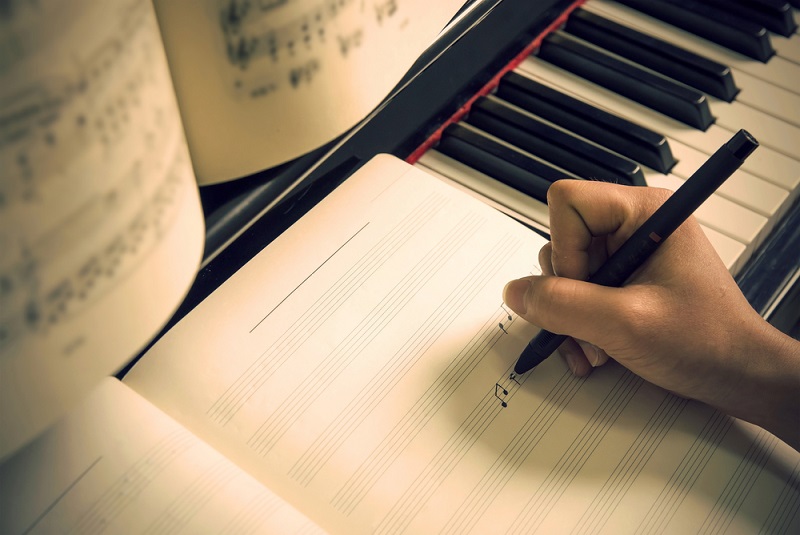
 Sheet Music Giant is a site for those who wants to access popular sheet music easily,
letting them download the sheet music for free for trial purposes.
It's completely free to download and try the listed sheet music, but you have to delete the files after 24 hours of trial.
Don't forget, if you like the piece of music you have just learned playing,
treat the artist with respect, and go buy the original sheet music.
Sheet Music Giant is a site for those who wants to access popular sheet music easily,
letting them download the sheet music for free for trial purposes.
It's completely free to download and try the listed sheet music, but you have to delete the files after 24 hours of trial.
Don't forget, if you like the piece of music you have just learned playing,
treat the artist with respect, and go buy the original sheet music.
Latest Sheet Music
Johann Sebastian Bach
Johann Sebastian Bach (31 March 1685 – 28 July 1750) was a German composer and musician of the Baroque period. He is known for instrumental compositions such as the Art of Fugue, the Brandenburg Concertos, and the Goldberg Variations, and for vocal music such as the St Matthew Passion and the Mass in B minor. Since the 19th-century Bach Revival he has been generally regarded as one of the greatest composers of the Western art musical canon.
Hillsong United
The Hillsong United band is an Australian rock and worship band, a part of Hillsong Church's youth ministry Hillsong United. Their music is a contemporary style of praise and worship tempered with mainstream rock.
Current members of the Hillsong United band include Jonathon Douglass (J.D.), Jadwin "Jad" Gillies, Holly Watson, Annie Garratt, Bec Gillies, and Michelle Fragar, daughter of Russell Fragar. Michael Guy Chislett plays guitar and Matthew Tennikoff plays bass guitar. Former original drummer Luke Munns made a transition from the drums to front the rock/indie band LUKAS. Popular New Zealand artist Brooke Fraser recently joined the band when she joined the church, first appearing on United We Stand.
The annual Hillsong United CD/DVD was recorded over many years during their October youth conference Encounterfest, with the album released in the first quarter of the following year. The 2007 album All of the Above was the first album to be fully studio recorded, containing videos of songs on the DVD. The band has toured in a number of countries, leading worship to thousands in North and South America, Europe and Asia.
Current members of the Hillsong United band include Jonathon Douglass (J.D.), Jadwin "Jad" Gillies, Holly Watson, Annie Garratt, Bec Gillies, and Michelle Fragar, daughter of Russell Fragar. Michael Guy Chislett plays guitar and Matthew Tennikoff plays bass guitar. Former original drummer Luke Munns made a transition from the drums to front the rock/indie band LUKAS. Popular New Zealand artist Brooke Fraser recently joined the band when she joined the church, first appearing on United We Stand.
The annual Hillsong United CD/DVD was recorded over many years during their October youth conference Encounterfest, with the album released in the first quarter of the following year. The 2007 album All of the Above was the first album to be fully studio recorded, containing videos of songs on the DVD. The band has toured in a number of countries, leading worship to thousands in North and South America, Europe and Asia.
Bart Howard
Bart Howard (born Howard Joseph Gustafson; June 1, 1915 — February 21, 2004) was the composer and writer of the famous jazz standard "Fly Me To The Moon", which has been performed by singers (among others) Frank Sinatra, Ella Fitzgerald, Nancy Wilson, Della Reese, Diana Krall, June Christy and Astrud Gilberto. It is also played frequently by jazz and popular musicians around the world.
Howard was born in Burlington, Iowa. He began his career as an accompanist at the age of 16 and played for Mabel Mercer, Johnny Mathis and Eartha Kitt, among others.
"Fly Me To the Moon" was first sung in 1954 by Felicia Sanders at the "Blue Angel" club in Manhattan where the composer became M.C. and accompanist in 1951. The song received wide exposure when Peggy Lee sang it on The Ed Sullivan Show several years later. Bart Howard "lived off" this song for the rest of his life, although he had 49 other songs to his credit.
He died, aged 88, in Carmel, New York. He was survived by a sister Dorothy Lind of Burlington, Iowa and by his companion of 58 years, Thomas Fowler.
Howard was born in Burlington, Iowa. He began his career as an accompanist at the age of 16 and played for Mabel Mercer, Johnny Mathis and Eartha Kitt, among others.
"Fly Me To the Moon" was first sung in 1954 by Felicia Sanders at the "Blue Angel" club in Manhattan where the composer became M.C. and accompanist in 1951. The song received wide exposure when Peggy Lee sang it on The Ed Sullivan Show several years later. Bart Howard "lived off" this song for the rest of his life, although he had 49 other songs to his credit.
He died, aged 88, in Carmel, New York. He was survived by a sister Dorothy Lind of Burlington, Iowa and by his companion of 58 years, Thomas Fowler.
Giulio Caccini
Giulio Romolo Caccini (also Giulio Romano) (Rome, 8 October 1551 – Florence, buried 10 December 1618) was an Italian composer, teacher, singer, instrumentalist and writer of the late Renaissance and early Baroque eras. He was one of the founders of the genre of opera, and one of the most influential creators of the new Baroque style. He was also the father of the composer Francesca Caccini and the singer Settimia Caccini.
Nhac Viet
Traditional Vietnamese music encompasses a large umbrella of Vietnamese music from antiquity to present times, and can also encompass multiple groups, such as those from Vietnam's ethnic minority tribes
Carlos Gardel
Carlos Gardel (11 December 1890 – 24 June 1935) was a singer, songwriter and actor, and is perhaps the most prominent figure in the history of tango. The unerring musicality of Gardel's baritone voice and the dramatic phrasing of his lyrics made miniature masterpieces of his hundreds of three-minute tango recordings. Together with lyricist and long-time collaborator Alfredo Le Pera, Gardel wrote several classic tangos, most notably "Mi Buenos Aires querido", "Por una cabeza" and "El día que me quieras".
Gardel died in an airplane crash at the height of his career, becoming an archetypal tragic hero mourned throughout Latin America. For many, Gardel embodies the soul of the tango style. He is commonly referred to as "Carlitos", "El Zorzal" (The Song Thrush), "The King of Tango", "El Mago" (The Magician) and "El Mudo" (The Mute).
Gardel died in an airplane crash at the height of his career, becoming an archetypal tragic hero mourned throughout Latin America. For many, Gardel embodies the soul of the tango style. He is commonly referred to as "Carlitos", "El Zorzal" (The Song Thrush), "The King of Tango", "El Mago" (The Magician) and "El Mudo" (The Mute).
Jean-Jacques Goldman
Jean-Jacques Goldman is a French singer-songwriter and music record producer. He is hugely popular in the French-speaking world. Since the death of Johnny Hallyday in 2017 he has been the highest grossing living French pop rock act.
Mae
Mae is an American rock band that formed in Norfolk, Virginia in 2001. The band's name is an acronym for "Multi-sensory Aesthetic Experience," based on a course taken by drummer Jacob Marshall while a student at Old Dominion University.
Current members:
Dave Elkins (born Dave Gimenez) – Vocals, guitar
Zach Gehring – Guitar
Jacob Marshall – Drums
Current members:
Dave Elkins (born Dave Gimenez) – Vocals, guitar
Zach Gehring – Guitar
Jacob Marshall – Drums
Chopin
Frédéric Chopin (1 March 1810 – 17 October 1849) was a Polish composer and virtuoso pianist of the Romantic period. He is widely regarded as the greatest Polish composer, and ranks as one of music's greatest tone poets.
He was born in the village of Żelazowa Wola, in the Duchy of Warsaw, to a Polish mother and French-expatriate father, and in his early life was regarded as a child-prodigy pianist. In November 1830, at the age of 20, Chopin went abroad; following the suppression of the Polish November Uprising of 1830–31, he became one of many expatriates of the Polish "Great Emigration."
In Paris, he made a comfortable living as a composer and piano teacher, while giving few public performances. A Polish patriot,
Chopin's extant compositions were written primarily for the piano as a solo instrument. Though technically demanding, Chopin's style emphasizes nuance and expressive depth rather than virtuosity. Chopin invented musical forms such as the ballade and was responsible for major innovations in forms such as the piano sonata, waltz, nocturne, étude, impromptu and prelude. His works are mainstays of Romanticism in 19th-century classical music.
He was born in the village of Żelazowa Wola, in the Duchy of Warsaw, to a Polish mother and French-expatriate father, and in his early life was regarded as a child-prodigy pianist. In November 1830, at the age of 20, Chopin went abroad; following the suppression of the Polish November Uprising of 1830–31, he became one of many expatriates of the Polish "Great Emigration."
In Paris, he made a comfortable living as a composer and piano teacher, while giving few public performances. A Polish patriot,
Chopin's extant compositions were written primarily for the piano as a solo instrument. Though technically demanding, Chopin's style emphasizes nuance and expressive depth rather than virtuosity. Chopin invented musical forms such as the ballade and was responsible for major innovations in forms such as the piano sonata, waltz, nocturne, étude, impromptu and prelude. His works are mainstays of Romanticism in 19th-century classical music.
The Beatles
The Beatles were a pop and rock group from Liverpool, England formed in 1960. Primarily consisting of John Lennon (rhythm guitar, vocals), Paul McCartney (bass guitar, vocals), George Harrison (lead guitar, vocals) and Ringo Starr (drums, vocals) throughout their career, The Beatles are recognised for leading the mid-1960s musical "British Invasion" into the United States. Although their initial musical style was rooted in 1950s rock and roll and homegrown skiffle, the group explored genres ranging from Tin Pan Alley to psychedelic rock. Their clothes, styles, and statements made them trend-setters, while their growing social awareness saw their influence extend into the social and cultural revolutions of the 1960s. After the band broke up in 1970, all four members embarked upon solo careers.
The Beatles are one of the most commercially successful and critically acclaimed bands in the history of popular music, selling over a billion records internationally. In the United Kingdom, The Beatles released more than 40 different singles, albums, and EPs that reached number one, earning more number one albums (15) than any other group in UK chart history. This commercial success was repeated in many other countries; their record company, EMI, estimated that by 1985 they had sold over one billion records worldwide. According to the Recording Industry Association of America, The Beatles have sold more albums in the United States than any other band. In 2004, Rolling Stone magazine ranked The Beatles number one on its list of 100 Greatest Artists of All Time. According to that same magazine, The Beatles' innovative music and cultural impact helped define the 1960s, and their influence on pop culture is still evident today. In 2008, Billboard magazine released a list of top-selling Hot 100 artists to celebrate the chart's fiftieth anniversary; The Beatles reached #1 again.
The Beatles are one of the most commercially successful and critically acclaimed bands in the history of popular music, selling over a billion records internationally. In the United Kingdom, The Beatles released more than 40 different singles, albums, and EPs that reached number one, earning more number one albums (15) than any other group in UK chart history. This commercial success was repeated in many other countries; their record company, EMI, estimated that by 1985 they had sold over one billion records worldwide. According to the Recording Industry Association of America, The Beatles have sold more albums in the United States than any other band. In 2004, Rolling Stone magazine ranked The Beatles number one on its list of 100 Greatest Artists of All Time. According to that same magazine, The Beatles' innovative music and cultural impact helped define the 1960s, and their influence on pop culture is still evident today. In 2008, Billboard magazine released a list of top-selling Hot 100 artists to celebrate the chart's fiftieth anniversary; The Beatles reached #1 again.
Johann Mattheson
Johann Mattheson (28 September 1681 – 17 April 1764) was a German composer, singer, writer, lexicographer, diplomat and music theorist.Mattheson was born and died in Hamburg. He was a close friend of George Frideric Handel, although he nearly killed him in a sudden quarrel, during a performance of Mattheson's opera Cleopatra in 1704. Handel was saved only by a large button which turned aside Mattheson's sword.
HUGO ALFVEN
Hugo Emil Alfvén (Swedish: (About this soundlisten); 1 May 1872 – 8 May 1960) was a Swedish composer, conductor, violinist, and painter.Alfvén was born in Stockholm, Sweden, and studied at the Royal College of Music (Kungliga Musikhögskolan) from 1887 to 1891 with the violin as his main instrument while receiving lessons from Lars Zetterquist. He also took private composition lessons from Johan Lindegren, a leading counterpoint expert. He earned a living by playing the violin at the Royal Opera in Stockholm. He also played the violin in the Royal Swedish Orchestra.
Georges Brassens
Georges Charles Brassens was a French singer-songwriter and poet. As an iconic figure in France, he achieved fame through his elegant songs with their harmonically complex music for voice and guitar and articulate, diverse lyrics. He is considered one of France's most accomplished postwar poets.
Traditional
Brahms
Johannes Brahms (May 7, 1833 â April 3, 1897) was a German composer of the Romantic period. He was born in Hamburg and in his later years he settled in Vienna, Austria.
Brahms maintained a Classical sense of form and order in his works â in contrast to the opulence of the music of many of his contemporaries. Thus many admirers (though not necessarily Brahms himself) saw him as the champion of traditional forms and "pure music," as opposed to the New German embrace of program music.
Brahms venerated Beethoven: in the composer's home, a marble bust of Beethoven looked down on the spot where he composed, and some passages in his works are reminiscent of Beethoven's style. The main theme of the finale of Brahms's First Symphony is reminiscent of the main theme of the finale of Beethoven's Ninth, and when this resemblance was pointed out to Brahms he replied that any ass â jeder Esel â could see that.
Ein deutsches Requiem was partially inspired by his mother's death in 1865, but also incorporates material from a Symphony he started in 1854, but abandoned following Schumann's suicide attempt. He once wrote that the Requiem "belonged to Schumann". The first movement of this abandoned Symphony was re-worked as the first movement of the First Piano Concerto.
Brahms also loved the Classical composers Mozart and Haydn. He collected first editions and autographs of their works, and edited performing editions. He also studied the music of pre-classical composers, including Giovanni Gabrieli, Johann Adolph Hasse, Heinrich Schütz and especially Johann Sebastian Bach. His friends included leading musicologists, and with Friedrich Chrysander he edited an edition of the works of François Couperin. He looked to older music for inspiration in the arts of strict counterpoint; the themes of some of his works are modelled on Baroque sources, such as Bach's The Art of Fugue in the fugal finale of Cello Sonata No. 1, or the same composer's Cantata No. 150 in the passacaglia theme of the Fourth Symphony's finale.
Brahms maintained a Classical sense of form and order in his works â in contrast to the opulence of the music of many of his contemporaries. Thus many admirers (though not necessarily Brahms himself) saw him as the champion of traditional forms and "pure music," as opposed to the New German embrace of program music.
Brahms venerated Beethoven: in the composer's home, a marble bust of Beethoven looked down on the spot where he composed, and some passages in his works are reminiscent of Beethoven's style. The main theme of the finale of Brahms's First Symphony is reminiscent of the main theme of the finale of Beethoven's Ninth, and when this resemblance was pointed out to Brahms he replied that any ass â jeder Esel â could see that.
Ein deutsches Requiem was partially inspired by his mother's death in 1865, but also incorporates material from a Symphony he started in 1854, but abandoned following Schumann's suicide attempt. He once wrote that the Requiem "belonged to Schumann". The first movement of this abandoned Symphony was re-worked as the first movement of the First Piano Concerto.
Brahms also loved the Classical composers Mozart and Haydn. He collected first editions and autographs of their works, and edited performing editions. He also studied the music of pre-classical composers, including Giovanni Gabrieli, Johann Adolph Hasse, Heinrich Schütz and especially Johann Sebastian Bach. His friends included leading musicologists, and with Friedrich Chrysander he edited an edition of the works of François Couperin. He looked to older music for inspiration in the arts of strict counterpoint; the themes of some of his works are modelled on Baroque sources, such as Bach's The Art of Fugue in the fugal finale of Cello Sonata No. 1, or the same composer's Cantata No. 150 in the passacaglia theme of the Fourth Symphony's finale.
Mozart
Wolfgang Amadeus Mozart, full name Johann Chrysostom Wolfgang Amadeus Mozart (27 January 1756 â 5 December 1791) was a prolific and influential composer of the Classical era. His over 600 compositions include works widely acknowledged as pinnacles of symphonic, concertante, chamber, piano, operatic, and choral music. Mozart is among the most enduringly popular of classical composers, and many of his works are part of the standard concert repertoire.
Mozart's music, like Haydn's, stands as an archetypal example of the Classical style. His works spanned the period during which that style transformed from one exemplified by the style galant to one that began to incorporate some of the contrapuntal complexities of the late Baroque, complexities against which the galant style had been a reaction. Mozart's own stylistic development closely paralleled the development of the classical style as a whole. In addition, he was a versatile composer and wrote in almost every major genre, including symphony, opera, the solo concerto, chamber music including string quartet and string quintet, and the piano sonata. While none of these genres were new, the piano concerto was almost single-handedly developed and popularized by Mozart. He also wrote a great deal of religious music, including masses; and he composed many dances, divertimenti, serenades, and other forms of light entertainment.
The central traits of the classical style can be identified in Mozart's music. Clarity, balance, and transparency are hallmarks of his work.
Mozart's music, like Haydn's, stands as an archetypal example of the Classical style. His works spanned the period during which that style transformed from one exemplified by the style galant to one that began to incorporate some of the contrapuntal complexities of the late Baroque, complexities against which the galant style had been a reaction. Mozart's own stylistic development closely paralleled the development of the classical style as a whole. In addition, he was a versatile composer and wrote in almost every major genre, including symphony, opera, the solo concerto, chamber music including string quartet and string quintet, and the piano sonata. While none of these genres were new, the piano concerto was almost single-handedly developed and popularized by Mozart. He also wrote a great deal of religious music, including masses; and he composed many dances, divertimenti, serenades, and other forms of light entertainment.
The central traits of the classical style can be identified in Mozart's music. Clarity, balance, and transparency are hallmarks of his work.
Johnny Mercer
John Herndon "Johnny" Mercer (November 18, 1909 – June 25, 1976) was an American lyricist, songwriter and singer. He was also the founder of Capitol Records.
He is best known as a lyricist, but he also composed music. He was also a popular singer who recorded his own songs as well as those written by others. From the mid-1930s through the mid-1950s, many of the songs Mercer wrote and performed were among the most popular hits of the time. He wrote the lyrics to more than fifteen hundred songs, including compositions for movies and Broadway shows. He received nineteen Academy Award nominations, and won four Best Original Song Oscars.
He is best known as a lyricist, but he also composed music. He was also a popular singer who recorded his own songs as well as those written by others. From the mid-1930s through the mid-1950s, many of the songs Mercer wrote and performed were among the most popular hits of the time. He wrote the lyrics to more than fifteen hundred songs, including compositions for movies and Broadway shows. He received nineteen Academy Award nominations, and won four Best Original Song Oscars.
Bach
Johann Sebastian Bach (31 March 1685 – 28 July 1750) was a German composer and organist whose sacred and secular works for choir, orchestra, and solo instruments drew together the strands of the Baroque period and brought it to its ultimate maturity. Although he introduced no new forms, he enriched the prevailing German style with a robust contrapuntal technique, an unrivalled control of harmonic and motivic organisation in composition for diverse musical forces, and the adaptation of rhythms and textures from abroad, particularly Italy and France.
Revered for their intellectual depth and technical and artistic beauty, Bach's works include the Brandenburg concertos; the Goldberg Variations; the English Suites, French Suites, Partitas, and Well-Tempered Clavier; the Mass in B Minor; the St. Matthew Passion; the St. John Passion; The Musical Offering; The Art of Fugue; the Sonatas and Partitas for violin solo; the Cello Suites; more than 200 surviving cantatas; and a similar number of organ works, including the celebrated Toccata and Fugue in D Minor.
While Bach's fame as an organist was great during his lifetime, he was not particularly well-known as a composer. His adherence to Baroque forms and contrapuntal style was considered "old-fashioned" by his contemporaries, especially late in his career when the musical fashion tended towards Rococo and later Classical styles. A revival of interest and performances of his music began early in the 19th century, and he is now widely considered to be one of the greatest composers in the Western tradition.
Revered for their intellectual depth and technical and artistic beauty, Bach's works include the Brandenburg concertos; the Goldberg Variations; the English Suites, French Suites, Partitas, and Well-Tempered Clavier; the Mass in B Minor; the St. Matthew Passion; the St. John Passion; The Musical Offering; The Art of Fugue; the Sonatas and Partitas for violin solo; the Cello Suites; more than 200 surviving cantatas; and a similar number of organ works, including the celebrated Toccata and Fugue in D Minor.
While Bach's fame as an organist was great during his lifetime, he was not particularly well-known as a composer. His adherence to Baroque forms and contrapuntal style was considered "old-fashioned" by his contemporaries, especially late in his career when the musical fashion tended towards Rococo and later Classical styles. A revival of interest and performances of his music began early in the 19th century, and he is now widely considered to be one of the greatest composers in the Western tradition.
Music theory
Music theory is the study of the practices and possibilities of music. The Oxford Companion to Music describes three interrelated uses of the term "music theory"
Genevieve Thompson
Genevieve Thompson United States · Composer, Private Music Teacher · Self-employed View Genevieve Thompson's profile on LinkedIn, the world's largest professional ... Activities and Societies: Marching Band, Jazz Ensemble, Wind Symphony,
Edgar Kelley
Edgar Stillman Kelley was an American composer, conductor, teacher, and writer on music. He is sometimes associated with the Indianist movement in American music.
billy cobham
William Emanuel Cobham Jr. (born May 16, 1944) is a Panamanian-American jazz drummer who came to prominence in the late 1960s and early 1970s with trumpeter Miles Davis and then with the Mahavishnu Orchestra. According to AllMusic's reviewer, Cobham is "generally acclaimed as fusion's greatest drummer".
He was inducted into the Modern Drummer Hall of Fame in 1987 and the Classic Drummer Hall of Fame in 2013.
He was inducted into the Modern Drummer Hall of Fame in 1987 and the Classic Drummer Hall of Fame in 2013.
Mack Wilberg
Mack Wilberg (born February 20, 1955) is an American composer, arranger, conductor, and choral clinician who has served as music director of the Tabernacle Choir at Temple Square since 2008.
Wilberg studied music at Brigham Young University (BYU) and the University of Southern California before returning to BYU as a professor of music. He was the associate director of the choir and music director of the Temple Square Chorale for The Church of Jesus Christ of Latter-day Saints (LDS Church) from May 1999 until his appointment as the Tabernacle Choir's director on March 28, 2008. Wilberg is a noted composer and arranger, and his works are published by Oxford University Press
Wilberg studied music at Brigham Young University (BYU) and the University of Southern California before returning to BYU as a professor of music. He was the associate director of the choir and music director of the Temple Square Chorale for The Church of Jesus Christ of Latter-day Saints (LDS Church) from May 1999 until his appointment as the Tabernacle Choir's director on March 28, 2008. Wilberg is a noted composer and arranger, and his works are published by Oxford University Press
Metallica
Metallica is an American heavy metal band that formed in 1981 in Los Angeles, California. Founded when drummer Lars Ulrich posted an advertisement in a Los Angeles newspaper, Metallica's original line-up consisted of Ulrich, rhythm guitarist and vocalist James Hetfield, lead guitarist Dave Mustaine, and bassist Ron McGovney. These last two were later replaced from the band, in favor of Kirk Hammett and Cliff Burton, respectively. In September 1986, Metallica's tour bus skidded out of control and flipped, which resulted in Burton being crushed under the bus and killed. Jason Newsted replaced him less than two months later. Newsted left the band in 2001 and was replaced by Robert Trujillo in 2003.
Metallica's early releases included fast tempos, instrumentals, and aggressive musicianship that placed them as one of the "Big Four" of the thrash metal subgenre alongside Slayer, Megadeth and Anthrax. The band earned a growing fan base in the underground music community, and some critics say the 1986 release Master of Puppets is one of the most influential and "heavy" thrash metal albums. The band achieved substantial commercial success with its self-titled 1991 album, which debuted at number one on the Billboard 200. Some critics and fans believed the band changed its musical direction to appeal to the mainstream audience. With the release of Load in 1996, Metallica distanced itself from earlier releases in what has been described as "an almost alternative rock approach", and the band faced accusations of "selling out".
In 2000, Metallica was among several artists who filed a lawsuit against Napster for sharing the band's copyright-protected material for free without the band members' consent. A settlement was reached, and Napster became a pay-to-use service. Despite reaching number one on the Billboard 200, the release of St. Anger in 2003 disappointed some critics and fans with the exclusion of guitar solos, and the "steel-sounding" snare drum. A film titled Some Kind of Monster documented the recording process of St. Anger.
Metallica's early releases included fast tempos, instrumentals, and aggressive musicianship that placed them as one of the "Big Four" of the thrash metal subgenre alongside Slayer, Megadeth and Anthrax. The band earned a growing fan base in the underground music community, and some critics say the 1986 release Master of Puppets is one of the most influential and "heavy" thrash metal albums. The band achieved substantial commercial success with its self-titled 1991 album, which debuted at number one on the Billboard 200. Some critics and fans believed the band changed its musical direction to appeal to the mainstream audience. With the release of Load in 1996, Metallica distanced itself from earlier releases in what has been described as "an almost alternative rock approach", and the band faced accusations of "selling out".
In 2000, Metallica was among several artists who filed a lawsuit against Napster for sharing the band's copyright-protected material for free without the band members' consent. A settlement was reached, and Napster became a pay-to-use service. Despite reaching number one on the Billboard 200, the release of St. Anger in 2003 disappointed some critics and fans with the exclusion of guitar solos, and the "steel-sounding" snare drum. A film titled Some Kind of Monster documented the recording process of St. Anger.
Aretha Franklin
Aretha Louise Franklin (born March 25, 1942) is an American singer, songwriter and pianist self-named and commonly referred to as "The Queen of Soul". Although renowned for her soul recordings, Franklin is also adept at jazz, rock, blues, pop, R&B and gospel. In 2008, the American music magazine Rolling Stone ranked Franklin #1 on its list of The Greatest Singers of All Time.
Franklin is one of the most honored artists by the Grammy Awards, with 20 Grammys to date, which include the Living Legend Grammy and the Lifetime Achievement Grammy. She has scored a total of 20 #1 singles on the Billboard R&B Singles Chart, two of which also became #1 hits on the Billboard Hot 100: "Respect" (1967) and "I Knew You Were Waiting (For Me)" (1987), a duet with George Michael. Since 1961, Franklin has scored a total of 45 "Top 40" hits on the Billboard Hot 100 chart.
In 1987, Franklin became the first female artist to be entered into the Rock and Roll Hall of Fame.
Franklin was the featured singer at the 2009 Presidential inauguration ceremony for Barack Obama.
Franklin is one of the most honored artists by the Grammy Awards, with 20 Grammys to date, which include the Living Legend Grammy and the Lifetime Achievement Grammy. She has scored a total of 20 #1 singles on the Billboard R&B Singles Chart, two of which also became #1 hits on the Billboard Hot 100: "Respect" (1967) and "I Knew You Were Waiting (For Me)" (1987), a duet with George Michael. Since 1961, Franklin has scored a total of 45 "Top 40" hits on the Billboard Hot 100 chart.
In 1987, Franklin became the first female artist to be entered into the Rock and Roll Hall of Fame.
Franklin was the featured singer at the 2009 Presidential inauguration ceremony for Barack Obama.
Erik Satie
Éric Alfred Leslie Satie, who signed his name Erik Satie after 1884, was a French composer and pianist. Satie was an influential artist in the late 19th- and early 20th-century Parisian avant-garde.
Counting Crows
Counting Crows is a rock band originating from Berkeley, California. The group gained popularity in 1994 following the release of its debut album August and Everything After, which featured the hit single "Mr. Jones". The band's influences include Van Morrison, R.E.M., Nirvana, Bob Dylan, and The Band. They received a 2004 Academy Award nomination for the song "Accidentally in Love".
Tom Jobim
Antônio Carlos Brasileiro de Almeida Jobim (January 25, 1927 in Rio de Janeiro – December 8, 1994 in New York), also known as Tom Jobim, was a Grammy Award-winning Brazilian songwriter, composer, arranger, singer, and pianist/guitarist. A primary force behind the creation of the bossa nova style, his songs have been performed by many singers and instrumentalists within Brazil and internationally.
Tiziano Benedetti
Tiziano Ferro is an Italian singer, songwriter, producer and author. He broke through in 2001 with his international hit single "Perdono" and has remained ...
Anonymous
Easy piano sheets to teach kids how to play piano.
Ryuichi Sakamoto
Ryuichi Sakamoto (坂本 龍一 Sakamoto Ryūichi?, born January 17, 1952) is an Academy Award-, Grammy-, and Golden Globe-winning Japanese musician, composer, record producer and actor, based in New York and Tokyo. He played keyboards in the influential Japanese electropop band Yellow Magic Orchestra. His 1999 musical composition "Energy Flow" is the first number-one instrumental single in the Japan's Oricon charts history. He was ranked at number 59 in a list of the top 100 most influential musicians compiled by HMV Japan.
Astor Piazzolla
Ástor Pantaleón Piazzolla (March 11, 1921 – July 4, 1992) was an Argentine tango composer and bandoneón player. His oeuvre revolutionized the traditional tango into a new style termed nuevo tango, incorporating elements from jazz and classical music. An excellent bandoneonist, he regularly performed his own compositions with different ensembles.
Piazzolla's nuevo tango was distinct from the traditional tango in its incorporation of elements of jazz, its use of extended harmonies and dissonance, its use of counterpoint, and its ventures into extended compositional forms. As Argentine psychoanalyst Carlos Kuri has pointed out, Piazzolla's fusion of tango with this wide range of other recognizable Western musical elements was so successful that it produced a new individual style transcending these influences. It is precisely this success, and individuality, that makes it hard to pin down where particular influences reside in his compositions, but some aspects are clear. The use of the passacaglia technique of a circulating bass line and harmonic sequence, invented and much used in 17th and 18th century baroque music but also central to the idea of jazz "changes", predominates in most of Piazzolla's mature compositions. Another clear reference to the baroque is the often complex and virtuosic counterpoint that sometimes follows strict fugal behavior but more often simply allows each performer in the group to assert his voice. A further technique that emphasises this sense of democracy and freedom among the musicians is improvisation that is borrowed from jazz in concept, but in practice involves a different vocabulary of scales and rhythms that stay within the parameters of the established tango sound-world. Pablo Ziegler has been particularly responsible for developing this aspect of the style both within Piazzolla's groups and since the composer's death.
Piazzolla's nuevo tango was distinct from the traditional tango in its incorporation of elements of jazz, its use of extended harmonies and dissonance, its use of counterpoint, and its ventures into extended compositional forms. As Argentine psychoanalyst Carlos Kuri has pointed out, Piazzolla's fusion of tango with this wide range of other recognizable Western musical elements was so successful that it produced a new individual style transcending these influences. It is precisely this success, and individuality, that makes it hard to pin down where particular influences reside in his compositions, but some aspects are clear. The use of the passacaglia technique of a circulating bass line and harmonic sequence, invented and much used in 17th and 18th century baroque music but also central to the idea of jazz "changes", predominates in most of Piazzolla's mature compositions. Another clear reference to the baroque is the often complex and virtuosic counterpoint that sometimes follows strict fugal behavior but more often simply allows each performer in the group to assert his voice. A further technique that emphasises this sense of democracy and freedom among the musicians is improvisation that is borrowed from jazz in concept, but in practice involves a different vocabulary of scales and rhythms that stay within the parameters of the established tango sound-world. Pablo Ziegler has been particularly responsible for developing this aspect of the style both within Piazzolla's groups and since the composer's death.
Cannonball Adderley
Julian Edwin "Cannonball" Adderley was an American jazz alto saxophonist of the hard bop era of the 1950s and 1960s. Adderley is remembered for his 1966 soul jazz single "Mercy, Mercy, Mercy", a crossover hit on the pop charts
Judy Garland
Judy Garland (June 10, 1922 – June 22, 1969) was an American actress and singer. Through a career that spanned 45 of her 47 years, Garland attained international stardom as an actress in musical and dramatic roles, as a recording artist, and on the concert stage. Respected for her versatility, she received a Juvenile Academy Award, won a Golden Globe Award, received the Cecil B. DeMille Award for her work in films, as well as Grammy Awards and a Special Tony Award. She had a contralto singing range.
After appearing in vaudeville with her sisters, Garland was signed to Metro-Goldwyn-Mayer as a teenager. There she made more than two dozen films, including nine with Mickey Rooney and the 1939 film with which she would be most identified, The Wizard of Oz. After 15 years, Garland was released from the studio but gained renewed success through record-breaking concert appearances, including a critically acclaimed Carnegie Hall concert, a well-regarded but short-lived television series and a return to acting beginning with a critically acclaimed performance in A Star Is Born.
Despite her professional triumphs, Garland battled personal problems throughout her life. Insecure about her appearance, her feelings were compounded by film executives who told her she was unattractive and overweight. Plied with drugs to control her weight and increase her productivity, Garland endured a decades-long struggle with prescription drug addiction. Garland was plagued by financial instability, often owing hundreds of thousands of dollars in back taxes. She married five times, with her first four marriages ending in divorce. She also attempted suicide on a number of occasions. Garland died of an accidental drug overdose at the age of 47, leaving children Liza Minnelli, Lorna Luft, and Joey Luft.
In 1997, Garland was posthumously awarded a Grammy Lifetime Achievement Award. Several of her recordings have been inducted into the Grammy Hall of Fame. In 1999, the American Film Institute placed her among the ten greatest female stars in the history of American cinema.
After appearing in vaudeville with her sisters, Garland was signed to Metro-Goldwyn-Mayer as a teenager. There she made more than two dozen films, including nine with Mickey Rooney and the 1939 film with which she would be most identified, The Wizard of Oz. After 15 years, Garland was released from the studio but gained renewed success through record-breaking concert appearances, including a critically acclaimed Carnegie Hall concert, a well-regarded but short-lived television series and a return to acting beginning with a critically acclaimed performance in A Star Is Born.
Despite her professional triumphs, Garland battled personal problems throughout her life. Insecure about her appearance, her feelings were compounded by film executives who told her she was unattractive and overweight. Plied with drugs to control her weight and increase her productivity, Garland endured a decades-long struggle with prescription drug addiction. Garland was plagued by financial instability, often owing hundreds of thousands of dollars in back taxes. She married five times, with her first four marriages ending in divorce. She also attempted suicide on a number of occasions. Garland died of an accidental drug overdose at the age of 47, leaving children Liza Minnelli, Lorna Luft, and Joey Luft.
In 1997, Garland was posthumously awarded a Grammy Lifetime Achievement Award. Several of her recordings have been inducted into the Grammy Hall of Fame. In 1999, the American Film Institute placed her among the ten greatest female stars in the history of American cinema.
Marty Sampson
Martin W "Marty" Sampson is an Australian singer-songwriter, musician and former worship leader at the Hillsong Church in Sydney. From the late 1990s until 2019 he featured on the United Live albums and was one of the original Hillsong United band's worship leaders.
Stephen Pearson
Although my training and career was as a lawyer, my personal worlds were in the mountains and in song. From 1995-2005, I wrote music and lyrics for the 150 Psalms (as well as related devotional music), and established a web site, www.psalmistry.com, to share the work with fellow praise and worship teams. I am now retired from my profession, but not the mountains or music. The changes in music technology continue to add exciting avenues of expression and creation.
La Fontaine
Jean de La Fontaine was a French fabulist and one of the most widely read French poets of the 17th century. He is known above all for his Fables, which provided a model for subsequent fabulists across Europe and numerous alternative versions in France, as well as in French regional languages.
Brooklyn Tabernacle Choir
The Brooklyn Tabernacle Choir is directed by Carol Cymbala, the wife of Senior Pastor Jim Cymbala and the daughter of the church founder, the late Rev. Clair Hutchins. Although the Choir is composed of vocally untrained church members, it has been used by the Lord to present the love of God all over the world.
Tales of Legendia
Frank Ticheli (born January 21, 1958) is an American composer of orchestral, choral, chamber, and concert band works. He lives in Los Angeles, California, where he is a Professor of Composition at the University of Southern California. He was the Pacific Symphony's composer in residence from 1991 to 1998, composing numerous works for that orchestra. A number of his works are particularly notable, as they have become standards in concert band repertoire.
Adele
Adele Laurie Blue Adkins (born 5 May 1988 in Enfield, North London), She is the first recipient of the Brit Awards Critics' Choice, which was given to artists who, at the time, had yet to release an album. She debuted at number one with her Mercury Prize nominated debut album 19 in the UK album chart and has since then been certified platinum with sales over 500,000 copies.
Josh Groban
Joshua Winslow Groban (born February 27, 1981) is a Grammy-nominated American singer-songwriter. He has concentrated his career so far mostly in concert singing and recordings, although he has stated that he wishes to pursue musical theater in the future.
Various music critics have described Groban's voice in different ways, with some referring to him as a tenor and others as a baritone. In performance, Groban's music goes as low as G2 (as in the song "To Where You Are") and extends up to at least B4 flat or the B flat above middle C (as heard in "You Raise Me Up"). He also hits a High B during the Baywatch theme song in his Emmy performance of TV Theme Songs on September 21, 2008.This places his voice lower than the tenor range on the low end, and just short of Tenor C, and therefore above the baritone range, on the high end.
Some of Groban's musical influences have been Radiohead, Paul Simon, Sting, Peter Gabriel, and Björk. He says he is able to look up to anyone, musically, who has pushed the boundaries and stepped outside of the box. As for vocal influences, "anyone who told a story with their songs," including Mandy Patinkin, Klaus Nomi, George Hearn, and Luciano Pavarotti.
Various music critics have described Groban's voice in different ways, with some referring to him as a tenor and others as a baritone. In performance, Groban's music goes as low as G2 (as in the song "To Where You Are") and extends up to at least B4 flat or the B flat above middle C (as heard in "You Raise Me Up"). He also hits a High B during the Baywatch theme song in his Emmy performance of TV Theme Songs on September 21, 2008.This places his voice lower than the tenor range on the low end, and just short of Tenor C, and therefore above the baritone range, on the high end.
Some of Groban's musical influences have been Radiohead, Paul Simon, Sting, Peter Gabriel, and Björk. He says he is able to look up to anyone, musically, who has pushed the boundaries and stepped outside of the box. As for vocal influences, "anyone who told a story with their songs," including Mandy Patinkin, Klaus Nomi, George Hearn, and Luciano Pavarotti.
Alexander Glazunov
Alexander Konstantinovich Glazunov (Russian: Алекса́ндр Константи́нович Глазуно́в, 10 August 1865 – 21 March 1936) was a Russian composer, music teacher, and conductor of the late Russian Romantic period. He served as director of the Saint Petersburg Conservatory between 1905 and 1928 and was instrumental in the reorganization of the institute into the Petrograd Conservatory, then the Leningrad Conservatory, following the Bolshevik Revolution. He continued heading the Conservatory until 1930, though he had left the Soviet Union in 1928 and did not return. The best-known student under his tenure during the early Soviet years was Dmitri Shostakovich.
Boys like Girls
Boys Like Girls is an American pop rock band from Boston, Massachusetts, who gained mainstream recognition when they released their self-titled debut album Boys Like Girls. They were the co-headliners with Good Charlotte for the Soundtrack of Your Summer Tour 2008 that toured across the U.S. The group's second studio album Love Drunk, was released on September 8, 2009.
Ray Henderson
Ray Henderson (December 1, 1896 – December 31, 1970), was an American songwriter.
Born Raymond Brost in Buffalo, New York, Henderson moved to New York City and became a popular composer in Tin Pan Alley. He was one third of a successful songwriting and music publishing team with Lew Brown and Buddy De Sylva from 1925 through 1930, responsible for several editions of the revue called George White's Scandals and such book musicals as Good News, Hold Everything!, and Follow Thru. After De Sylva's departure, Henderson continued to write with Brown through 1933, then worked with other partners. In 1934 he composed the musical Say When with lyricist Ted Koehler.
Henderson's biggest hit songs included "That Old Gang of Mine", "Annabelle" (both 1923), "Bye Bye Blackbird", "Five Foot Two, Eyes of Blue", "I'm Sitting on Top of the World" (all 1925), "The Varsity Drag" (1927), "You're The Cream In My Coffee" (1928), "Button Up Your Overcoat", "You Are My Lucky Star" "I'm A Dreamer, Aren't We All", "Keep Your Sunny Side Up" (1929), "The Thrill Is Gone", and "Life Is Just a Bowl of Cherries" (1931).
Born Raymond Brost in Buffalo, New York, Henderson moved to New York City and became a popular composer in Tin Pan Alley. He was one third of a successful songwriting and music publishing team with Lew Brown and Buddy De Sylva from 1925 through 1930, responsible for several editions of the revue called George White's Scandals and such book musicals as Good News, Hold Everything!, and Follow Thru. After De Sylva's departure, Henderson continued to write with Brown through 1933, then worked with other partners. In 1934 he composed the musical Say When with lyricist Ted Koehler.
Henderson's biggest hit songs included "That Old Gang of Mine", "Annabelle" (both 1923), "Bye Bye Blackbird", "Five Foot Two, Eyes of Blue", "I'm Sitting on Top of the World" (all 1925), "The Varsity Drag" (1927), "You're The Cream In My Coffee" (1928), "Button Up Your Overcoat", "You Are My Lucky Star" "I'm A Dreamer, Aren't We All", "Keep Your Sunny Side Up" (1929), "The Thrill Is Gone", and "Life Is Just a Bowl of Cherries" (1931).
Jimmy Roberts
Jimmy Roberts is an American composer for the musical theater as well as a pianist and entertainer. His musical scores include: I Love You, You're Perfect, Now Change and The Thing About Men, both with book and lyrics by Joe DiPietro.
Henry Schradieck
Henry Schradieck (29 April 1846 – 25 May 1918) was a German violinist, music pedagogue and composer. He was one of the foremost violin teachers of his day. He wrote a series of etude books for the violin which are still in common use todayBorn in Hamburg, he received his first violin lessons from his father, and made his first public appearance at the age of six. He studied under Hubert Léonard, at Royal Conservatory of Brussels, where he gained first prize. Afterwards he went to Leipzig, where he became a pupil of Ferdinand David. In 1863 he became a soloist at the Reinthaler concerts at Bremen. The following year he went to Moscow as Professor of the violin. In 1868 Schradieck returned to Hamburg, to take up the position of conductor of the Philharmonic Society, vacated by Leopold Auer. After six years he became concertmaster at the Gewandhaus Orchestra in Leipzig, professor at the Leipzig Conservatory, and leader of the theater orchestra.
Danny Elfman
Daniel Robert "Danny" Elfman (born May 29, 1953) is an American musician, best known for composing music for television and movies, and leading the rock band Oingo Boingo as singer/songwriter from 1976 until its breakup in 1995. He is a frequent collaborator with long-time friend Tim Burton, and has scored all but two of his films. He was nominated for four Academy Awards and won a Grammy Award for Tim Burton's Batman and an Emmy Award for his Desperate Housewives theme. Elfman also wrote the theme for the video game Fable. He is also famous for creating The Simpsons main title theme, and his role as Jack Skellington's singing voice in The Nightmare Before Christmas. He is the Uncle in-law to actress Jenna Elfman.
The American Rejects
The All-American Rejects are an American rock band from Stillwater, Oklahoma, formed in 1999. The band consists of lead vocalist and bassist Tyson Ritter, lead guitarist and backing vocalist Nick Wheeler, rhythm guitarist and backing vocalist Mike Kennerty, and drummer Chris Gaylor. Wheeler and Ritter serve as the band's songwriters; Wheeler is the primary composer and Ritter is the primary lyricist. Although Kennerty and Gaylor are not founding members, they have appeared in all of the band's music videos and on all studio releases except for the band's self-titled debut.
Andrew Lloyd Webber
Andrew Lloyd Webber, Baron Lloyd-Webber (born 22 March 1948) is an English composer of musical theatre, the elder son of organist William Lloyd Webber and brother of the cellist Julian Lloyd Webber. Lloyd Webber started composing at the age of six, and published his first piece at the age of nine.
Lloyd Webber has achieved great popular success, with several musicals that have run for more than a decade both in the West End and on Broadway. He has composed 13 musicals, a song cycle, a set of variations, two film scores, and a Latin Requiem Mass. He has also gained a number of honours, including a knighthood in 1992, followed by a peerage from the British Government for services to Music, seven Tony Awards (and 40 nominations), three Grammy Awards (with an additional 60 nominations), an Academy Award (two other nominations), seven Olivier Awards (with 100 nominations), a Golden Globe, and the Kennedy Center Honors in 2006. Several of his songs, notably "The Music of the Night" from The Phantom of the Opera, "I Don't Know How to Love Him" from Jesus Christ Superstar, "Don't Cry for Me, Argentina" from Evita, "Any Dream Will Do" from Joseph and the Amazing Technicolor Dreamcoat and "Memory" from Cats have been widely recorded and were hits outside of their parent musicals. His company, the Really Useful Group, is one of the largest theatre operators in London.
Producers in several parts of the UK have staged productions, including national tours, of Lloyd Webber's musicals under licence from the Really Useful Group. According to britishhitsongwriters.com, he is the one hundredth most successful songwriter in U.K. singles chart history, based on weeks that his compositions have spent on the chart.
Lloyd Webber has achieved great popular success, with several musicals that have run for more than a decade both in the West End and on Broadway. He has composed 13 musicals, a song cycle, a set of variations, two film scores, and a Latin Requiem Mass. He has also gained a number of honours, including a knighthood in 1992, followed by a peerage from the British Government for services to Music, seven Tony Awards (and 40 nominations), three Grammy Awards (with an additional 60 nominations), an Academy Award (two other nominations), seven Olivier Awards (with 100 nominations), a Golden Globe, and the Kennedy Center Honors in 2006. Several of his songs, notably "The Music of the Night" from The Phantom of the Opera, "I Don't Know How to Love Him" from Jesus Christ Superstar, "Don't Cry for Me, Argentina" from Evita, "Any Dream Will Do" from Joseph and the Amazing Technicolor Dreamcoat and "Memory" from Cats have been widely recorded and were hits outside of their parent musicals. His company, the Really Useful Group, is one of the largest theatre operators in London.
Producers in several parts of the UK have staged productions, including national tours, of Lloyd Webber's musicals under licence from the Really Useful Group. According to britishhitsongwriters.com, he is the one hundredth most successful songwriter in U.K. singles chart history, based on weeks that his compositions have spent on the chart.